Illustration: VCG
Editor’s Note:
When Spanish Prime Minister Pedro Sanchez delivered a speech at the Chinese Academy of Sciences during his recent visit to China, he said, “In recent years, collaboration between our research institutions and scientific communities has grown stronger. Researchers move between our countries, ideas travel, and together we build knowledge that no country can or could build alone… These partnerships show something important: Cooperation does not weaken science. It strengthens it.” How can we facilitate the flow of knowledge and ideas between China and European countries to build bridges of understanding and cooperation? In the eighth article of the “China-Europe Resonance” column, we invite experts and scholars from China and Europe to discuss these topics.
‘Researchers move between our countries, ideas travel’
Xiao Qian (deputy director of the Center for International Security and Strategy, Tsinghua University): Currently, scientific research cooperation between China and Spain, and other European countries, is becoming increasingly close. For example, a series of stable cooperation mechanisms have been established between Chinese, Spanish and European universities. Represented by joint research projects between Tsinghua University and universities such as the University of Barcelona and the Polytechnic University of Madrid, both sides are continuously promoting collaborative research in areas such as energy transition, urban governance and digital technologies. This has not only achieved resource sharing but also promoted the expansion of research topics from single disciplines to interdisciplinary integration.
From the two-way flow of researchers to joint university research projects, and then to joint laboratories across institutions, this cooperation is not only reflected in quantitative growth but also in structural deepening. The exchange of scholars is not merely a “personnel movement” but also an interaction and reconstruction of knowledge systems. In this process, researchers are both producers of knowledge and “translators” of cross-cultural understanding, promoting dialogue and integration between different cognitive frameworks.
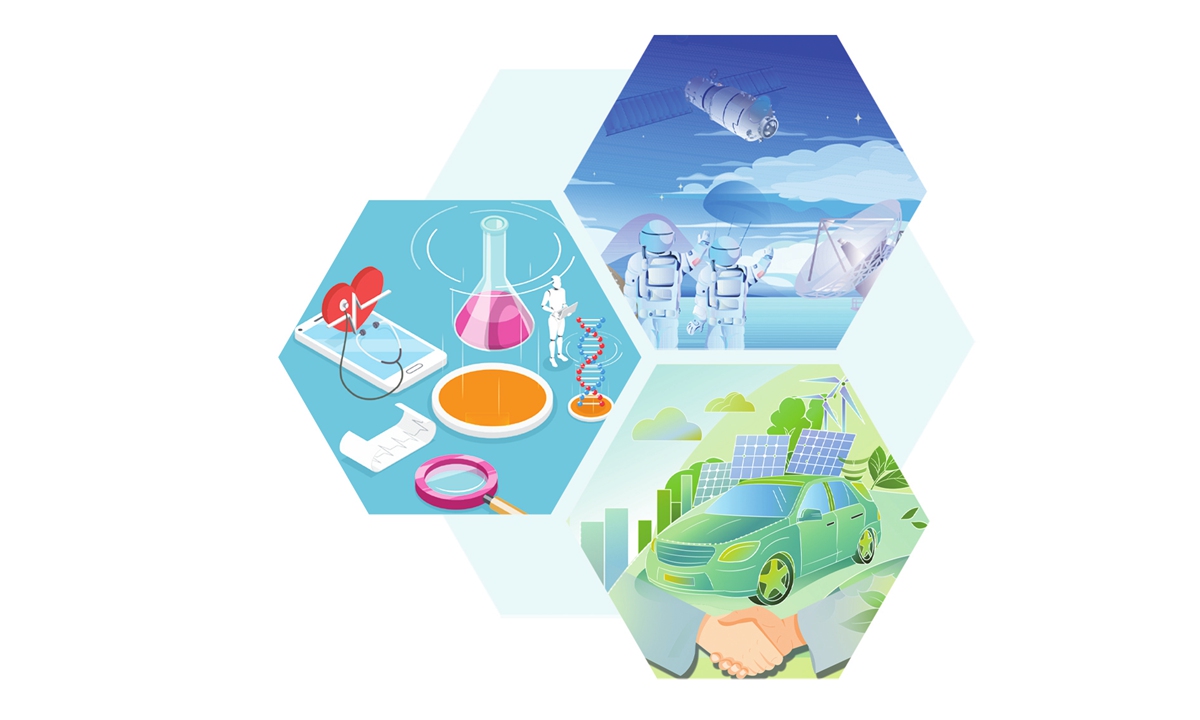
Tu Dong (associate professor at the College of Foreign Languages and Cultures, Sichuan University): China and Spain have gradually established various forms of scientific and technological cooperation, including R&D and implementation projects led by both local and national enterprises, as well as joint research projects carried out by universities. At the multidisciplinary level, both basic and applied sciences are well developed and represented. The cooperation spans both fundamental and applied sciences, covering diverse fields such as agriculture, astronomy, marine science, biomedicine, new energy, artificial intelligence, and the digital economy. Notably, collaboration in cutting-edge areas like power batteries, new energy vehicles, photovoltaics, and energy storage has been particularly strong and productive in recent years.
This cooperative framework yields several positive outcomes. First, it strengthens in-depth exchanges and knowledge sharing between researchers from both sides, providing sustained momentum for bilateral scientific and technological cooperation. Second, collaboration builds trust and friendship that transcend cultural differences, fostering mutual understanding between Chinese and Spanish academic communities and laying a social foundation for the healthy development of bilateral relations. And there remains room for improvement in terms of overall scale and frequency.
Augusto Soto (director of Dialogue with China Project, Spain): Since the establishment of diplomatic relations between Spain and China in March 1973, technological exchange has been one of the most dynamic pillars of their bilateral relationship. This has become particularly evident over the past two decades, since the comprehensive strategic partnership was established in November 2005.
What is the significance of cross-border academic exchanges? This is undoubtedly one of the defining challenges of our time. With the US administration waging war on open trade and the free movement of people – particularly cross-border academic exchanges – Europe and China stand to benefit by attracting talent. In fact, this is already happening. They can also explore ways to identify further synergies.
‘Cooperation does not weaken science. It strengthens it’
Tu Dong: Cooperation is an inevitable choice grounded in the laws of scientific development and practical needs. China and Spain each have their own strengths in science and technology, allowing for precise complementarity and mutually beneficial integration.
Through cooperation, scientists from China and Spain can not only achieve their own professional growth, but also enhance the two countries’ voice and influence in global science and technology governance.
It is reasonable to believe that, in this new wave of scientific and technological cooperation, China and Spain – given their strong alignment and complementarity across multiple areas of comparative advantage – are fully capable of opening up a new landscape of scientific collaboration and becoming a core driving force in unlocking broader dimensions of cooperative potential.
Augusto Soto: International technological cooperation is nothing new. In short, without these contacts, humanity would not be what it is today, nor would it have reached its current level of advancement.
Inventions and techniques transcend borders and generate new techniques. Consider the firecracker, invented in China during the Tang Dynasty (618-907), which evolved into the space rocket through cross-border diffusion.
Xiao Qian: From the perspective of knowledge production, transnational interaction is fundamental. Science is never the result of isolated development. Whether it’s the formation of basic theories or the evolution of technological systems, both rely on long-term cross-regional knowledge accumulation and collaborative innovation. No single country can build a complete scientific knowledge system in a closed environment. On the contrary, the history of scientific development has repeatedly proven that openness and exchange are the key driving forces for breakthroughs.
Therefore, viewing scientific cooperation as a “byproduct of competition” is a misjudgment. In today’s world, many major problems facing humanity are inherently “cross-border”: climate change, public health, artificial intelligence safety, and nuclear risk control. In the modern scientific era, China-Europe cooperation has become an important force driving global knowledge production and technological breakthroughs.
‘Create lasting bonds between science communities’
Augusto Soto: In Chinese, the word for “robot” is jiqiren. The character ji can convey abstract concepts such as “chance” or “opportunity.” It carries a positive connotation and is inspiring. Together, we will have more opportunities to make progress.
There are examples within the Chinese and European academic communities. One of the most notable examples is the joint space mission SMILE (Solar wind Magnetosphere Ionosphere Link Explorer), which aims to obtain the first global image of the Earth’s magnetosphere.
A technology that made a huge impact in Europe is the most recent spectacular showcase of robotics. During German Chancellor Friedrich Merz’s visit to Unitree Robotics in Hangzhou in February 2026, he showed appreciation for the robots’ performance.
These can encourage us to establish stronger and more meaningful cooperative relationships to address future technological challenges together, and even accelerate progress in this area.
Tu Dong: Scientific and technological cooperation cannot rely on short-term enthusiasm alone; it requires stable mechanisms to ensure long-term support.
China-Spain cooperation could serve as a model for China-Europe relations. For Spain, alongside efforts to revitalize its economy and traditional industries, strengthening cooperation with China in emerging fields such as AI and robotics is a suitable option. For China, building on cooperation with established technological powers like France and Germany, and expanding collaboration with more European countries, including Spain, can help develop a new type of science and technology partnership and support broader China-Europe cooperation. In the context of global uncertainty, closer China-Spain cooperation is a constructive response.
Xiao Qian: Establishing lasting bonds between Chinese and European science communities is of significant practical importance. Both sides are complementary in their scientific research traditions and institutional environments. Moreover, China-Europe cooperation can also help maintain the openness of scientific cooperation globally, preventing the over-securitization of technological development from leading to systemic fragmentation. Through joint research, joint standard setting and risk assessment, Chinese and European academics can explore a more balanced governance model between technological development and risk control.