From payment tool to mobility layer
Introduced in 1997 as a stored-value card for public transport, Octopus has long been integral to the city’s transport network. Its use now spans retail, parking and online transactions, with this booking function bringing reservation, payment and fulfilment into the same system.
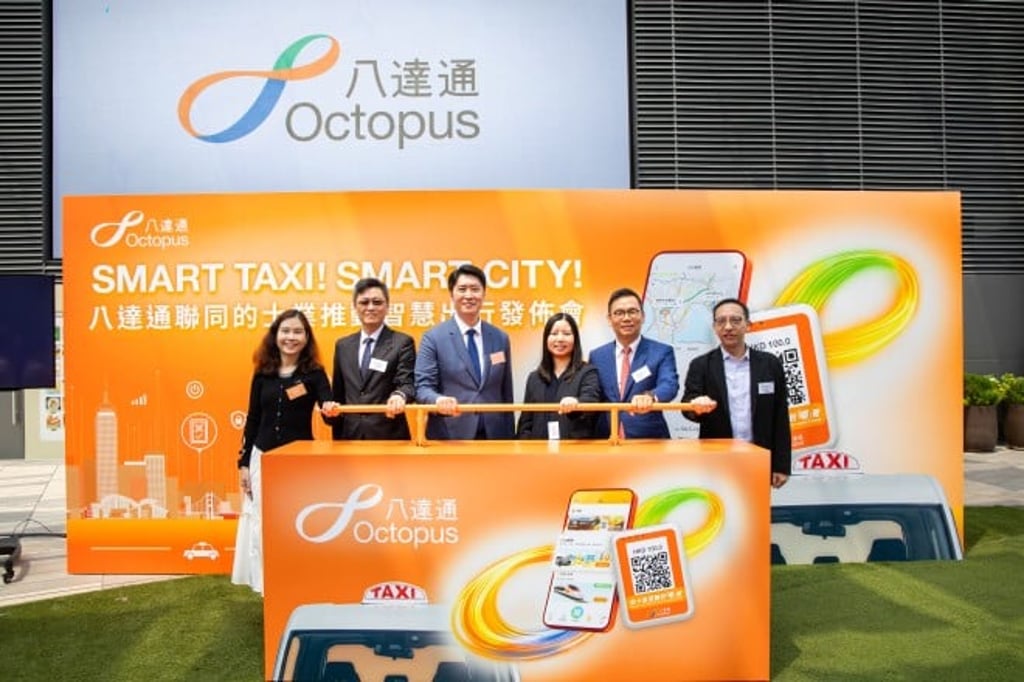
She added that the feature would integrate multiple taxi fleets, private and taxi associations’ ride-booking platforms and barrier-free transport providers into a single interface, offering a range of vehicle types including standard four-seaters, larger vehicles, premium options and wheelchair-accessible cars.
The feature has already been rolled out and tested in Singapore, Malaysia, Thailand and Vietnam since May last year, and in Japan in early 2026.

More than 18,000 taxis operate across Hong Kong, serving over one million passenger trips a day, with ownership fragmented among multiple companies and individual licence holders. This is what the platform seeks to address by bringing these sources of supply together into a unified booking experience, without altering that structure.
The addition of another booking channel is expected to bring fresh momentum to the city’s point-to-point transport market, expanding ways for drivers to access bookings. The company said this could be particularly helpful for older drivers or those less familiar with digital tools, helping them remain competitive as more services move online.
Octopus said it designed Easy Ride in co-ordination with the trade to serve as an inclusive bridge to the digital economy, particularly helping older or less tech-savvy drivers. The aggregated service is open to licensed taxi fleets and operators, giving drivers additional access to bookings besides existing traditional street-hails.
Regulation drives adoption
The timing of the launch coincides with policy changes that have been in preparation for several years. While some taxis had begun accepting electronic payments as early as the 2010s, adoption was uneven, with many drivers continuing to operate on a cash-only basis.
The April mandate has accelerated uptake. More than 49,000 drivers have registered for the Octopus App for Business or started using its mobile point-of-sale devices, exceeding the Transport Department’s estimate of about 46,000 active taxi drivers.
In the first quarter of 2026, the total value of taxi e-payment transactions processed by Octopus rose by nearly 50 per cent year on year. Since the legislation took effect, transaction value has increased by 74 per cent compared with March, volumes have more than doubled and the number of active drivers using the system has risen by 68 per cent.
The requirement is accompanied by further measures aimed at modernising the trade, including plans to introduce in-vehicle systems such as cameras and navigation tools to improve safety and accountability.
The change opens up a large, previously under-digitised segment of the transport market. Octopus has kept barriers low by continuing to waive fees for drivers while charging passengers no additional fees.
Access and adoption
Another feature of the platform is its focus on segments that have been less well served by traditional taxi booking channels.
Barrier-free vehicles, often operated by social enterprises, are included on top of standard and premium fleets. Larger vehicles for passengers with luggage, as well as higher-end options, are also available through the same interface.
This broadens access to specialised taxi services for passengers with specific needs while giving operators greater visibility, with structured fleet operators and premium services supporting a strategy focused on organised supply, in contrast to participation by individual drivers.
Built on an existing user base
Easy Ride is built into the Octopus app, allowing existing users to access the feature without a separate download. With over half of Hong Kong’s population – about 3.7 million people – using the mobile Octopus app, this provides an immediate user base.
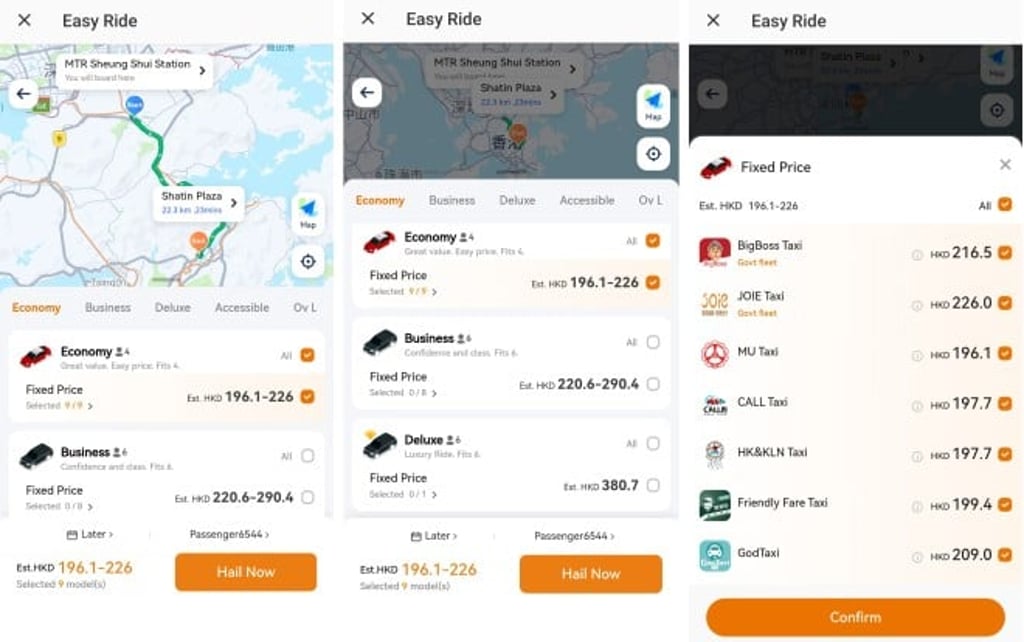
Passengers can input a pick-up point, select a vehicle type or platform, confirm the booking and complete payment in the same interface. If a booking is cancelled or cannot be fulfilled, the fare is refunded directly to the user’s Octopus wallet or card, avoiding the delays often associated with credit card refunds.
The integrated approach is expected to lower barriers for users, particularly occasional riders and visitors, while reinforcing Octopus’ role in Hong Kong’s transport system.
Integration over disruption
Rather than building a network by recruiting drivers directly, Octopus has taken a different route by connecting its system with licensed taxi fleets and legal booking platforms.
Passengers can select different service types in the app, while drivers continue to operate under their existing fleet or booking platform applications. Orders are distributed to nearby drivers based on availability. Refunds are credited automatically to the user’s Octopus wallet, while card users can receive refunds via an NFC tap in the Octopus App.
Waiting times are expected to remain comparable to those on other booking platforms, particularly in the early stages as supply is still being scaled up. Driver onboarding is set to continue through partner platforms and fleet operators.
Each booking is assigned to a specific fleet operator to allow trips to be traced back through the supply chain, supporting compliance and passenger confidence.
The model is well suited to Hong Kong’s taxi regime, where ride-hailing services operate alongside a tightly regulated sector, with Octopus positioning itself as a co-ordinating layer rather than a direct competitor.