Which Iran is America dealing with?

THE PAST couple of days in the Middle East have been characterised by the now-familiar whiplash. On April 17th Donald Trump announced the Strait of Hormuz had opened to traffic. Abbas Araghchi, Iran’s foreign minister, confirmed as much. The same day outlets linked to Iran’s Islamic Revolutionary Guard Corps (IRGC) criticised Mr Araghchi for failing to mention the conditions of the opening. The next day a military spokesman said the strait was closed again; several vessels came under fire as they tried to sail through. Mr Trump mocked the move to re-block the passage, reminding the world that America’s own blockade already ensured it remained closed to Iranian ships. On April 20th the president said that the US Navy had fired upon and boarded an Iranian cargo ship. Only the day before he said an American delegation would return to Islamabad, Pakistan’s capital, for more talks with the Iranians, and repeated threats to bomb Iran’s civilian infrastructure unless negotiations succeeded.

Mourners carry Iranian flags in Tehran on April 1, 2026 during a funeral procession for Alireza Tangsiri, head of Iran's Islamic Revolutionary Guard Corps Navy, and others killed in Israeli strikes (AP)
Mourners carry Iranian flags in Tehran on April 1, 2026 during a funeral procession for Alireza Tangsiri, head of Iran’s Islamic Revolutionary Guard Corps Navy, and others killed in Israeli strikes (AP)

Mr Trump’s flip-flopping is no longer surprising. Yet the conflicting messages coming out of Iran are a sign of something significant: a power struggle is under way in the Islamic Republic, which is without a present and absolute supreme leader for only the second time in its 47-year history. One observer likens the situation to “a jungle of power”, resembling the first chaotic months during Iran’s revolution in 1979. State media report that Iranian officials are currently in no mood to resume peace talks. But should that change, for the American delegation to Islamabad, that raises the question of who, exactly, they will be talking to.

The first set of talks in Islamabad, held on April 11th and 12th, provided a sense of Iran’s internal tensions. Iranian delegations dispatched for talks with America are usually lean, disciplined and tightly briefed. The Islamabad one was anything but: it was composed of some 80 Iranians, roughly 30 of whom were billed as decision-makers. They ranged from Majid Takht-Ravanchi, a seasoned diplomat who helped fine-tune a nuclear deal with the Obama administration in 2015, to Mahmoud Nabavian, a firebrand who derides America as “a vicious yellow dog” and sneers that any deal would be capitulation. Their arguments were so ferocious that Pakistani mediators are reported to have spent as much time refereeing among the Iranians as engaging the Americans. When tempers frayed, the hosts called a pause.

One cause of the tensions is the existence of a vacuum at the top. Seven weeks after an American-Israeli air strike killed Ali Khamenei, the supreme leader for 37 years, his successors have failed to find a date for his funeral. His son and designated successor, Mojtaba Khamenei, is thought to be either incapacitated or too weak to impose authority. Israel’s wars and assassinations have also thinned the senior ranks of army loyalists. Their replacements seem reluctant to surrender the autonomy they achieved during the war, when Iran decentralised its command-and-control to survive the combined American and Israeli attacks.

Since a ceasefire was declared on April 8th, the regime’s wartime cohesion has begun to fray. Formally, authority rests with the Supreme National Security Council, comprising the president, the parliamentary speaker and the heads of the security services. Mohammad-Bagher Ghalibaf, the speaker, has been designated as chief negotiator, with Mr Araghchi as his lieutenant. But their readiness to negotiate has provoked a backlash, particularly from the IRGC, the 190,000-strong force that defends the Islamic Republic. To outsiders, that divide has been visible in contradictory pronouncements over the status of the Strait of Hormuz in the past couple of days.

Inside Iran, signs of swelling military assertiveness are plentiful. Pro-regime crowds—mobilised nightly by networks tied to the IRGC—have taken to denouncing Mr Araghchi and Mr Ghalibaf by name. Military communiqués delivered by men in fatigues appear to have replaced clerical sermons. Even puritanical dress codes seem to be slipping: at a recent rally an unveiled woman led chants, breaching the four-decade taboo on women singing solo in front of men. In a further sign of a military control, outlets linked to the Guards have floated the idea of delaying municipal elections that are scheduled for May 1st.

Some argue that the cacophony is tactical—a way to extract concessions by projecting hardline opposition. After all, the fissures within Iran are as old as the revolution. From the outset, its leaders have disagreed on whether to confront America or accommodate it. Yet the war appears to be hardening a new faultline between nationalists who are guided by realpolitik and state interest, and Islamists who are anchored in revolutionary ideology.

Material interests muddy matters further. Over the years a class of generals-turned-sanction-busters has emerged: its members are thought to benefit handsomely from operations to circumvent American sanctions on the economy. Networks tied to Mojtaba Khamenei and Mr Ghalibaf are thought to control foreign-property portfolios and have attracted media scrutiny. With Khamenei senior gone, previously sidelined figures have re-emerged. Each brings different allies, agendas and claims on power.

Each group has a different view on the most important sticking-points in the talks, including the nuclear programme, control of Gulf waters and the role of Iran’s regional proxies. Nationalists would trade proxy networks for sanctions relief; Islamists see them as the spine of “resistance”. For the nationalists, nuclear brinkmanship invites attack; the Islamists follow North Korea’s model and look to developing a bomb for the sake of deterrence. Control of the Strait of Hormuz, to pragmatists, is leverage for a broader security pact with Arab Gulf states; to ideologues, its appeal would be as a lucrative toll-booth under Iran’s control.

On April 15th Asim Munir, Pakistan’s army chief, visited Tehran, seeking common ground between the different groups. The need to fix what the regime claims is some $270bn-worth of damage from the war may help concentrate minds. Even if Iran returns to talks, the deep divisions within the Iranian delegation mean both that it will be hard to reach a deal, and that any agreement with America could quickly unravel.

Editor’s note, April 20th: This story has been updated

Source link

Visited 1 times, 1 visit(s) today

Related Article

Amnesty alleges possible war crimes in Ethiopia shelling

Amnesty alleges possible war crimes in Ethiopia shelling

Amnesty International called Tuesday for an investigation into potential war crimes by the Ethiopian army and its allies after 14 civilians, including children, were killed by “indiscriminate” artillery fire in the Tigray region. Amnesty alleges possible war crimes in Ethiopia shellingmore Tigrayan rebels, who have run the region for years, launched an offensive against the

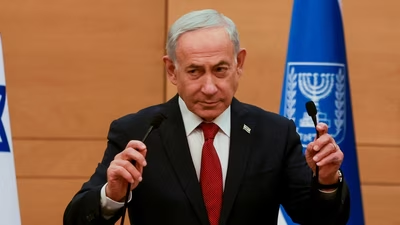
Israeli Prime Minister Benjamin Netanyahu welcomes Jensen Huang's reinstatement as Nvidia CEO. (REUTERS)

‘Good news’: Netanyahu hails Jensen Huang’s reinstatement as Nvidia CEO, underscores Israel’s ties with chip giant

Israel’s caretaker Prime Minister Benjamin Netanyahu has joined the growing list of prominent figures welcoming Jensen Huang’s reinstatement as Nvidia CEO. Israeli Prime Minister Benjamin Netanyahu welcomes Jensen Huang’s reinstatement as Nvidia CEO. (REUTERS)more The Likud party leader described the development as a positive sign for the company’s ties with Israel as Nvidia operates several

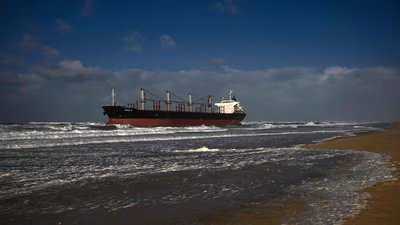
The Comoros-registered vessel - MV Star Line, was stopped by naval authorities on November 7. (AFP/representational image)

Indonesia seizes Chinese cargo ship to Bangladesh carrying chemicals enough to manufacture 100 missiles: Report

The Indonesian navy has intercepted a Bangladesh-bound cargo ship carrying 405 tonnes of sodium perchlorate in the water near Belawan, Indonesia. The chemical, known for its oxidising properties, is commonly used in various industrial applications and in the production of certain explosive materials. The Comoros-registered vessel – MV Star Line, was stopped by naval authorities

A 66-year-old US climber was found dead at the high camp on Mera Peak in Nepal's Everest region after summiting the 6,476-metre mountain, a local official said. (Representational image)

US climber dies while descending Nepal’s 6,476-metre Mera Peak after successful summit

A US climber has died while descending Nepal’s Mera Peak after summiting the 6,476-metre (21,247-foot) mountain in the Everest region, a local official said Monday. A 66-year-old US climber was found dead at the high camp on Mera Peak in Nepal’s Everest region after summiting the 6,476-metre mountain, a local official said. (Representational image)more “His

Bangladesh has sought Thailand's continued support for the safe and dignified return of Rohingya refugees to Myanmar, days after an ICJ ruling on Myanmar's 2017 military operation. (AFP)

Bangladesh seeks Thailand’s support to repatriate Rohingya refugees to Myanmar

Bangladesh has sought Thailand’s continued support for the safe and dignified repatriation of forcibly displaced Rohingya Muslims to Myanmar in renewed diplomatic efforts to resolve a protracted refugee crisis with significant implications for regional stability, including India. Bangladesh has sought Thailand’s continued support for the safe and dignified return of Rohingya refugees to Myanmar, days

As per reports, the threat email went to around 450 schools with a subject line of "Death awaits you." (REUTERS/Representational)

450 schools in Germany receive bomb threat emails, probe underway

Around 450 schools in Germany received bomb threat emails on Monday. Following the threat, all students and staff were evacuated, and an investigation has been launched. As per reports, the threat email went to around 450 schools with a subject line of “Death awaits you.” (REUTERS/Representational)more As reported by the German local newspaper Bild, police

WHO chief pleads for peace in Ebola-hit DR Congo area

WHO chief pleads for peace in Ebola-hit DR Congo area

GENEVA The head of the World Health Organization (WHO) has pleaded for peace in the epicenter of the Democratic Republic of Congo’s Ebola outbreak that has killed nearly 5,700 people. Tedros Adhanom Ghebreyesus said the frequency of attacks across the country’s east had increased since the end of October, seriously affecting the Ebola response. “Heavy

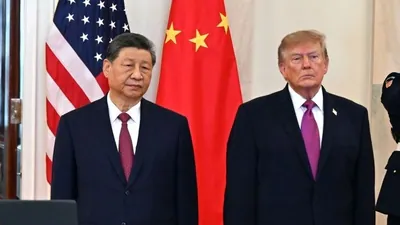
Chinese reporters clashed with Secret Service agents before Xi Jinping’s White House welcome as the Trump-Xi summit continued.. Photographer: Annabelle Gordon/CNP/Bloomberg (Bloomberg)

‘Fake jobs, consulting gigs’: Months before Nvidia row, FBI busted Chinese espionage plot to acquire US secrets

As the US continues its investigation into ex-Nvidia CEO Jensen Huang’s alleged affair with a Chinese “spy”, focus has once again been placed on the processes Chinese agents use to recruit Americans and acquire intelligence. Chinese reporters clashed with Secret Service agents before Xi Jinping’s White House welcome as the Trump-Xi summit continued.. Photographer: Annabelle

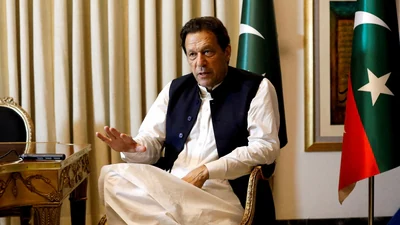
Imran Khan has been in jail since 2023, following his conviction in a graft case. He was ousted from office through a parliamentary no-confidence vote in April 2022. (Reuters/File Photo)

Pakistan’s Imran Khan needs immediate help to prevent heart damage; delay could lead to ‘serious consequences’: Report

Pakistan’s jailed former prime minister Imran Khan needs to see a medical specialist “within days” to prevent irreversible damage to his heart, his personal doctor has reportedly warned, adding that the 74-year-old was suffering from “uncontrollable” blood pressure. Imran Khan has been in jail since 2023, following his conviction in a graft case. He was

Crude oil prices have been on the rise of late and the Russia’s invasion of Ukraine has further fuelled concerns of supply disruption leading to further spike in prices. (Representational image)  (Reuters)

Oil prices fall amid equity selloff though Iran war attacks limit losses

Oil prices fell on Monday as the selloff in the wider financial markets amid concerns about the ability of the AI sector to boost economic growth spilled over into commodities, though the continuing attacks on Gulf shipping limited the losses. Crude oil prices have been on the rise of late and the Russia’s invasion of

0
Would love your thoughts, please comment.x
()
x