Eyck Freymann is a Hoover Fellow at Stanford University, a Non-Resident Research Fellow at the U.S. Naval War College, China Maritime Studies Institute, Columbia Center on Global Energy Policy, and the Institute of Geoeconomics in Tokyo. In his new book, Defending Taiwan, he draws on extensive interviews and research to argue that the U.S. needs a far more comprehensive strategy to deter China’s multifaceted threats to Taiwan and maintain peace.

Illustration by Kate Copeland
Q: What is the core argument of your book?
A: The argument is Xi Jinping has a highly coherent grand strategy to take Taiwan that marshals every tool of China’s national power: military, political, economic, technological. The United States does not have an equivalent strategy to deter conflict and therefore we are barreling towards a crisis, if not a war. The bottom line is that conventional military deterrence is necessary, but not sufficient.
Xi is deterrable. The status quo can hold, but it requires integrating all these tools of our national power and making them work together to deter catastrophe and preserve an honorable peace.
So you think that the status quo can be maintained?
Yes, because it’s held so far. The broader reason is that while Taiwan is the keystone in the arch of what Xi Jinping calls national rejuvenation, it’s not equivalent to national rejuvenation, which is a comprehensive thing touching on every domain of human endeavor. It’s about technology, ethnic minorities, urbanization, China’s position in international institutions, making China green and the streets safe and clean. Xi has said explicitly that national rejuvenation cannot be achieved without Taiwan reunification. But I don’t think he’s willing to hold the broader project at risk for only one part of it.
| BIO AT A GLANCE | |
|---|---|
| AGE | 32 |
| BIRTHPLACE | New York, NY |
| CURRENT POSITION | Hoover Fellow, Stanford |
That means the way to deter him is to give him credible reason to believe that rolling the iron dice over Taiwan and coming up short would put the entire project — and his own skin — in jeopardy. Someday he will have to retire or hand off some responsibilities, and if he’s the guy who let Taiwan slip away — who moved on the prize and failed — he will not be able to get old in peace.
Why should Taiwan’s future matter to the U.S.?
The most obvious reason is chips. Taiwan’s fabs being disabled for any reason means an immediate global economic shock. The fabs falling intact into China’s hands, likely means China seizing the commanding heights of AI with all of the consequences for authoritarian power that that implies.
| MISCELLANEA | |
|---|---|
| RECENT READ | What We Can Know by Ian McEwan |
| FAVORITE FILM | Dr. Strangelove (just kidding) |
| FAVORITE MUSICIAN | Currently performing? Bill Charlap |
| MOST ADMIRED | Jimmy Lai comes to mind |
But chips are actually not the most important reason. Maps matter too. If China could use Taiwan as a forward operating base, they could project naval power far into the Pacific, eventually threatening our hemisphere, surrounding Japan, the Philippines, Australia, making these treaty allies very hard to defend by conventional means. China’s fleet is growing. They have three operational aircraft carriers today. In ten years, they’ll have nine, so there’s a strong argument for keeping that fleet bottled up within the first island chain.
But more than chips and maps, it’s about what kind of century we want to live in. There’s no way for the U.S. to escape catastrophic consequences for its credibility if Taiwan falls by force.
The U.S. has generally focused on the military component of deterrence. Within the comprehensive deterrence strategy you argue for, you advocate a subtle change to the policy of strategic ambiguity. What would that look like?
The basic framework [of strategic ambiguity] is right. In terms of managing Beijing, you have to show resolve — showing Xi Jinping that you actually haven’t reconsidered the fundamental interests for why you care about Taiwan in the region — and restraint, so that there’s no way that he can persuade himself that there’s some secret American strategy to achieve formal Taiwanese independence.
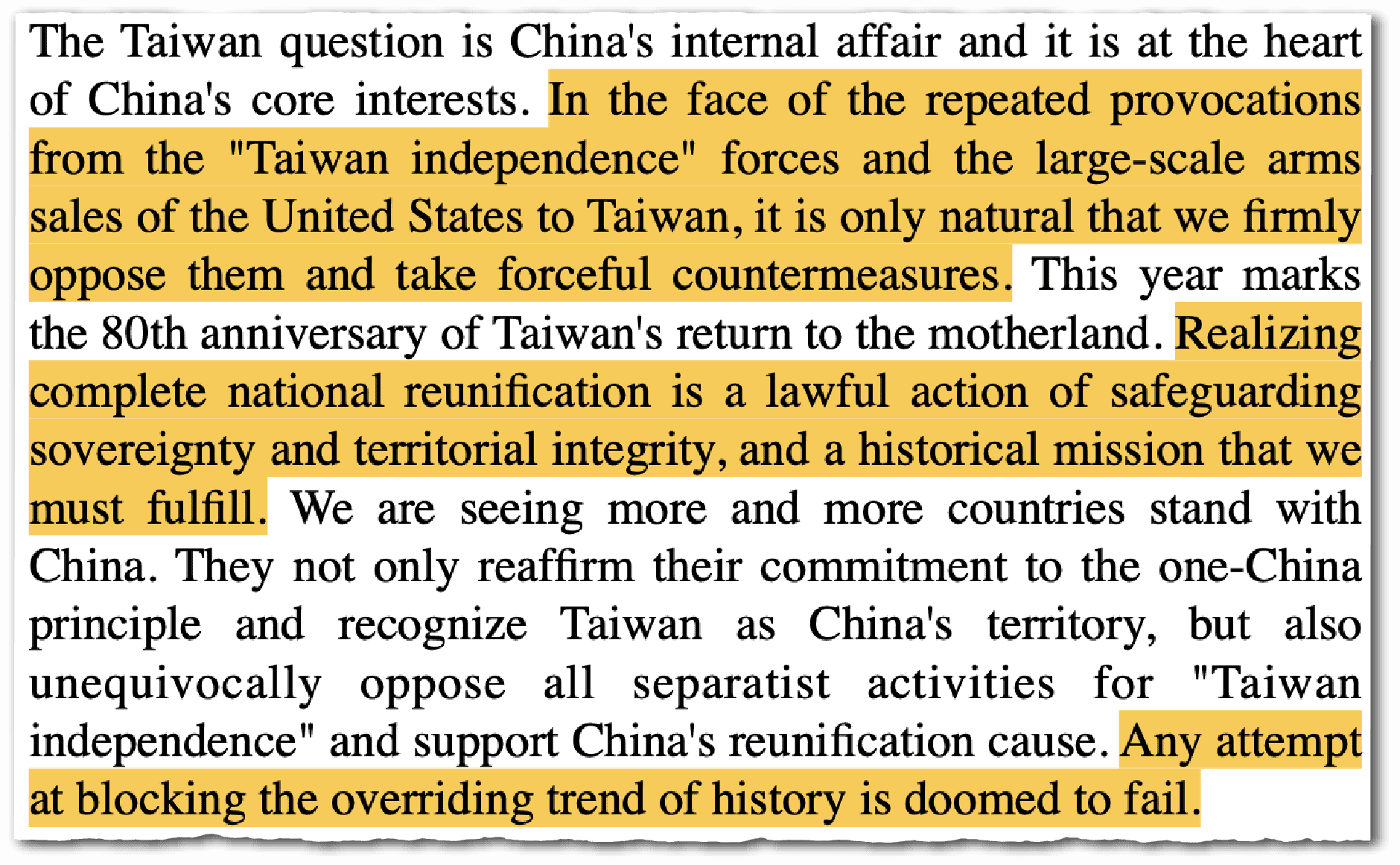
But right now, China’s gray zone campaign is using strategic ambiguity against us. The current policy implicitly says ‘our policy is ambiguous until you start shooting’. It is being interpreted to mean: ‘go nuts in the gray zone’. A better way of interpreting strategic ambiguity is that we are keeping our policy ambiguous because at this moment, in this particular way, it serves our interests. We could stop being ambiguous at any time.
I introduce a concept in the book called structured ambiguity, which is substantively the same as strategic ambiguity, but it’s communicated differently. It says to China: just because we’re ambiguous on some points in our policy doesn’t mean that we plan to stand back and let you salami-slice your way to victory. So if you incrementally try to change the status quo on the ground by, say, normalizing a constant drone and Coast Guard presence all around Taiwan’s main island, we are going to incrementally redefine the status quo from our end in a proportionate way that shows restraint as well as resolve. We’re going to deepen our relationship with Taipei, move towards a more formal political relationship, with deeper defense and industrial integration, trade and energy.
When you war game this scenario, it gets very ugly very fast, but I still think everything in China’s past, pattern of behavior and just taking Xi’s comments suggest that they are going to move for a [so-called] “peaceful” action — which is to say violent, coercive, but non-kinetic…
This is to say to Xi, there should be a principle of proportionality in the gray zone. That is the only way that we create some limiting factor, otherwise he will continue to push on Taiwan until it tips over.
Xi Jinping addresses reunification with Taiwan during a New Year Address, December 31, 2023. Credit: CCTV
The other part of structured ambiguity is that if U.S. and allied intelligence assesses that Xi is getting ready for a big move to change the status quo, our policy shouldn’t be that we’re ambiguous until he starts shooting at us. If our intelligence ascertains that he has given the decision to go, every minute of preparation time will matter for the potential outcome of the first round of hostilities. So the United States and its coalition needs to be ready to swing into gear, and we should reserve the right to do that preemptively if our intelligence says that he’s decided to go.
You also argue that the U.S. needs a different economic deterrence strategy, and that arguments that mutually assured economic destruction will deter China fall flat. What would an effective strategy look like?
There are some who would say economic threats belong in the mutually assured destruction category. If we have any crisis with China, the automatic response would be that Wall Street and the bond markets would panic. We all know this.
But the lessons from history aren’t encouraging. In World War One, economic mutually assured destruction didn’t prevent conflict. And also, suppose we face a crisis where the burden of decision falls upon us to choose if we let Taiwan go or have the war — if deciding to have the war would mean economic mutually assured destruction, maybe we’re actually deterring ourselves.
So we need an economic contingency plan that involves no economic mutually assured destruction. Instead, it’s about crisis response, recovery coalition consolidation — so we don’t leave our allies out on the field to get ravaged economically — and then a controlled decoupling from China that prioritizes the most critical supply chains first. In other words, if we have some kind of crisis with China and we have to restructure the world economy without them, how do we do it? We can’t decouple all at once, so we have to do it gradually, predictably and doing the most essential stuff first, and the less essential stuff later.
My collaborator Hugo Bromley and I coined the term ‘avalanche decoupling’. An avalanche doesn’t cause chaos and destruction on day one, but it gains momentum over time. Avalanche decoupling should be clear, predictable and multilateral, and if you do that, you can tell companies that produce in China, maybe the best time to get out of China was five years ago, but the second best time is now. Find the best safe market, pull back there.
There’s a whole lot of allied coordination that would be needed for this, and those conversations should happen now. What is our ranked list of the most important things to decouple in? How long will it take to do it? To what extent are we going to command and control the supply chains? Then there’s a question of taking China out of our critical systems, networks, technological networks, software, that sort of thing. There’s a whole lot of allied coordination in that too, if there becomes a real risk that these things could be weaponized.
In the book, you argue that there are major gaps in U.S. understanding of Taiwan’s domestic politics. Why do these exist?
Taiwan has a robust, vibrant democracy — there’s a diversity of views. Taiwan’s two main political parties are big tents. I think there’s very limited understanding in Washington of the role of factions. What does the KMT actually stand for? Well, it depends. Under new leadership, maybe something very different.
We need to be able to work with whoever’s in power. That’s what it means to have relations with a democracy. But if your goal is to motivate Taiwan, say, to invest in its own defense, you have to be able to communicate privately to the leadership and then publicly to the people where the U.S. position is.
Because of these failures of public and private diplomacy, Beijing has been able to shape the public debate in Taiwan in ways that are unfavorable. The propaganda, the information and cognitive warfare that Taiwanese citizens face day to day is relentless; and yet we’ve just canceled Radio Free Asia. So there’s some low hanging fruit to get back in the game. I would like to see more U.S. scholars and low level officials and so forth, cycle through Taiwan, and there should be mechanisms for them not to just meet government officials, but to really hear a range of views from civil society.
The U.S. is very focused on an amphibious invasion scenario, but you discuss other moves China could use to annex Taiwan, including a blockade. How do you assess the strategic calculation around this?
China can impose a blockade at any point of the escalation ladder, as a prelude to invasion, simultaneously with an invasion, or as a fallback after a failed invasion. A blockade in my usage means medieval style, no one in or out. The obvious reason to do this is that Taiwan is a small island that’s energy and food insecure. The message is, “we’re going to do this the easy way or the hard way”. And then if the United States and its allies can’t credibly show the ability and the resolve to break the blockade, Taiwan could capitulate immediately. That’s the attraction.
But there’s a number of reasons why I don’t think a blockade is Plan A. It looks really bad — it’s declaring war against every civilian in Taiwan and also on the million foreign nationals who are on Taiwanese soil at any given time. It creates a panic where the world wants to get their people out, which could be embarrassing to the West, but it would also make China look like a really bad actor; and it might stiffen the spines of European countries, Southeast Asian countries that would otherwise like to stay back, because they would have no choice but to intervene to protect the citizens they had on the ground.
I also think the United States would try to break the blockade. Then China would face the decision, do you shoot at the U.S. resupply craft? The Soviets didn’t dare do that in 1948 [during the Berlin Blockade]. If they do shoot, then they have the shooting war on their hands, and they’ve given us advance notice to surge our air and naval forces to the region, to prepare our economic retaliation, to consolidate our core coalition.
When you war game this scenario, it gets very ugly very fast, but I still think everything in China’s past, pattern of behavior and just taking Xi’s comments suggest that they are going to move for a [so-called] “peaceful” action — which is to say violent, coercive, but non-kinetic — that pushes the burden of escalation onto the U.S.. That is the way that they could potentially get the prize for free, rather than paying upfront and at enormous cost.
How could China do that?
There are a couple of ways.
The first is a quarantine. Beijing says: pursuant to existing PRC customs law, Taiwan province is now subject to the customs law of the PRC, so anyone who comes and goes, should clear customs in a mainland port. They can salami slice their way towards that, starting with spot inspections, which they’ve already attempted on a couple of occasions. They could start demanding that airlines send manifests before flights coming or going from Taiwan take off. In extreme cases, they could shadow ships and aircraft [force them to clear customs in the PRC]. I think private carriers would comply, otherwise it would be very hard to get insurance. Automatically, most of the traffic of people and goods in and out of Taiwan would just fall under Beijing’s control.
Then the question would be: can you create a corridor, maybe convoyed by U.S. naval ships, that can get the critical people and goods in and out. It might be chipmaking supplies coming in and GPUs going out. How would this work operationally? How could we keep Taiwan’s morale up if de facto, 90 percent of their exchanges with the outside world were now mediated through China?
The second thing that they can do is coercive mobilization. If the PLA started to mobilize, really and truly for an invasion, they couldn’t do it in secret, so they would do it out in the open. Markets would start to move, and they would do it in a way that would impose pressure on corporates, investors and foreign leaders that didn’t want the enormous cost of a conflict. They would impose some of this pressure up front to try to persuade the U.S. president that it’s not worth it, and to try to persuade Taiwan that this is real and the Americans aren’t coming.
Another reason to do that is that if your bluff doesn’t get called, then you’re ready to go at a moment’s notice. Or if your bluff does get called and you want to go, you can go. It’s analytically undetermined whether you’re bluffing or not, until the moment that you shoot. That’s a scenario that I’m concerned about, because that also potentially triggers the crisis of when and how do you get all the foreign nationals out of Taiwan.
If Taiwan capitulates under an extreme form of gray zone pressure, you can argue that that is actually the worst possible scenario for the United States, short of thermonuclear war, because China then gets the prize without fighting.
When you actually game this out, and you think about how the financial markets behave, we would be improvising a response. This would be a simultaneous global financial crisis. I don’t think our financial system can absorb the massive drawdown in tech stocks — which we would see in any Taiwan crisis — without seizing up. You’d see big movements in currencies and commodities markets. This would totally destabilize the economies of certain countries. What countries are going to get a helping hand from the Fed, and at what price? What are we going to do if the NASDAQ one day falls by 25 percent because everyone’s afraid about Taiwan?
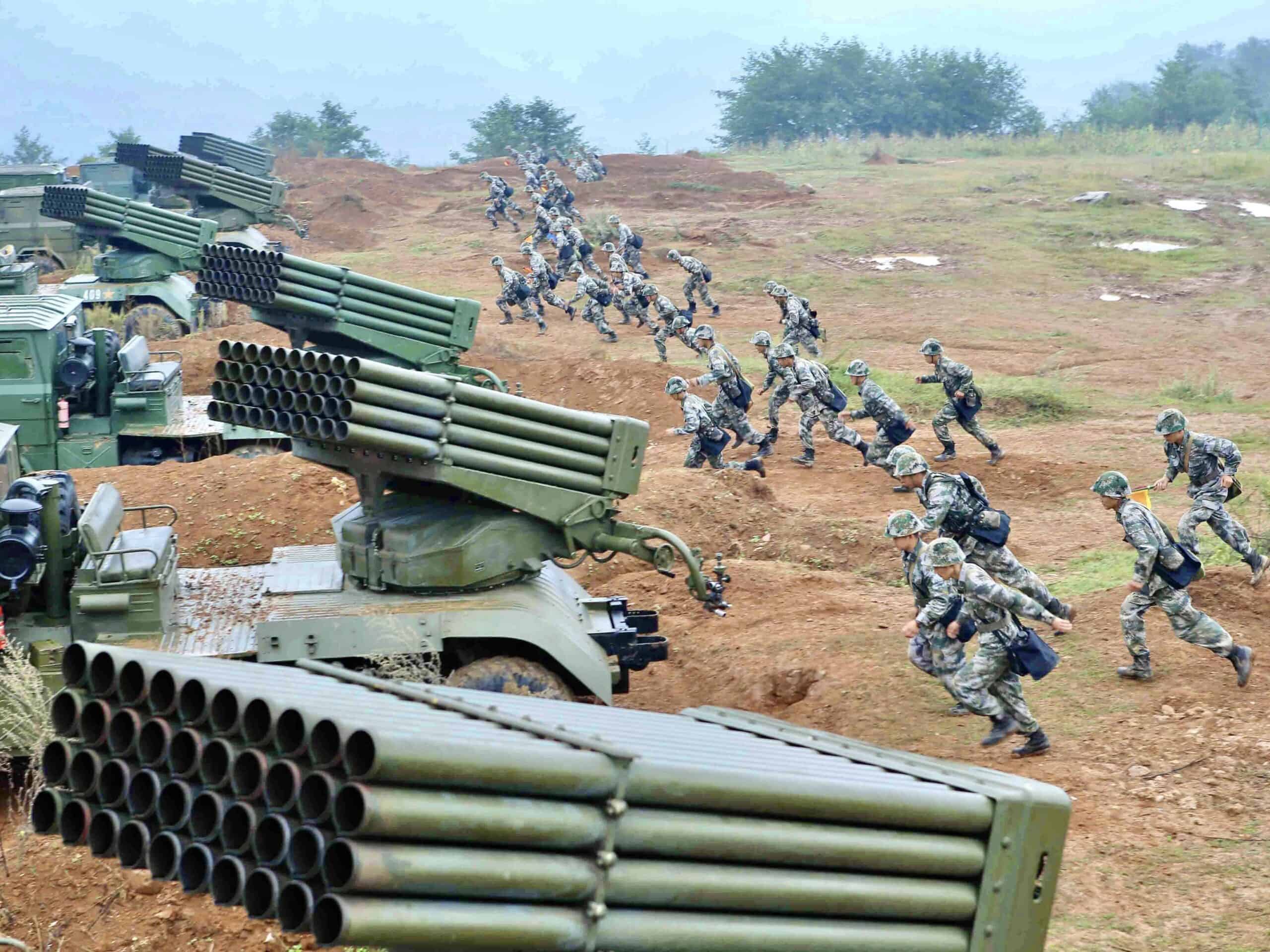
Part of what the book tries to do is emphasize that these scenarios should be the primary basis for our planning. Allied planning for these scenarios has progressed by leaps and bounds in the last 12 months. There’s a lot more that has to be done, including by helping, say, our financial community understand what these scenarios look like, and by doing the contingency planning.
You argue that Washington needs new tools to deter Xi from indefinitely escalating these kinds of gray zone pressures. What happens if the U.S. fails to do so?
If Taiwan capitulates under an extreme form of gray zone pressure, you can argue that that is actually the worst possible scenario for the United States, short of thermonuclear war, because China then gets the prize without fighting. Their navy and air force have suffered no attrition, and they now can use Taiwan as a forward operating base. The U.S. will have said no to war, so its security commitments globally would all come under the microscope. It would lack credibility because it would be clear the U.S. is afraid of the economic coercion of the market going down; that would mean anyone could potentially extort the United States for anything, by making the market go down.
What’s your assessment of U.S. public opinion around supporting Taiwan, and particularly in the event of some kind of crisis?
Historically, I can’t think of a single case in American history where the President of the United States believed we needed to have a great power crisis, or, God forbid, a war, and the American people haven’t gone along. This time might be different, but I tend to believe that public opinion will follow where the political leadership is at.
A key reason is that great power wars are the outcome of a prolonged process of preparation and posturing and back channel negotiation where at least one side doesn’t know whether there will actually be a war or not. Part of that process is that political leaders get reputationally invested. They start to communicate to the public. They put their reputation on the line. They make statements to box themselves in. They hype themselves up. And then by the time the decision point comes, the world just looks and feels very different than it did in peacetime.
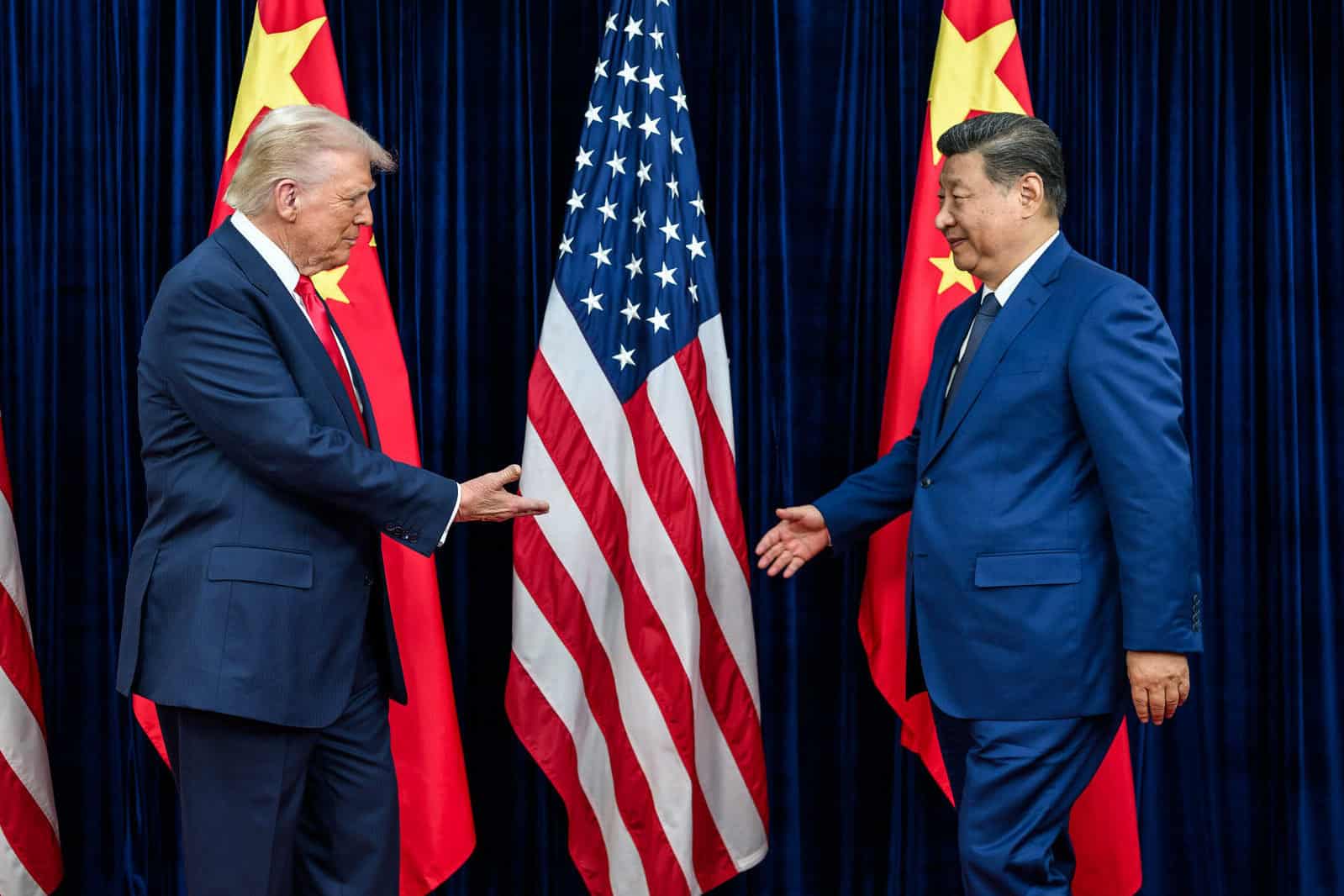
As Trump heads to Beijing, what are you expecting? And how do you assess his Taiwan policy?
I think he’s very likely to water down, delay or cancel the arms package [Note: the $11.1bn package announced in December is the largest ever for Taiwan]. He’s unlikely to change the substance of U.S. policy towards Taiwan. But Beijing will do everything in its power to frame the summit as Trump throwing Taiwan under the bus.
It’s too early to judge Trump’s Taiwan policy. He’s done some things that I don’t like very much, like denying Lai’s transit. [In July, the FT reported that Trump had refused a request from Taiwan’s President Lai to visit New York en route to Central America]. But his administration just offered this arms package, which I think could be a game changer if it goes through. I read the national security strategy and the other key strategic documents as laying the groundwork for the U.S. to make the argument that a quarantine of Taiwan threatens vital U.S. interests. This administration gets it on the quarantine, but its diplomatic approach involves being soft on China in public and very candid with them in private and it’s hard to judge the totality without knowing the private communications.
If I were Xi, I would not assume that moving in a big way on Taiwan under this administration is a freebie. I think it would come with a lot of risk.

Paddy Stephens is a freelance tech and energy journalist based in Taipei. He has written for The Economist, Financial Times, and Sinification newsletter, and is the author of The New Space Race Substack.