With the market reaching all-time highs and many growth stocks’ valuations looking stretched, some investors may be looking to bolster their portfolios with more substance. Companies with resilient cash flows and a substantial dividend yield can be a great way to anchor a portfolio.
And that brings me to Verizon (VZ 0.40%).
Sure, the telecom provider has been in a transition phase, trying to reclaim its leadership position in a highly competitive market. But after a period of sluggish growth that spooked some investors, recent financial results suggest the underlying business is finally turning a corner.
Even so, the stock has fallen about 8% over the past month — and shares look dirt cheap.
This pullback — paired with an attractive dividend and an impending earnings report — makes the stock an intriguing idea right now.
Here is a closer look at why I love Verizon stock at its current price.
Image source: Getty Images.
A turnaround gaining traction
A glance at Verizon’s fourth-quarter results shows a business that is finding its footing — and one with a lot of potential.
In the fourth quarter of 2025, Verizon reported total operating revenue of $36.4 billion, up nicely from $35.7 billion in the year-ago quarter. And, more importantly, the telecom provider reported more than 1 million total net additions across mobility and broadband. 616,000 of those were postpaid phone net additions, marking the best quarter for postpaid phone net additions since 2019. This shows that the company’s volume-first strategy under new CEO Dan Schulman is resonating with consumers.
“We are exiting 2025 with strong momentum, delivered by a team that is intensely focused on winning through healthy volumes and fiscally responsible growth,” Schulman explained in the company’s fourth-quarter earnings release.
The momentum also carried over to profitability. Verizon’s free cash flow, which represents operating cash flow less capital expenditures, came in at $20.1 billion for the full year of 2025 — up from $19.8 billion in 2024.
And looking ahead, the company expects this cash generation to accelerate. Management’s 2026 guidance calls for free cash flow of $21.5 billion or more, representing growth of at least 7%.
Further, Verizon isn’t just relying on its wireless business to drive growth. The company recently closed its acquisition of Frontier, expanding its fiber access to over 30 million homes and businesses.
This convergence strategy of offering both wireless and home broadband could help reduce churn and increase customer lifetime value over the long haul through cross-selling opportunities.
Even more, the Frontier acquisition represents a growth opportunity. With the acquisition creating a footprint of 30 million fiber homes and businesses for Verizon, management aims to reach 40 to 50 million fiber passings over time.
But with turnaround stories, execution is everything. That is why investors should pay close attention to Verizon’s upcoming first-quarter 2026 earnings call on April 27. The report will give the market a fresh look at whether the company’s subscriber momentum carried into the new year and how the Frontier integration is progressing.
An attractive valuation
But perhaps the greatest facet of the bull case for Verizon stock is simply valuation. Shares are cheap.
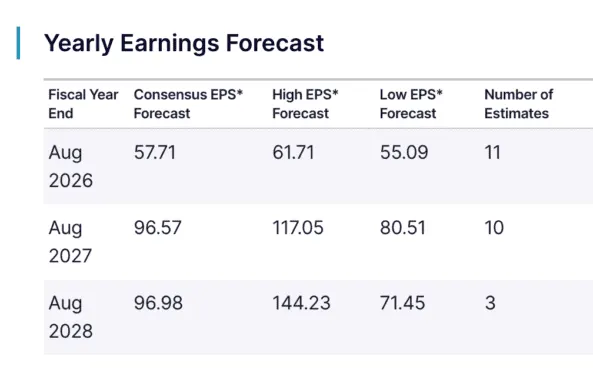
As of this writing, Verizon trades at a price-to-earnings ratio of just 11.5. A valuation like this arguably assumes the company will hardly grow earnings per share in line with inflation over the long haul.
But with management guiding for adjusted earnings per share to grow between 4% and 5% in 2026, and with the potential for earnings to inflect as the company pays down debt and reduces its share count through repurchases, the stock seems to be priced far too pessimistically.

Today’s Change
(-0.40%) $-0.18
Current Price
$46.59
Key Data Points
Market Cap
$196B
Day’s Range
$46.15 – $46.89
52wk Range
$38.39 – $51.68
Volume
466K
Avg Vol
31M
Gross Margin
45.79%
Dividend Yield
5.94%
The biggest draw for income investors, of course, is the dividend. As of this writing, Verizon stock currently boasts a dividend yield of about 6%.
A high yield can sometimes be a red flag, signaling that the payout is at risk. But Verizon’s dividend looks notably safe. The company’s annualized dividend costs represent only about half of its projected $21.5 billion in 2026 free cash flow, leaving plenty of wiggle room for the company to service its debt, invest in its network, repurchase shares, and still comfortably pay its shareholders.
Of course, the telecom industry remains fiercely competitive, and Verizon’s heavy debt load is a risk that investors should keep an eye on.
But at today’s price, the market appears to be ignoring the company’s accelerating free cash flow and recent subscriber wins.
For investors seeking a robust dividend yield with the potential for modest stock price appreciation over time, Verizon stock could be a great addition to a diversified portfolio.
I think shares are a buy today.