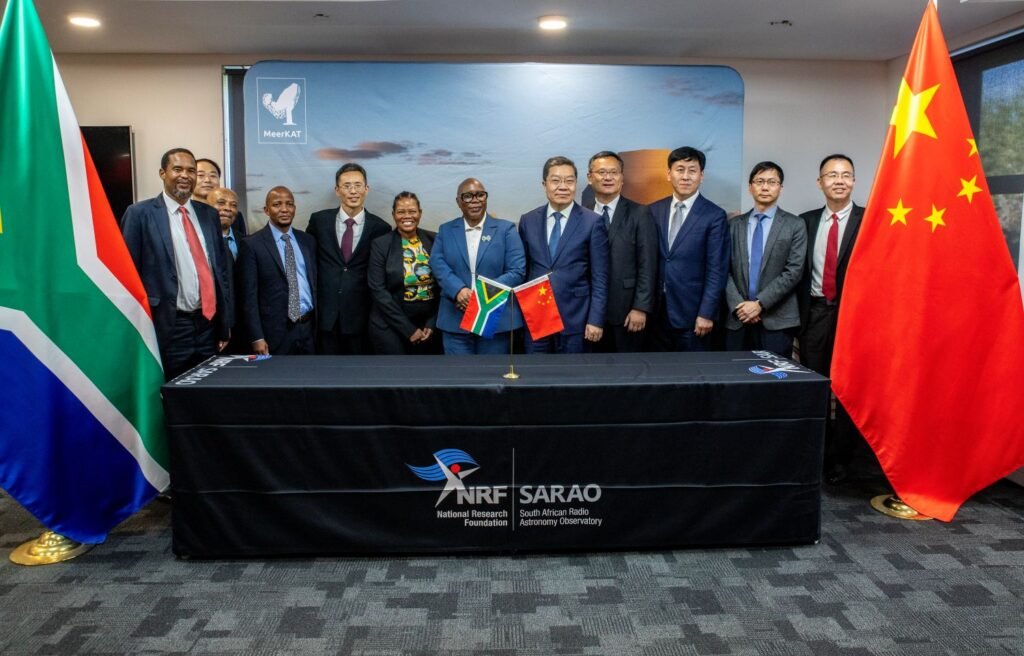
Chinese President Xi Jinping has told Taiwan opposition leader Cheng Li-wun that “people on both sides of the Taiwan Strait are Chinese” and that the future of cross-strait ties should be decided by “the Chinese people themselves”.
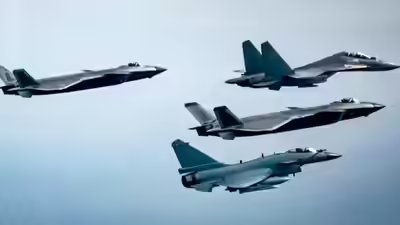
Cheng, the chairperson of Taiwan’s largest opposition party, the Kuomintang (KMT), is visiting China on what she has described as a peace mission aimed at easing tensions, as Beijing increases military pressure on the self-governed island, which it claims as its territory. Meeting at Beijing’s Great Hall of the People, Xi said the world was not fully at peace and that “peace is precious”.
In remarks carried by Taiwan television stations, he said, “Compatriots on both sides of the strait are all Chinese, people of one family who want peace, development, exchange, and co-operation.”
He added that the meeting between the two parties’ leaders was intended “to safeguard the peace and stability of our shared homeland” and “to promote the peaceful development of cross-strait relations”.
Meanwhile, China’s state news agency Xinhua quoted Xi as saying, “Mainland and Taiwan are both part of one China,” and that “Taiwan independence” was “the root cause of the disruption of peace across the Taiwan Strait”.
He added, “We will not condone it, nor will we tolerate it,” and called on both parties to oppose “Taiwan independence” separatism and “external interference”, while promoting the peaceful development of cross-strait relations.
Xinhua also quoted him as saying China welcomed Taiwanese agricultural and fishery products, as well as “high-quality goods”, reaching households across the mainland.
Cheng told Xi that mutually beneficial relations were what people on both sides wanted, and said exchanges should be reciprocal. She said she hoped that one day she could host Xi in Taiwan, and warned that the Taiwan Strait should not become a “chessboard for outside forces to intervene in.”
She also called for “institutionalised and sustainable mechanisms” for dialogue and co-operation.
The KMT once ruled mainland China before its government fled to Taiwan in 1949 after losing a civil war to Mao Zedong’s communists, who founded the People’s Republic of China. No peace treaty has been signed, and neither side formally recognises the other.
The U.S. remains Taiwan’s most important international backer and arms supplier despite having no formal diplomatic ties, while Beijing has repeatedly demanded Washington stop arming Taipei.
China has refused to talk to Taiwan President Lai Ching-te, calling him a “separatist”, while Lai’s administration has urged Cheng to press China to end its threats and to engage with Taiwan’s democratically elected government in Taipei.
Read More: