How China is reshaping Tajikistan through trade, debt, and investment

Editor’s note: Moses Becker is a special political commentator for News.Az. He holds a PhD in political science and specializes in interethnic and interreligious relations. The views expressed in this article are the author’s own and do not necessarily reflect the position of News.Az.

After the collapse of the USSR and the achievement of independence, the countries of Central Asia found themselves in an ideological and political vacuum. They had to undergo a difficult transition from a planned system and state ownership of property to a market economy, where everyone survives as best they can.

Naturally, this created confusion and a loss of direction. A significant part of the population became impoverished and was forced to migrate to other countries in search of work. The Russian Federation itself found itself in no less difficult a situation.

It is therefore not surprising that China moved into the newly formed states. Possessing significant resources, the PRC began to actively develop this new space.

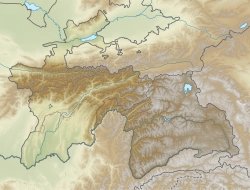
In addition to economic factors, a significant role in strengthening ties between Beijing and Dushanbe was played by the establishment of diplomatic relations in 1992, as well as the existence of a shared 414-km border. This border also contained the seeds of future disputes due to its unresolved status. On August 13, 1999, the “Agreement on the Tajik–Chinese State Border” was signed between Dushanbe and Beijing, under which Tajikistan retained full jurisdiction over a disputed section in the area of the Karzak Pass but ceded about 200 sq. km near the Markansu River to China.
News about -  How China is reshaping Tajikistan through trade, debt, and investment

Wikipedia

In May 2002, an additional agreement, “On Border Demarcation and Settlement of Territorial Disputes,” was signed, under which Tajikistan agreed to transfer 1,000 sq. km of the 28,000 sq. km of disputed territory in the Eastern Pamirs to China. On October 6, 2011, the transfer of 1,158 sq. km of Tajik territory under Chinese jurisdiction was completed. On May 6, 2013, according to several international media reports, Chinese troops allegedly entered the Murghab district of the Gorno-Badakhshan region. No official denials of this information were issued.

Ultimately, in any dispute, the stronger side prevails — namely, the one with a more developed economy and a stronger military. It is enough to note that Tajikistan’s GDP in 2025 amounted to only $19 billion, while China’s exceeded $20 trillion. A significant portion of Tajik exports consists of ore concentrates and metals.

Trade turnover between China and Tajikistan in 2013 amounted to $682.1 million, while Tajik exports accounted for only $86.3 million. These exports mainly consisted of raw materials, while China supplied furniture, plastic products, polymers, technical equipment, and vehicles.

China provides Tajikistan with significant loans. For example, in 2012, Dushanbe’s debt to Beijing amounted to $878.5 million. As a result, most of the gold and silver extracted in Tajikistan is produced by the joint Chinese–Tajik enterprise Zarafshan. In 2009, the Zarnisor lead-zinc processing plant was launched, with 51% Chinese capital. In 2012, it produced more than 23,400 tons of lead concentrate and over 37,300 tons of zinc powder for Chinese industry.

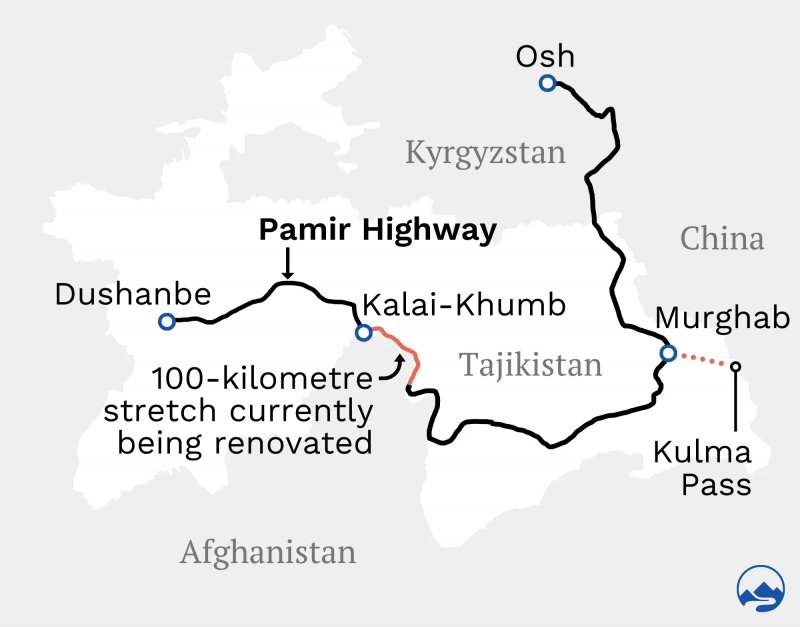
Currently, China is involved in a number of investment projects, including road reconstruction, bridge construction, and infrastructure development connecting different regions of Tajikistan. In addition, several major grant-funded projects are being implemented, including the reconstruction of the Kalai Khumb–Rushon highway worth $120 million, part of the international Dushanbe–Kulob–Kalai Khumb–Khorog–Kulma (border with China) route.
News about -  How China is reshaping Tajikistan through trade, debt, and investment

Wikipedia

In recent years, 10 joint projects have been completed, including the construction of the Dushanbe-2 thermal power plant, the Chuntai–Dangara–Sinsilu textile spinning enterprise, a metallurgical plant, the Huaxin Gayur–Sughd cement plant, the Vahdat–Yavan railway tunnel, and factories producing aluminum fluoride and cryolite, among others.

In order to create a favourable environment for Chinese capital, a model of “investment in exchange for access to resources” has been developed. China uses this approach effectively, ensuring access to cheap raw materials for its rapidly growing economy. With vast financial resources, skilled labour, and scientific capacity, China is gradually increasing its presence in Tajikistan’s resource sector through loans and investment projects.

According to expert Zulfikor Ismoiliyon, the danger lies in the possibility that the country may be unable to repay its debts, and that China could, in the near future, legally gain access to its deposits. However, experts close to the government do not see such a threat and describe Beijing as a “reliable partner.”

For example, in a 2017 interview with Radio Ozodi, the then-director of the Center for Strategic Studies, Khudoyberdi Kholiknazar, stated that “China always keeps its promises. All agreements it signs are implemented, contributing to our country’s development.”

This may well be true. Nevertheless, any debt dependency leads to a limitation of sovereignty. As mentioned earlier, there are also territorial disputes involving China and Tajikistan. Currently, Dushanbe owes Beijing more than $1.5 billion, which is difficult to repay. Since the territorial issue has not been fully resolved, the matter remains sensitive.

At one point, on January 11, 2011, the Tajik foreign minister told parliament that China initially claimed 28,500 sq. km of Tajik territory, “almost 20% of the country’s total area.” After the agreement, China received only about 3% of the disputed lands.

However, according to media reports in Central Asia since 2020, China still allegedly maintains claims to parts of Tajik territory. This is reportedly reflected in an article by Chinese journalist and historian Chu Yao Lu, who wrote that Tajikistan began returning China’s “ancestral lands,” allegedly lost under Western pressure at the end of the Qing dynasty (1644–1912). Chinese authorities did not condemn this publication, which some interpret as tacit approval.

Today, Tajikistan’s territory is of interest to Beijing not only for the above reasons. A key issue is the growing integration of Tajikistan’s economy into China’s, which, by leveraging the weaknesses of its partners, gradually increases its access to resources and deepens financial dependency. Tajikistan’s trade balance with China has consistently been negative. For example, in 2019 exports to China amounted to $55 million, while imports reached $605 million; in 2021, $159 million and $679 million respectively.

Most loans are tied loans, requiring the use of Chinese materials, equipment, machinery, technologies, and labour. Moreover, China invests primarily in projects whose output is linked to its own supply chains. In this way, Tajikistan’s resources effectively serve as input for the Chinese economy without equivalent returns.

Recently, China has been actively developing Tajik gold deposits, which are being used as a form of debt repayment. The principle of “investment in exchange for natural resources” is widely applied.

Practice shows that China does not engage in charitable lending, and therefore expectations of debt cancellation or even deferment are unrealistic. In the near future, increased claims by Chinese financial institutions over mineral resources, land, real estate, and other assets cannot be ruled out.

Tajikistan is repaying China not only through transferred territory but also through long-term land leases to Chinese farmers. For example, in 2014, the Chinese state corporation Xinjiang Production and Construction Corps leased 500 hectares of land in the Khatlon region for 50 years.

It is noteworthy that China is relocating some of its textile production to Tajikistan, as labour costs in China are significantly higher. Despite the risks, Dushanbe continues to pursue further rapprochement with Beijing. The country remains locked in a cycle of dependency from which it sees no clear exit.

(If you possess specialized knowledge and wish to contribute, please reach out to us at opinions@news.az).

News.Az 

Source link

Visited 1 times, 1 visit(s) today

Related Article

AI-processed satellite image of US military facilities at Diego Garcia. (Source: MizarVision)

China’s AI Satellites Are Helping Iran Hunt US Bases, Intelligence Warns — UNITED24 Media

Iranian forces are using AI-processed satellite imagery from a Chinese company to improve targeting of US military installations in the Middle East. We bring you stories from the ground. Your support keeps our team in the field. DONATE NOW According to ABC News on April 5, officials from the US Defense Intelligence Agency (DIA) assess that Iran’s Islamic Revolutionary Guard Corps (IRGC) is using

Taiwan opposition leader visits China for first time in a decade

Taiwan opposition leader visits China for first time in a decade

Taiwan opposition leader visits China for first time in a decade The leader of Taiwan’s main opposition party landed in China today, marking the first rare visit in a decade. Cheng Li-wun who took over as Kuomintang (KMT) chairperson last year, gladly accepted the invitation of President Xi Jinping’s and became the party’s first incumbent

A poster for

China’s Qingming Holiday Box Office Falls 19%

A poster for “The Super Mario Galaxy Movie” in Yichang, Hubei province, on April 1, 2026. Photo: VCG China’s Qingming holiday box office fell sharply from a year earlier despite more new releases, more screenings and cheaper tickets, underscoring the lack of a breakout hit to draw moviegoers back to theaters after the Lunar New

NASA's Artemis II moon rocket lifts off from the Kennedy Space Center's Launch Pad 39-B Wednesday, April 1, 2026, in Cape Canaveral, Fla. (AP Photo/Chris O'Meara)

Factbox-Key Facts on Relations as Taiwan Opposition Leader Visits China

April 7 (Reuters) – Taiwan opposition leader Cheng Li-wun arrived in China on Tuesday on what ⁠she ⁠says is a mission of peace, happening at a ⁠time Beijing has ramped up its military and political pressure against the democratically governed island. Cheng, chairwoman of the largest ​opposition party, the Kuomintang or KMT, will be in

Supporters of Cheng Li-wen gathered at Taipei's Songshan Airport ahead of her departure

what you need to know

Kuomintang (KMT) chairwoman Cheng Li-wun sees her visit as laying the foundation for “peace and stability” with Beijing, which claims Taiwan is part of its territory and threatens to use force to annex it. Taiwanese President Lai Ching-te’s government and his Democratic Progressive Party (DPP), which reject China’s claims of sovereignty and are detested by

logo

Vietnam elects Communist Party chief as president, echoing China’s power structure

{‘ap_id’: ‘9e2e66ff044145f3411617e422424b78’, ‘byline’: ‘Associated Press’, ‘ap_version’: 0, ‘apProducts’: [{‘product_id’: 42430, ‘station’: ‘wbbm780’, ‘section_front’: ‘news/world’, ‘name’: ‘AP Top News – International – Stories’}, {‘product_id’: 42430, ‘station’: ‘wben’, ‘section_front’: ‘news/world’, ‘name’: ‘AP Top News – International – Stories’}, {‘product_id’: 42430, ‘station’: ‘kcbsradio’, ‘section_front’: ‘news/world’, ‘name’: ‘AP Top News – International – Stories’}, {‘product_id’: 42430, ‘station’: ‘1010wins’, ‘section_front’:

NASA's Artemis II moon rocket lifts off from the Kennedy Space Center's Launch Pad 39-B Wednesday, April 1, 2026, in Cape Canaveral, Fla. (AP Photo/Chris O'Meara)

Taiwan Opposition Chief Leaves for China ‘Peace’ Mission, Minister Details Warship Deployments

TAIPEI, April 7 (Reuters) – Taiwan opposition leader Cheng Li-wun left ⁠for ⁠China on Tuesday for a “peace” mission and ⁠a potential meeting with President Xi Jinping, as a senior Taiwanese minister detailed the number of ​Chinese warships currently deployed around the island.  Cheng, chairwoman of the Kuomintang (KMT), Taiwan’s largest opposition party, is travelling

The 18th China International Battery Fair (CIBF 2026) will be held from May 13-15 at the Shenzhen World Exhibition & Convention Center, featuring over 3,100 exhibitors and a total exhibition area of 280,000 square meters

Connecting the Globe, Empowering Green Energy: China International Battery Fair 2026 Shapes the Next Era of Battery Technology

More than 3,100 exhibitors across battery, materials, equipment, and recycling segments, highlighting solid-state, sodium-ion, and carbon tracking TIANJIN, China, April 7, 2026 /PRNewswire/ — China’s battery sector closed out 2025 with steady shipment volumes and climbing prices, a clear sign of improving quality and efficiency across the sector. Full-year exports totaled 37.896 billion battery units,

The 18th China International Battery Fair (CIBF 2026) will be held from May 13-15 at the Shenzhen World Exhibition & Convention Center, featuring over 3,100 exhibitors and a total exhibition area of 280,000 square meters

Connecting the Globe, Empowering Green Energy: China International Battery Fair 2026 Shapes the Next Era of Battery Technology

More than 3,100 exhibitors across battery, materials, equipment, and recycling segments, highlighting solid-state, sodium-ion, and carbon tracking TIANJIN, China, April 7, 2026 /PRNewswire/ — China’s battery sector closed out 2025 with steady shipment volumes and climbing prices, a clear sign of improving quality and efficiency across the sector. Full-year exports totaled 37.896 billion battery units,

Kuomintang chairwoman Cheng Li-wun will become the party's first leader to visit China in a decade (I-Hwa Cheng)

Taiwan opposition leader makes rare visit to China

Kuomintang chairwoman Cheng Li-wun will become the party’s first leader to visit China in a decade (I-Hwa Cheng) · I-Hwa Cheng/AFP/AFP Taiwan’s main opposition leader will travel to China on Tuesday for a rare visit aimed at building cross-strait “peace”, but the goverment warns Beijing will seek to stop US arms sales to the democratic

Starvation as a Method of Warfare or How Russia Weaponizes Ukrainian Grain

Ukraine and China Sign Protocol to Open Wheat Flour Export Market — UNITED24 Media

Ukraine has officially opened its wheat flour exports to China following the signing of a bilateral protocol on sanitary and phytosanitary requirements. Serhii Tkachuk, head of the State Service of Ukraine on Food Safety and Consumer Protection, announced this in a Facebook post on April 6. We bring you stories from the ground. Your support

Xi Jinping CCP

China could target US homeland if Iran conflict escalates, expert warns

Gatestone Institute senior fellow Gordon Chang joins ‘Mornings with Maria’ to break down China’s ties to Russia and Iran amid Strait of Hormuz tensions and warn of rising threats to US national security. Unidentified, sophisticated drones flying over a handful of U.S. military bases could be a warning sign from China, Gordon Chang warned Monday,

China’s Xi calls for rapid growth of new energy system amid Middle East conflict

China’s Xi calls for rapid growth of new energy system amid Middle East conflict

Chinese president Xi Jinping said that China’s path as the first country to develop wind and solar power has proven to be forward-looking. (EPA Images pic) BEIJING: Chinese president Xi Jinping has called for accelerated planning and construction of a new energy system to safeguard the country’s energy security, weeks into the Iran war that

Honda warns of China threat, moves to accelerate innovation and cut development time

Honda warns of China threat, moves to accelerate innovation and cut development time

Honda is recalibrating its vehicle development strategy to be more competitive while warning of the growing threat posed by Chinese manufacturers and their production processes. First things first: Under the move, thousands of Honda engineers involved in development will become employees of a research and development (R&D) unit aimed at reviving the company’s spirit of

tsmc

US lawmakers aim to ban export of DUV chipmaking and etching tools to leading firms in China — bipartisan proposal would ban lithography equipment for Huawei, SMIC, and others

A bipartisan group of U.S. senators has proposed a new law that would impose an almost blanked ban on exports of advanced wafer fabrication equipment (WFE) to select entities in adversary nations, a rule that would complement the existing fab-based bans. If imposed, leading China-based chipmakers like CXMT, Hua Hong, SMIC, and YMTC would lose

Zacks Investment Research

Revvity Gains on Diagnostics Strength, Faces China Headwinds — TradingView News

Revvity, Inc. RVTY is well positioned for growth, thanks to its strong product portfolio. The company benefits from a strong diagnostics franchise driven by newborn screening, TB testing and specialty immunodiagnostics, complemented by the rapid expansion of its high-margin Signals Software business. However, near-term challenges persist, including China’s reimbursement reforms pressuring immunodiagnostics, weak academic/government demand

visualization

China’s ODI Strategy in the 15th Five-Year Plan

China’s 15th Five-Year Plan marks a significant shift in China’s ODI strategy, emphasising security, risk management, and the overseas expansion of high-tech sectors, particularly AI and digital technologies. The plan also reaffirms the Belt and Road Initiative and positions Hong Kong as a comprehensive services hub for Chinese companies going global. The Chinese government is

'We Have No Chance Against This'

‘We Have No Chance Against This’

Honda President Toshihiro Mibe recently visited an auto supplier factory in Shanghai. Upon returning to Japan, he told suppliers, ‘We must act quickly’ to speed up production. In 2025, Honda’s sales in China fell for the fifth consecutive year. It’s safe to say that Honda is in a bit of a pickle. It recently canceled two

0
Would love your thoughts, please comment.x
()
x