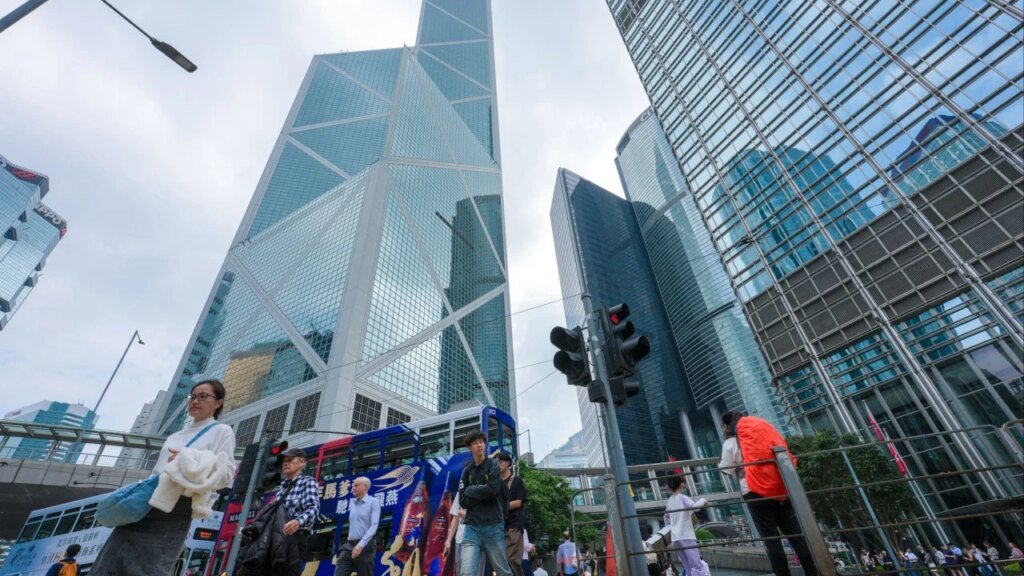
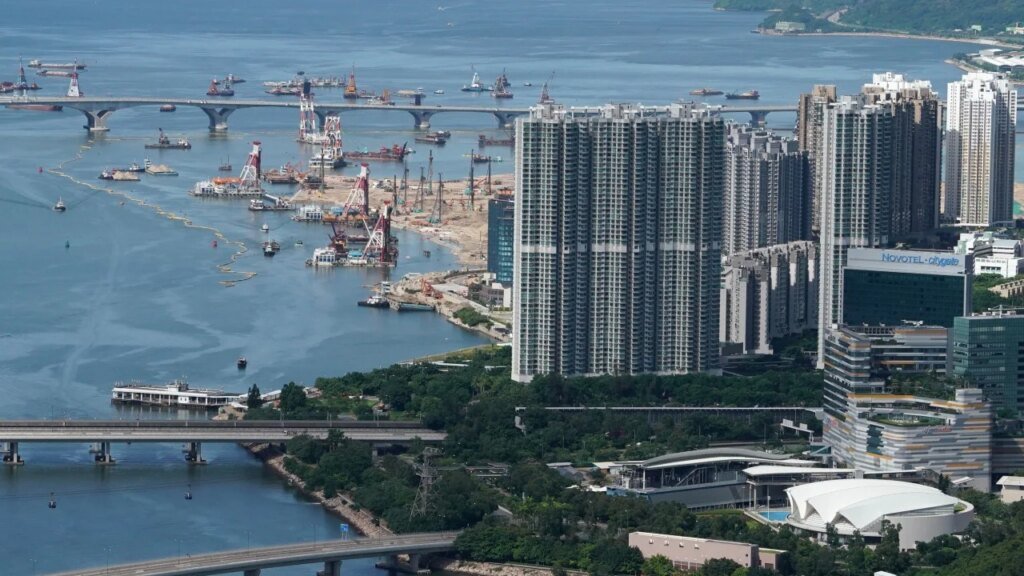
Hong Kong will host the world’s top law enforcement officials later this year at Interpol’s annual general assembly, amid warnings from lawyers, rights activists and former police officers that meeting in China could embolden authoritarian regimes and inhibit participation by reporters and NGOs.
“It’s a really terrible idea,” said Ben Keith, a barrister at 5 St. Andrew’s Hill Chambers in London who specializes in tracking a key aspect of Interpol’s work, Red Notices. These are a global alert system used by Interpol member states to locate and detain alleged fugitives from justice. Critics say that the system is vital, but is also abused by governments to target political or religious dissidents, and others.
With the China venue, “You’ve got one of the most repressive regimes and one of the world’s worst abusers of Red Notices holding the general assembly,” said Keith.
Police officers from 196 member states will converge on Hong Kong from November 17-20, for the Lyon, France-based organization’s 94th General Assembly. Interpol has met in China before, most recently in 2017, in Beijing.
The Hong Kong meeting comes amid growing efforts by China to expand the work of its Ministry of Public Security around the world as part of its Global Security Initiative, which Beijing envisages as a new international security order. The Ministry of Public Security is a police service, but also a domestic and foreign intelligence agency that tracks dissidents at home and abroad. Newsweek reported this week on growing Chinese policing activities across the Pacific.

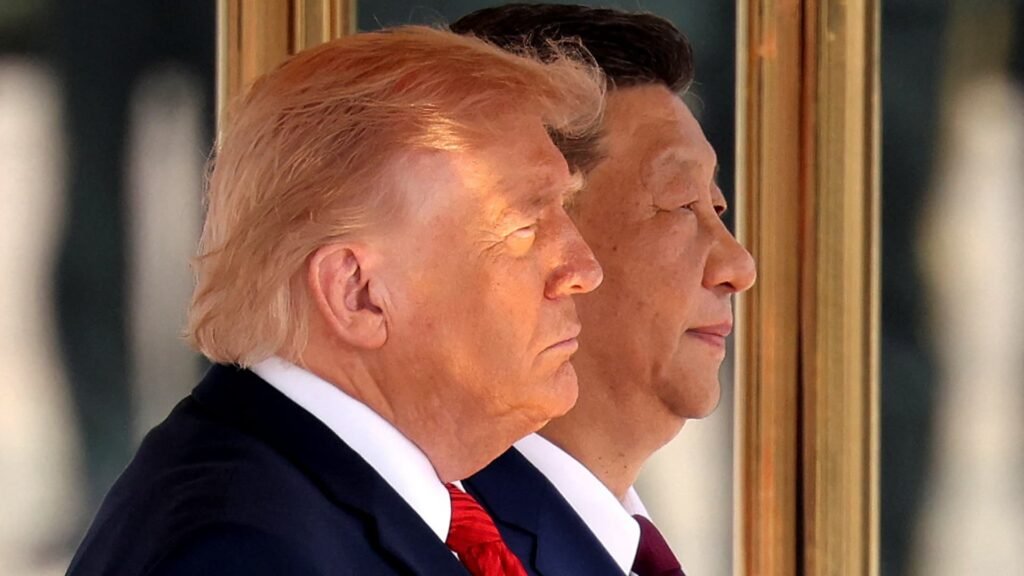
Newsweek Illustration/GETTY IMAGES
Holding the meeting in Hong Kong was also risky for reporters and NGOs, Keith said.
The Hong Kong authorities have prosecuted thousands of people, including many journalists and civil society participants, under a tough state security law that took effect after the crushing of massive pro-democracy demonstrations in the city in 2019. Most recently, 78-year-old newspaper publisher Jimmy Lai was sentenced to 20 years in prison for “collusion with foreign forces.”
More than 10,200 people were arrested and nearly 2,400 were prosecuted in connection with the protests under the National Security Law that took effect in 2020, according to police figures cited by Reuters. The law had a conviction rate of 80 percent, Reuters said.
A planned update to the law announced in March will criminalize refusing to give police the passwords to personal electronic devices or not decrypting communications for them, prompting a security alert for U.S. citizens by the State Department.
Media and other non-law enforcement persons are permitted to attend the general assembly’s opening and closing events, Interpol told Newsweek.
For NGO members or reporters, “the fact that you can’t go to a meeting of Interpol because you might be arrested and detained is mad,” said Keith.
In a statement to Newsweek, Hong Kong’s Security Bureau said that the event “will demonstrate the determination of our country and Hong Kong to collaborate with law enforcement agencies around the world in combating crimes.”
“Through the GA [General Assembly] and its related events, participants can experience firsthand the culture, innovation and hospitality of our country; security, inclusivity and prosperity of Hong Kong; achievements of ‘one country, two systems’; and professionalism of the Hong Kong Police Force,” the Security Bureau said in an email.
“[A]ppropriate arrangements will be made for INTERPOL, its officials, representatives of member countries, and other persons in accordance with international and local laws. Media outlets overseas will also be invited to provide coverage for the GA in order to publicise the achievements of the GA in police cooperation to a global audience,” it said.
In January, Hong Kong’s Commissioner of Police, Joe Chow Yat-ming, said that the event was an opportunity to “showcase positive stories about China, Hong Kong, and the HKPF.”
A Rising Number of Red Notices
China has sought to expand its influence over Interpol and allegedly is among the top five abusers of its global “wanted” alert system of Red Notices and Diffusions, alongside Russia, lawyers told Newsweek.
Interpol does not release figures for which country requests how many alerts each year but says that the volume of Red Notices is continually rising and that hundreds are rejected by the organization annually on the grounds that they violate human rights, or are unserious.
In 2024, Interpol published 15,548 Red Notices and Diffusions—a 27 percent increase over 2023. A total of 2,462 alerts were rejected. Of these, 305 were rejected because they violated Interpol’s Constitution which requires respecting the United Nation’s Universal Declaration of Human Rights and refusing requests that are of a political, military, religious or racial character, Interpol said. The rest did not meet the criteria of being “serious ordinary law crimes.”
In 2025 the total number of rejections had risen to 2,550, though it was unclear how many alerts were issued. Of the rejected ones, 558 were over human rights concerns, sharply up. Under growing pressure to react to abuse of the system, Interpol has strengthened its own monitoring of requests.
Because Interpol does not issue country breakdowns, “We don’t know how many notices are requested by China or how many are refused,” said Charlie Magri, a Marseille, France-based lawyer and a former Interpol legal officer who once reviewed Red Notices for the organization and now helps people who are targeted by the alerts. “But there is no way they are not in the top five,” he said.
Magri said that he currently had about 10 Chinese clients who were fighting Red Notices, mostly asylum-seekers based in the U.S.
“We know they are active because I have a lot of clients from China,” Magri said. “Right now, I have the feeling there are more and more clients from China.”

A Disappeared Chinese Interpol Leader
China’s role in Interpol drew global attention in 2018, when the Chinese former president of the organization, Meng Hongwei, vanished from view to resurface in China where he was sentenced to a lengthy prison term for corruption.
“The PRC would definitely like to exercise more influence over Interpol, and using the Hong Kong Police is a good way to do so,” said a former police officer in Asia who was granted anonymity to speak because of political and security risks.
China sought to pair the organization’s notice system with its own methods of hunting down targets for prosecution, known as Foxhunt and Skynet, the person said.
“Interpol notices legitimize the pursuit of anyone, including corrupt officials and dissidents. Control of Interpol notices is of great value to the PRC authorities as part of their Operation Foxhunt and Skynet,” the person said.
“They can be used to locate individuals, pressure local authorities into stripping them of residence status, and allow for more effective surveillance, intimidation and harassment,” said Laura Harth of Safeguard Defenders, a Spain-based rights organization that monitors extralegal practices by the Chinese state in returning people whom the authorities accuse of crimes.
Interpol told Newsweek: “Every year, thousands of the world’s most serious criminals are arrested thanks to Interpol’s systems, children are saved from sexual exploitation, and terrorists, cybercriminals and human traffickers are brought to justice.”
“Interpol knows Red Notices are powerful tools for law enforcement cooperation and is fully aware of their potential impact on the individuals concerned, which is why Interpol has a number of systems in place to avoid misuse of our systems,” a spokesperson said via email.
“While these have been significantly strengthened, we continue to actively review our processes to ensure they are as robust as possible.”