XRP Holders Are Pulling XRP Off Exchanges at the Fastest Rate Since 2024: What’s Going On?
XRP exchange reserves dropped from 3.76 billion to roughly 1.66 billion since October 2025, a 57% decline driven by ETF custody, whale cold storage moves, and Korean exchange withdrawals.
Despite the outflows, the XRP price has fallen 64% over the same period because overhead selling from underwater holders and macro pressure has overpowered the supply tightening.
In 2024, similar reserve lows on Binance didn’t trigger a rally, but the breakout came months later after demand arrived, suggesting the current outflows are setting the stage but not yet triggering a move.
A recent study identified one single habit that doubled Americans’ retirement savings and moved retirement from dream, to reality. Read more here.
The XRP price has fallen 64% since July 2025, from $3.65 to $1.33, and during the same stretch, exchange reserves have dropped 57% as over 2 billion tokens left centralized exchanges. When that much supply leaves exchanges, prices usually go up because there are fewer tokens available to sell. But XRP (CRYPTO: XRP) has kept falling through it all.
Whales, ETF custodians, and Korean exchange users are all pulling XRP off exchanges at the same time, and the pace has been the fastest since the outflows that preceded XRP’s 560% rally in late 2024. With the exchange outflows accelerating, why isn’t the supply squeeze working to move the price the way it’s supposed to?
Most Americans drastically underestimate how much they need to retire and overestimate how prepared they are. But data shows that people with one habit have more than double the savings of those who don’t.
At their peak in October 2025, centralized exchanges held roughly 3.76 billion XRP according to Glassnode data. By early 2026, that number had dropped to around 1.66 billion—more than 2 billion tokens pulled off exchanges in under five months. The decline picked up speed after the XRP ETF launched in November 2025, and by January the pace was unlike anything the market had seen since late 2024 when similar outflows preceded XRP’s run from $0.50 to $3.65.
The first five days of January alone saw roughly 800 million XRP leave exchanges, and on March 10 a single-day outflow of $738 million worth of XRP moved into cold storage—one of the largest withdrawal events of 2026. Retail traders don’t move such volume off exchanges for no reason. Cold storage transfers of that size typically come from institutions or large holders repositioning for the long term.
What makes the current outflows stand out compared to 2024 is that they’re happening while the XRP price is falling. In mid-2024, exchange reserves hit similar lows on Binance around 2.6 billion XRP, but that was during a period where XRP was trading sideways at $0.50 and nobody was paying attention. Right now, reserves are even lower and the outflows are faster, but the XRP price has been dropping the entire time. This raises the obvious question of who exactly is accumulating this aggressively into a 64% drawdown?
XRP ETFs have been the biggest single driver of the outflows. Since launch, spot XRP ETFs have absorbed roughly 770 million tokens into custodial wallets backed by over $1.3 billion in cumulative inflows. When an ETF buys XRP, those tokens move off exchanges and into regulated custody at firms like Coinbase, where they sit until investors redeem their shares. That supply is effectively removed from the tradeable market for as long as the ETF holds it.
Large whale wallets have also been moving aggressively. In early March, wallets holding between 100 million and 1 billion XRP added roughly 1.3 billion tokens in a 48-hour window according to Santiment data. And the massive single-day cold storage move on March 10 came from this same group. Korean exchanges have also seen sharp withdrawals. Upbit lost around 40 million XRP and Bithumb around 20 million in the first week of January, echoing the same pattern that played out before XRP’s 560% rally in November 2024.
The picture isn’t entirely one-directional, though. Since January, approximately 3.8 billion XRP has flowed into Binance from whale wallets, with the pace picking up through February—including $652 million in a single week in late February. Despite those massive deposits, Binance’s overall XRP reserves have barely moved, which means the market has been absorbing the inflows almost as fast as they arrive.
So while the net direction is clearly toward outflows across the broader exchange ecosystem, the largest exchange in the world has been seeing heavy two-way traffic from whales who are both depositing and withdrawing.
Summit Art Creations / Shutterstock.com ·Summit Art Creations / Shutterstock.com
On paper, a 57% drop in exchange reserves should be one of the strongest bullish signals in crypto. Fewer tokens on exchanges means thinner order books, less sell-side liquidity, and sharper price reactions when demand picks up. But the XRP price has dropped 64% over the same period that reserves contracted, which means the selling pressure from other sources. The bearish pressure is mostly from underwater holders breaking even, macro-driven risk-off flows, and whale profit-taking.
Binance reserves hit similar lows around 2.6 billion XRP in July 2024, and the price sat at roughly $0.50 for months afterward without any breakout. The rally that eventually took XRP from $0.50 to $3.65 didn’t start until November 2024, and by that point exchange reserves had actually climbed back above previous levels. The tightest supply didn’t trigger the rally—the rally came later when demand finally arrived, driven by the SEC settlement and ETF launches.
Right now, about 60% of XRP’s circulating supply is held at a cost basis above the current price, with the average sitting around $1.44. Every time XRP pushes toward that level, holders who have been waiting weeks or months to break even sell to get out. That overhead supply is doing more to suppress the XRP price than the exchange outflows are doing to support it.
The supply squeeze is building the conditions for a sharp move when the macro conditions do eventually turn, but until that happens, the thinning exchange supply on its own isn’t enough to push the XRP price higher.
The exchange outflows are happening at a pace that hasn’t been seen since the buildup to XRP’s last major rally in late 2024. But low exchange reserves alone have never been enough to drive XRP higher—the 2024 move proved that. The outflows are setting the stage by thinning the available supply, so when demand eventually arrives, the move will be sharper than it would be if exchanges were still sitting on 3.7 billion tokens.
For the supply squeeze to actually translate into a higher XRP price, the macro pressure has to ease first. Oil needs to come down, the Fed needs to shift its tone, and Bitcoin needs to break out of its range before altcoin capital starts flowing again. If those things happen while exchange reserves are this low, the recovery could be fast and explosive.
Most Americans drastically underestimate how much they need to retire and overestimate how prepared they are. But data shows that people with one habit have more than double the savings of those who don’t.
And no, it’s got nothing to do with increasing your income, savings, clipping coupons, or even cutting back on your lifestyle. It’s much more straightforward (and powerful) than any of that. Frankly, it’s shocking more people don’t adopt the habit given how easy it is.
Trump also told reporters that Russia has been “fine” with regards to Ukraine. US President Donald Trump on Monday said he thought someone other than Ukrainian President Volodymyr Zelenskiy should negotiate on Kyiv’s behalf as it seeks to end the war with Russia. “Maybe it’s time for Zelenskiy to get somebody else to negotiate,” said
US Defense Secretary Pete Hegseth last met Israeli PM Benjamin Netanyahu in Washington in July. US Defense Secretary Pete Hegseth met with Israeli Prime Minister Benjamin Netanyahu during an unannounced visit to Israel on Monday, Axios reported, citing two sources with knowledge. The Pentagon and Israel’s embassy in Washington did not immediately respond to requests
Saudi Arabia says it has executed 2 Bangladeshi nationals over “indecent acts” inside a mosque in Mecca. Bangladesh said that it hadn’t been informed of the executions beforehand. Meanwhile, Israeli police have arrested 10 suspects in connection with a wave of settler violence, including against a U.S. journalist and European diplomats in the occupied West
Credit markets are coming for CoreWeave. The price of a five-year bond issued by the “neocloud”, which rents out data-centre capacity for artificial-intelligence models, has fallen by 16% since July. The bond’s yield is now 15%—a level associated with companies in financial distress—up from 10% in July. The price of credit-default swaps offering insurance against
Islamabad, A Pakistan Army officer has been killed in an improvised explosive device blast during a security operation in the country’s Balochistan province, authorities said on Monday. Pak army officer killed in IED blast Security forces conducted a series of operations in the Shadi Kaur area in Gwadar and Jattakabad in Kalat district on Sunday
US President Donald Trump on Sunday defended his decision to waive some sanctions against Russia and again accused Ukrainian President Volodymyr Zelensky of not wanting to end the war. Trump and Zelensky have clashed over the US President’s decision to block new sanctions against Russia and strike a diesel supply deal with Moscow. (AFP/Bloomberg/AP) His
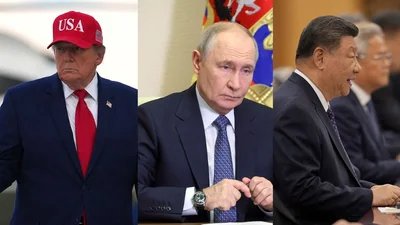
Russian President Vladimir Putin has proposed a meeting with US President Donald Trump and Chinese President Xi Jinping next month to discuss the Ukraine war, seeking a settlement favorable to Moscow as ties between Washington and the Kremlin show signs of warming, The Wall Street Journal reported. Putin proposes meeting with Trump and Xi to
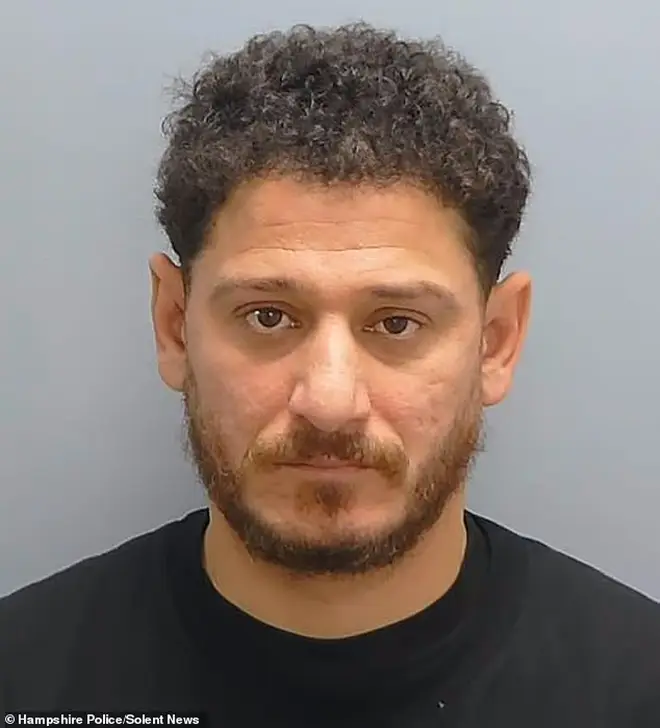
Mohammed Yaseen was pictured visiting a Co-op store near his bail hostel despite his terrorist past An Islamic terrorist who belonged to Al-Qaeda and later Isis has been spotted shopping at King Charles’ local Co-op. Mohammed Yaseen was free to walk the streets near Windsor Castle after he was allowed to stay in Britain on
CAIRO (AP) — Egypt’s top security body said Sunday it has agreed to support close ally Saudi Arabia in the major escalation of fighting between the kingdom and Iranian-backed Houthi rebels in Yemen, which has marked the latest front in the Iran war. Saudi Arabia has been pressing allies for military assistance. The Houthis have
US President Donald Trump on Sunday blamed “immigration of people” for the widespread unrest in France as violent protests broke out in Paris, Nice, Marseille and other cities over rising inflation. “Close your Borders and take control, before it is too late,” the US President said on Truth Social. (File Photo/Reuter) The US president’s comment
A spectacular swimming pool stretching across the deck on an 80-metre luxury vessel, complete with waterslides at one end, has emerged as a striking symbol of the privileged lifestyle enjoyed by North Korea’s elite. Kim Jong Un oversees the missile test on TV, accompanied by his daughter, Ju Ae, (AP/PTI) According to the BBC, satellite
These days, it’s easy to succumb to hopelessness. Whether you’re thinking about the climate crisis, the prospect of AI apocalypse, war or political turmoil, the list of challenges facing humanity can seem insurmountable. It certainly feels unprecedented, and much of it may be. The sense of impending doom, on the other hand, is nothing new.
18 Oct 2026, 10:10Updated: 3h ago The former convicted terrorist previously entered the UK with a false name. 18 Oct 2026, 10:10 | Updated: 3h ago Enjoy your favourite LBC shows with ad-free Catch Up, weekly competition entries and an exclusive newsletter. Subscribe to LBC Catch Up Plus from £4.99 a month Mohammed Yaseen. Picture:
Hundreds of demonstrators gathered outside Colombia’s National Museum on Saturday to protest an order by the country’s new right-wing president to remove works related to feminism, the LGBTQ community, the country’s peace process and other topics. Protesters accuse Colombia govt of erasing history at National Museum Dozens of pieces were taken down from the walls
Ukrainian Foreign Minister Andrii Sybiha said on Saturday that Russian occupying forces were turning the Ukrainian town of Oleshky into a “death trap” gripped by starvation, and urged international organisations to help evacuate its residents. The Kremlin acknowledged in September that Oleshky had critical problems with food and medical supplies. (34th Separate Marine Brigade “Borysfen”/Handout
The historic Town Hall in Limoges collapsed after a massive fire engulfed the historic building amid a wave of protests in Paris and other French cities on Saturday, as huge crowds agitated against rising living costs. Witnesses said a group of masked protesters first set a police car on fire outside the town hall before
Former White House Press Secretary Katie Zacharia was grilled by Fox News host Sean Hannity on Thursday during his primetime show when he asked her questions about her legal credentials after scrutiny arose regarding her classification of herself as an attorney. Zacharia struggled to answer the questions and defend herself. “You took the bar exam
Ukrainian President Volodymyr Zelensky on Saturday blasted the “unfortunate” decision to hold back new sanctions on Russia after the country released still more devastating attacks on his country’s energy infrastructure. He posted on X about the “unrelenting pace” of Moscow’s attacks, just hours after President Trump issued a surprise order from Mar-a-Lago to pause sanctions
Oct 17 (Reuters) – Ukraine on Saturday rejected Russia’s claim to have captured more than 1,800 square km (695 square miles) of territory and nearly 100 settlements, including the eastern town of Dobropillia, since September 1. On Friday, the chief of Russia’s General Staff, Valery Gerasimov, told President Vladimir Putin that Russian forces had captured 92
KYIV, Ukraine (AP) — Ukrainian President Volodymyr Zelenskyy urged supporters Saturday to speak out in defense of new U.S. sanctions against Russia, hours after President Donald Trump signed an executive order pausing a sweeping package of restrictions targeting the Russian economy. The White House decision has further raised fears that Ukraine could be left exposed