- Expectations of peace in the Middle East are leading to a sell-off in the US dollar.
- Gold is the main beneficiary of the conflict’s resolution.
And the last shall be first. EURUSD bulls have launched a counterattack following Donald Trump’s announcement that the conflict in the Middle East would be resolved within 2–3 weeks. The US President called on the Gulf states to take back their oil, forcibly opening the Strait of Hormuz.
The White House’s willingness to withdraw from the region fits well with the TACO strategy — Trump Always Changes His Mind — which investors have adopted since April 2025, when tough initial tariffs were followed by reductions and delays, triggering a rally in stock indices and weakening the dollar.
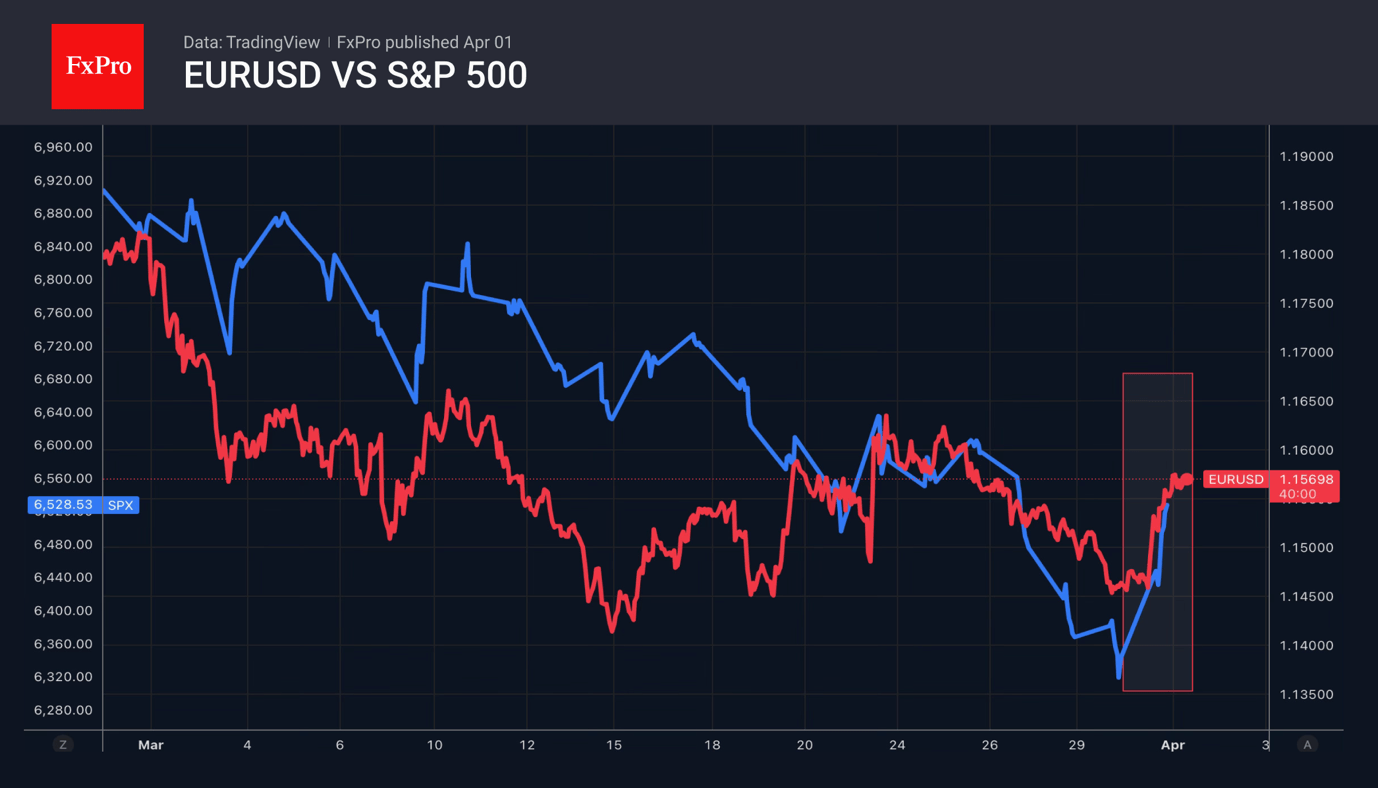
History is repeating itself, so a rally of more than 1.3% in EURUSD looks logical, as investors are betting on a fall in Brent and an improvement in global risk appetite. In this scenario, the global economy will suffer less than if the conflict were to drag on, and signs of a slowdown in US GDP should soften the Fed’s stance in the coming months.
The outlook for Europe is also changing. In March, the eurozone CPI jumped from 1.9% to 2.5% due to food and energy prices, but hopes have risen in the last day that the acceleration in consumer prices may be temporary. Without a tightening of monetary policy, the currency bloc’s economy will manage to avoid a recession and begin to recover gradually, whilst falling oil and gas prices will improve expectations for the trade balance. This is good news for the euro.
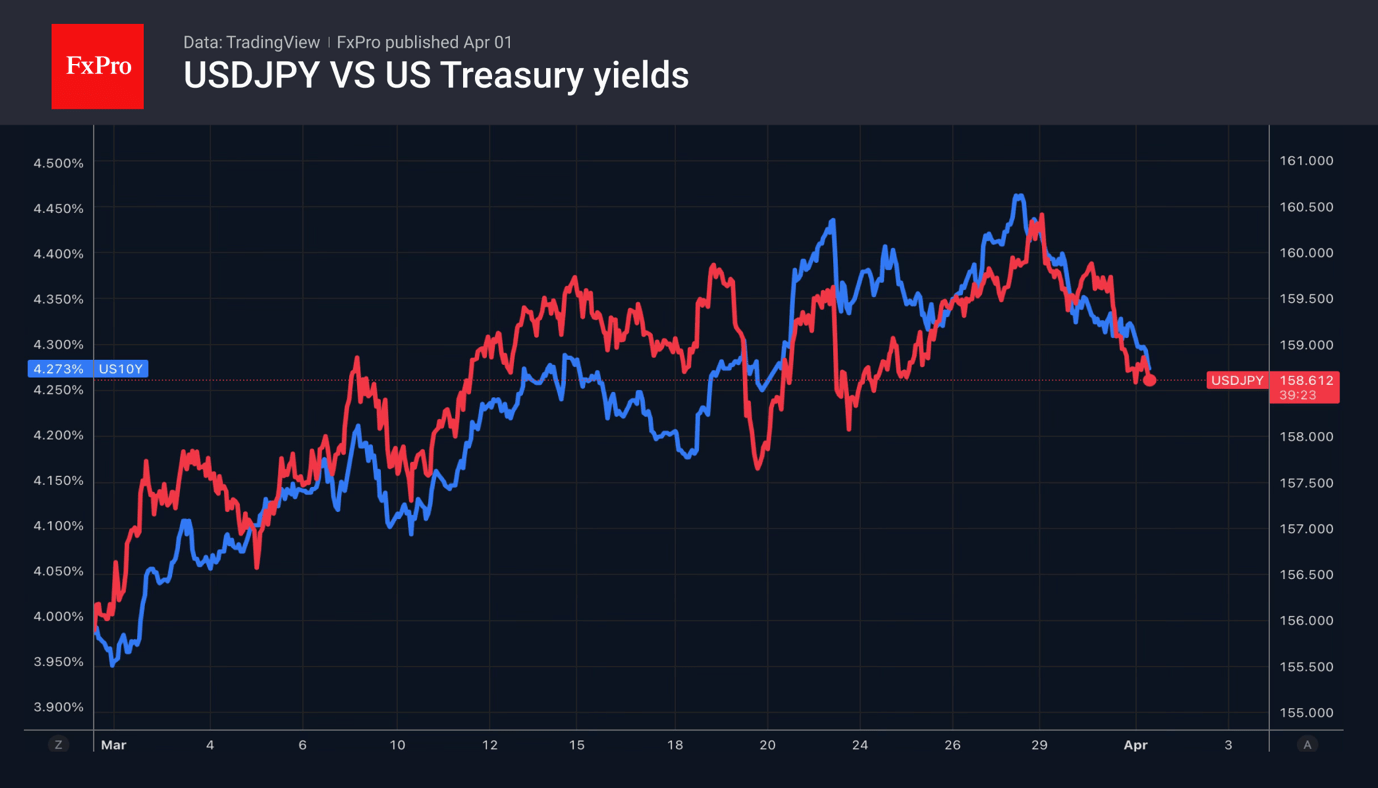
The fall in the dollar and US Treasury yields allowed USDJPY bears to mount a counterattack. The Japanese Ministry of Finance was ready to act on all fronts, including the currency and commodity markets. Verbal interventions have cooled speculators who had built up net short positions on the yen to a two-month high.
Gold could be the main beneficiary of the imminent end to the armed conflict in the Middle East. The precious metal is poised to rise above $4,700 per ounce amid speculative reaction to Donald Trump’s comments. Previously, it was actively sold off by both central banks to secure the liquidity needed to support their economies and by investors to meet margin calls on shares and bonds.
Nevertheless, investors and traders should remain cautious, as the US administration has on more than one occasion played the role of the ‘good cop’ in falling markets and the ‘bad cop’ when markets are closed.