The rise of Chinese platform state

 S. Alex Yang

LONDON/LOS ANGELES – China’s just-concluded “Two Sessions” – the annual meetings of the National People’s Congress and the Chinese People’s Political Consultative Conference – delivered a clear message: technology will be the primary engine of the country’s economic future.

In its 15th Five-Year Plan, the government again highlighted the development of “new quality productive forces,” setting an ambitious goal of positioning China as a global leader in areas like AI, quantum technology, biotech, clean energy, drones, and 6G.

Angela Huyue Zhang

Making sense of China’s technological ambitions, however, requires moving beyond the common perception of its innovation system as driven entirely by top-down state planning. In many of its most dynamic sectors – from electric vehicles (EVs) and batteries to solar and AI – the leading firms are privately owned, with only limited state involvement. Market competition is often so intense, and margins are so thin, that the government has at times intervened to curb what it describes as “excessive competition.”

A more accurate way to describe China’s innovation system is as a state-orchestrated platform. Rather than replacing the market, the government structures it – setting strategic direction, creating experimentation zones, facilitating procurement, coordinating standards, and providing regulatory support. Firms then enter these markets and compete intensely, driving rapid improvement and large-scale deployment.

China’s approach resembles that of a platform company like Nvidia or Apple: the state builds the architecture within which firms compete while also governing interactions across the broader ecosystem. In this model, firm-level profitability is not the primary measure of success. Instead, value accrues at the system level through lower costs, integrated supply chains, faster learning cycles, and the adoption of new technologies, all of which strengthen national capabilities.

This dynamic is already evident in sectors where China has become globally dominant. In solar panels and EVs, fierce competition has often eroded profit margins while bolstering China’s international competitiveness. BYD illustrates the pattern, having recently overtaken Tesla as the world’s largest EV manufacturer despite a domestic price war that has put pressure on its profitability.

The solar industry offers another example. Many firms are struggling financially, yet China now controls more than 80 percent of the solar-panel supply chain, with intense domestic competition helping to consolidate production and strengthen the country’s global advantage.

AI now appears to be following a similar trajectory. Chinese AI companies, many of which have embraced open-source models, are under significant financial pressure. But open-sourcing also serves a strategic purpose by accelerating the diffusion of AI capabilities and narrowing the gap with leading U.S. labs.

At the same time, the Chinese government is shoring up the broader ecosystem. The National Data Bureau has issued guidelines to promote high-quality training datasets, while the Ministry of Industry and Information Technology is advancing a nationwide computing grid to connect and standardize architectures, thereby easing capacity constraints and mitigating the impact of chip shortages.

With physical AI – including autonomous vehicles, robots, and drones – moving from development to deployment, the next phase may prove even more consequential. Because these systems require extensive real-world interaction, data has emerged as the primary bottleneck. As one of us (Zhang) argues in a recent paper, China’s advantage lies in its ability to build a “data flywheel,” whereby deployment generates continuous data streams that, in turn, improve performance and reliability.

Government-backed pilot programs play a key role in this effort, accelerating adoption while facilitating data collection. In 2022, Baidu received China’s first permits for fully driverless commercial robotaxi services. Within three years, Chinese robotaxi firms expanded to more than 20 cities across the country, as well as Middle Eastern and European markets.

Standard-setting has also become an important tool for reducing costs and enabling data interoperability. To coordinate the complex supply chains required for humanoid robots, Chinese authorities have brought together more than 120 companies, academic institutions, and industry groups to develop common standards.

Just as companies like Meta and Alphabet rely on proprietary data as a competitive moat, China is increasingly treating data generated by physical AI as a strategic national asset. New regulations on cross-border transfers of automotive data, finalized earlier this year, impose stricter controls, making it harder for foreign firms to use Chinese data for model training. These rules are already having tangible effects, as Tesla’s rollout of its advanced driver-assistance systems has been delayed despite its large market presence in China.

None of this is to suggest that China’s innovation model is inherently superior. The United States remains more open, more pluralistic, and often more effective at producing technological breakthroughs. China’s approach also carries serious risks, including misguided investments, chronic overcapacity, and widespread inefficiencies.

But the platform power of the Chinese state should not be underestimated. If the ultimate prize is artificial general intelligence – potentially delivering outsize rewards to whoever develops it first – the US may well retain the lead. If value is instead distributed through low-cost deployment, industrial integration, and ecosystem-wide learning, America could end up building the most advanced models and still lose the race to shape the industrial revolution that AI is set to unleash.

S. Alex Yang is professor of management science and operations at London Business School. Angela Huyue Zhang, professor of law at the University of Southern California, is the author of “High Wire: How China Regulates Big Tech and Governs Its Economy” (Oxford University Press, 2024) and “Chinese Antitrust Exceptionalism: How the Rise of China Challenges Global Regulation” (Oxford University Press, 2021).

Source link

Visited 1 times, 1 visit(s) today

Related Article

<p>2027 BMW iX3 (China)</p>

BMW Drops The Pop-Out Door Handles For China’s iX3

The long-wheelbase BMW iX3 has semi-enclosed door handles. BMW plans to sell the stretched iX3 outside China. Compared to the global version, it adds a camera mounted in the roof spoiler. When BMW teased the iX3 for China at the beginning of the year, it showed a prototype with the same flush door handles as

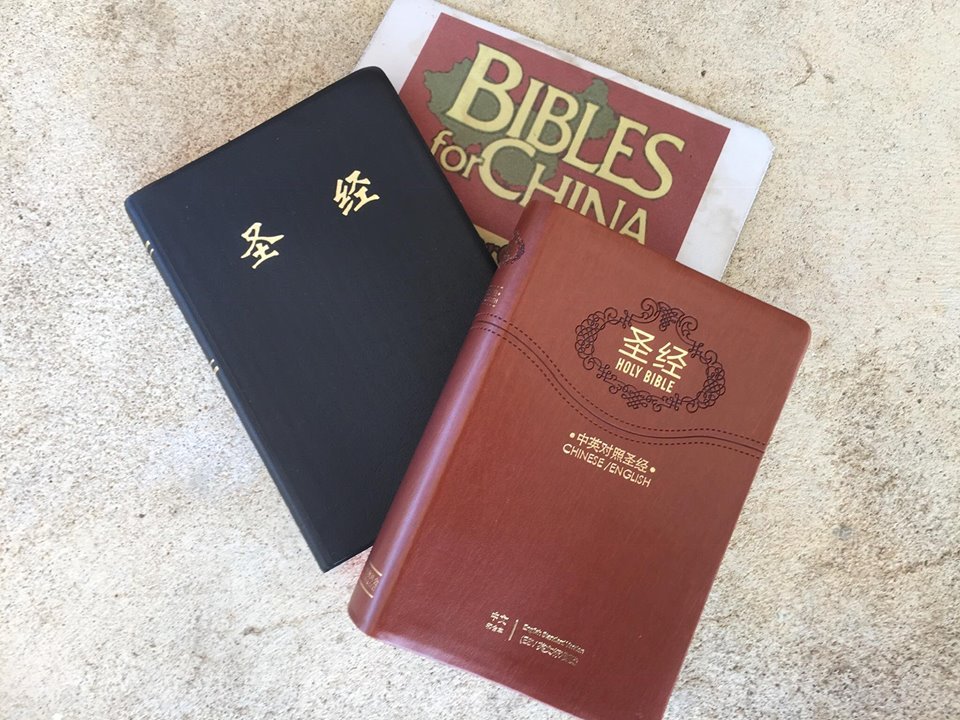
Are Bibles banned in China? Not quite

Are Bibles banned in China? Not quite

China (MNN)—Kurt Rovenstine, of Bibles for China, disagrees with recent claims that China is one of the countries leading a trend of banning the Bible, as reported in a recent article. “The way these articles are framed and the statements that they make, I think you have to be able to dig a little bit

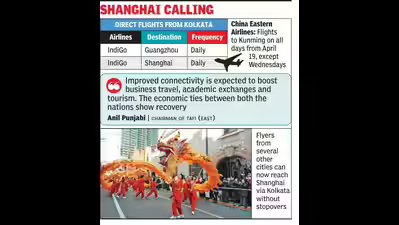
Second flight to China from Kol starts daily ops

Second flight to China from Kol starts daily ops | Kolkata News

Kolkata: After the direct air connectivity between Kolkata and China resumed, the second non-stop flight to the neighbouring country was launched. IndiGo started a daily flight to Shanghai from the city on Sunday. The services were resumed last Oct with a flight to Guangzhou. This was also launched by IndiGo.A flight to Kunming will also

Thousands Of Travellers Stranded Around China Today As Beijing, Chengdu, Shenzhen, Shanghai, Guangzhou, And More Cancel 462 And Delay 5413 Flights, Grounding China Southern, China Eastern, Air China, Shenzhen Airlines, And Others

Thousands Of Travellers Stranded Around China Today As Beijing, Chengdu, Shenzhen, Shanghai, Guangzhou, And More Cancel 462 And Delay 5413 Flights, Grounding China Southern, China Eastern, Air China, Shenzhen Airlines, And Others

Home » Latest Travel News » Thousands Of Travellers Stranded Around China Today As Beijing, Chengdu, Shenzhen, Shanghai, Guangzhou, And More Cancel 462 And Delay 5413 Flights, Grounding China Southern, China Eastern, Air China, Shenzhen Airlines, And Others Published on March 31, 2026 Image generated with Ai Thousands of passengers were grounded in China today

Thousands Of Passengers Trapped Around Asia Today As Thailand, Japan, China, Hong Kong, South Korea, And Malaysia Cancel 470 And Delay 6,712 Flights, Disrupting AirAsia, Japan Airlines, Cathay Pacific, China Southern, And Other Airlines In Shenzhen, Shanghai, Tokyo, Bangkok, And More

Thousands Of Passengers Trapped Around Asia Today As Thailand, Japan, China, Hong Kong, South Korea, And Malaysia Cancel 470 And Delay 6,712 Flights, Disrupting AirAsia, Japan Airlines, Cathay Pacific, China Southern, And Other Airlines In Shenzhen, Shanghai, Tokyo, Bangkok, And More

Home » Latest Travel News » Thousands Of Passengers Trapped Around Asia Today As Thailand, Japan, China, Hong Kong, South Korea, And Malaysia Cancel 470 And Delay 6,712 Flights, Disrupting AirAsia, Japan Airlines, Cathay Pacific, China Southern, And Other Airlines In Shenzhen, Shanghai, Tokyo, Bangkok, And More Published on March 31, 2026 Image generated with

Iran's Foreign Minister Abbas Araghchi

China keeps Iranian oil moving through Hormuz as war reshapes trade

In early March, a Chinese-owned oil tanker moved through the Strait of Hormuz. It was one of just three vessels to pass through the strait that day. Only one of them — carrying Iranian crude — is bound for China. Iran war live updates: For the latest on the Middle East conflict, read our blog.

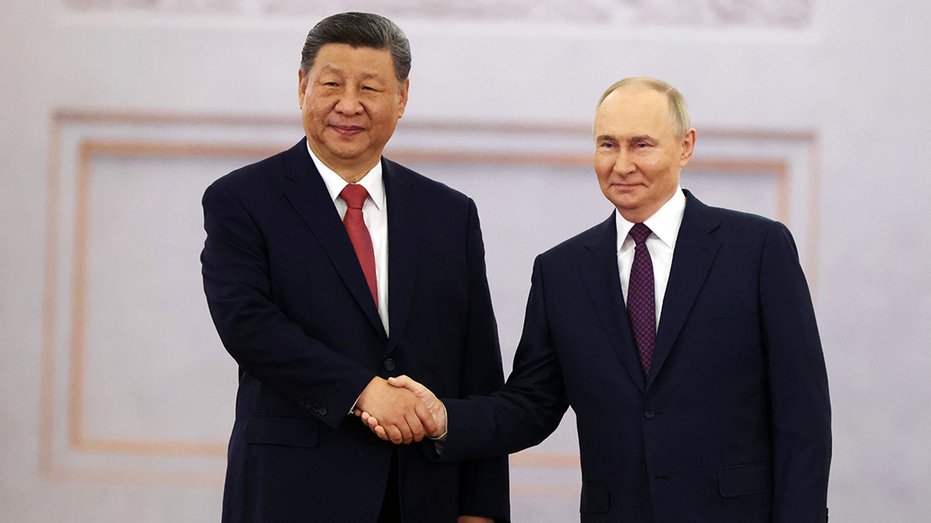
Xi Jinping and Vladimir Putin shaking hands

Analyst warns US could lose conflict if China’s Iran support goes unchecked

Gatestone Institute senior fellow Gordon Chang joins ‘Mornings with Maria’ to warn China’s support for Iran could escalate the conflict and raise risks of a broader global war ahead of President Donald Trump’s Beijing trip. The growing alignment between China, Russia, and Iran raises new concerns about the trajectory of the conflict in the Middle

Wondering where China’s cyber effort will go next? Just read the five-year plan

Wondering where China’s cyber effort will go next? Just read the five-year plan

Most cyber analysis begins with incidents. It should begin with intent. Adversaries sometimes declare strategic priorities, yet cyber incidents that align with them are not assessed accordingly. We should in fact be guarding against intrusions before they happen by taking note of foreign and industrial policies that indicate where they’re likely to concentrate. This methodology

China Sends Fuel to Struggling Southeast Asia Despite Export Ban

China Sends Fuel to Struggling Southeast Asia Despite Export Ban

Despite a ban on fuel exports from early this month, China has delivered cargoes of diesel and other fuels to Southeast Asia in recent days in a sign that Beijing seeks to alleviate the regional crisis and retain diplomatic leverage. Two weeks after the war in the Middle East began and after it became clear

A Mercedes Benz car showroom from the outside with large logo

German Firms Trapped Between US And China, Study Finds

Germany’s largest companies are deeply entangled with rival businesses in China and the US, and unable to escape either superpower, according to new research published today [30 March 2026] by the University of Sussex and King’s College London. While it is widely known that Germany is caught between the US and China, this new research

Toyota's China Problem Is Getting Harder To Ignore — TradingView News

Toyota Reports 2.3% Sales Drop as China Weakness Deepens — TradingView News

Toyota Motor Corp. TM is starting to show early signs of strain as February data points to softening demand in key markets, particularly China, where competition in electric vehicles continues to intensify. The company reported a 2.3% year-over-year decline in global sales to 806,905 units, with Toyota and Lexus brand sales in China falling 13.9%

Russia Sends Nuclear-Capable Tu-95 Bombers Toward Japan in Regional Power Play

China Reportedly Goes Submarine Hunting Near Okinawa, Japanese Fighters Scrambled — UNITED24 Media

Japan scrambled fighter jets after detecting a Chinese military aircraft operating over the East China Sea, with early assessments suggesting the platform may be a new or modified submarine-hunting variant. Japan’s Ministry of Defense reported on March 30 that an Air Self-Defense Force response was triggered after a Chinese patrol aircraft was spotted flying southwest of Okinawa on March 28. We bring you stories from the ground.

Toyota's China Problem Is Getting Harder To Ignore — TradingView News

Toyota’s China Problem Is Getting Harder To Ignore — TradingView News

Toyota Motor TM is starting to feel the heat, with February sales slipping 2.3% year over year to 806,905 units as pressure builds in China and demand softens at home. The biggest drag came from China, where Toyota and Lexus sales dropped 13.9%, while production fell 11.5%. The company partly blamed the shifting timing of

China Strategic Technology Group posts loss for year rmb463.4 million

USPACE Technology Group Ltd, formerly Hong Kong Aerospace Technology Group Ltd is an investment holding company mainly engaged in electronic manufacturing services (EMS) business. The Company operates its business through three segments. The EMS Business-Smart Home Device segment is principally engaged in the production of printed circuit board assemblies (PCBAs) and fully assembled electronic products,

China's expanding role in Central Asia: Economic dominance and geopolitical risks

China and Kyrgyzstan – stages of interaction

Editor’s note: Moses Becker is a special political commentator for News.Az. He holds a PhD in political science and specializes in interethnic and interreligious relations. The views expressed in this article are the author’s own and do not necessarily reflect the position of News.Az. As part of the former Soviet Union, the Kyrgyz SSR was

China launches Dongbi Index to challenge impact factor dominance

China launches Dongbi Index to challenge impact factor dominance

Image: Shutterstock.com/Ikkiae001 Chinese researchers have introduced a new methodology for evaluating medical and life science journals that moves beyond the traditional reliance on journal impact factors, in a development seen as part of wider efforts to strengthen the country’s “academic discourse power”. According to the South China Morning Post two new Dongbi Index journal lists

Pak offers to mediate between Iran and US after Gulf FMs meet, gets China’s support

Pak offers to mediate between Iran and US after Gulf FMs meet, gets China’s support

Pakistan said on Sunday (March 29, 2026) that it is ready to “host and facilitate meaningful talks” between the United States and Iran to bring an end to the month-long war that has destabilise the region. Outlining growing support for its peace efforts, including from the United Nations and China, Pakistan issued a statement after

Avatar of Adrian Leung

solid-state batteries may need 5–10 years to reach 1% market share

Ouyang Minggao said solid-state batteries may require 5 to 10 years to reach a 1% market share, adding a longer-term adoption estimate to his earlier comments on the technology’s rollout, according to China News Weekly. The estimate adds a market adoption timeline to earlier disclosures from the same event, which focused on vehicle-level deployment and

0
Would love your thoughts, please comment.x
()
x