What 5 Wall Street Analysts Predict for XRP by 2030
The most bullish 2030 XRP forecast is $1,000, which would require a $61 trillion market cap—larger than every stock market on the planet combined.
Only 16% of XRP ETF assets are tied to institutional filers despite $1.44 billion in total inflows, meaning the institutional wave that bulls are counting on hasn’t started yet.
The $4 to $10 XRP price range requires the least to go right among the bullish forecasts, needing a market cap between $244 billion and $610 billion—levels top-five crypto assets have already reached in past cycles.
XRP (CRYPTO: XRP) has cleared every hurdle its community spent years waiting for—and the XRP price has done nothing but fall. The SEC case ended, spot ETFs launched, and the token just got classified as a digital commodity alongside Bitcoin. Yet XRP sits at roughly $1.40, down over 40% since January.
Five analysts with Wall Street and institutional credentials have published 2030 price targets for XRP, and the spread between them is unlike anything you’ll find on any other major crypto. From under $1 all the way to $1,000, each forecast depends on a completely different view of whether Ripple’s wins will ever translate into real demand for the XRP token itself.
Which of those predictions are actually realistic, and which ones fall apart the moment you look at what XRP’s market cap would need to be? Let’s break it down.
XRP is trading around $1.40 with an $85 billion market cap and 61.34 billion tokens in circulation. The token hit $3.65 in July 2025 riding a broader crypto rally, then fell over 60% across the next eight months. It briefly ran to $2.40 in the first week of January 2026 before selling off again, and it’s been grinding between $1.30 and $1.50 since mid-February.
The SEC and Ripple settled their five-year legal battle in August 2025, with the court confirming that XRP sales on public exchanges are not securities transactions. On March 17, 2026, the SEC and CFTC went a step further and classified XRP as a digital commodity alongside Bitcoin. Spot XRP ETFs have been live since November 2025 and pulled in $1.44 billion in inflows—but 84% of that money is retail, and weekly flows dropped from $200 million at launch to under $2 million by early March.
Mastercard added Ripple to its crypto payments program, Goldman Sachs became the largest XRP ETF holder with $153 million in positions, and a $1 billion XRP treasury firm just filed for a Nasdaq listing. Ripple’s valuation also sits around $50 billion, yet the XRP price hasn’t held any of those gains. That’s why XRP price predictions for 2030 range from under $1 to over $1,000.
Geoffrey Kendrick, Standard Chartered’s global head of digital assets research, first laid out his XRP roadmap in April 2025—$5.50 by end of 2025, $8 by 2026, and $12.50 by 2028. In February 2026, he slashed the 2026 target by 65% from $8 to $2.80, marking the largest percentage cut across all the bank’s crypto forecasts. But he raised the longer-term numbers: $7 for 2027, $12.60 for 2028, $19.60 for 2029, and $28 for 2030.
The near-term cut came after what Kendrick called a “capitulation-prone” environment. Bitcoin dropped 28% in early 2026, XRP fell to $1.16—a 15-month low—and weekly ETF inflows that had been running at $200 million dried up almost entirely. Kendrick warned of more pain ahead but said the selloff made XRP’s long-term setup stronger. He sees stablecoin growth, tokenized real-world assets, and XRP overtaking Ethereum by market cap as the catalysts that carry the price through the decade.
At $28, XRP’s market cap would sit around $1.7 trillion with 61 billion tokens in circulation—larger than Ethereum’s current valuation and close to where Bitcoin traded at its 2025 peak. Kendrick’s target also lines up with the 161.8% Fibonacci extension from XRP’s 2020 lows, a level the XRP community has watched for years. Getting there means ETF inflows need to scale well past their current $1.44 billion, and trillions in annual settlement volume need to flow through the XRP Ledger—but neither of which is close to happening yet.
BAZA Production / Shutterstock.com ·BAZA Production / Shutterstock.com
Dom Kwok worked at Goldman Sachs before co-founding EasyA, a blockchain education platform. He first called for a $1,000 XRP price by 2030 during an interview at the New York Stock Exchange in mid-2025, when the token was trading near $3. He sees institutional capital rotating into XRP through ETFs, Ripple capturing a share of the $150 trillion annual cross-border payment market, and a network effect where rising prices pull in developers who build applications that drive more usage on the XRP Ledger.
Kwok has pointed to his former employer’s own position as early validation—Goldman Sachs is now the largest institutional XRP ETF holder. He argues that once hedge funds and asset managers lock in their crypto allocation rules under XRP’s new commodity classification, the token will absorb a wave of institutional capital that hasn’t arrived yet. His brother and EasyA co-founder Phil Kwok has made a similar case, saying that as more money flows in, it attracts more builders, which drives more adoption, and that loop is what makes the long-term case hard to price using traditional models.
The problem with $1,000 XRP is the market cap. At 61 billion tokens in circulation, that price puts XRP at roughly $61 trillion—larger than every stock market on the planet combined. Kwok has acknowledged the number looks extreme but argues that if XRP routes even a fraction of global payment volume, conventional market cap comparisons stop being the right way to value it. Most analysts disagree, and some have suggested $1,000 is more realistic on a 2040s timeline than by 2030.
Ryan Lee, chief analyst at Bitget Research, put his 2030 XRP price prediction at $4.20 to $10 or higher. His range depends on three things: how fast Ripple’s RLUSD stablecoin gains traction, whether RippleNet partnerships convert into actual XRP-denominated settlement volume, and whether Ripple goes public through an IPO.
Banks currently use Ripple’s network for messaging and tracking, but most of them don’t settle in XRP—they prefer RLUSD or fiat because stablecoins don’t carry price volatility. RLUSD crossed $1 billion in market cap within its first year, and if banks keep choosing it over XRP for actual transfers, Lee’s lower end around $4 to $5 is the more likely outcome.
Nick Ruck, director at LVRG Research, has backed the bullish side of that range, noting that XRP held up better than most altcoins during the 2026 selloff—a sign that longer-term holders aren’t selling.
At $10, XRP’s market cap would land around $610 billion—roughly where Ethereum peaked in 2025. Getting there needs ETF inflows to scale past $5 billion, the CLARITY Act to pass, and a broader crypto market recovery pushing Bitcoin back toward new highs. Compared to Kendrick’s $28 or Kwok’s $1,000, Lee’s ceiling is the target that requires the least to go right.
Summit Art Creations / Shutterstock.com ·Summit Art Creations / Shutterstock.com
Adam Spatacco, a former investment banking analyst who covers crypto for Nasdaq, sees XRP falling back to $0.50–$1.00 by 2030. He views XRP as a narrative-driven asset—banks can use Ripple’s network and still settle in fiat or stablecoins without ever touching the token.
Dominic Basulto, also writing for Nasdaq, uses a transaction velocity model that ties XRP’s price directly to how much of SWIFT’s annual cross-border volume flows through the XRP Ledger. At 1% capture, XRP lands around $4. At 14%, it reaches $20. He flags stablecoin competition and Ripple’s own RLUSD as forces that could pull volume away from XRP even within Ripple’s own ecosystem.
Analyst
2030 Target
Market Cap Required
Key Condition
Geoffrey Kendrick (Standard Chartered)
$28
$1.7T
Trillions in XRPL settlement volume, ETF inflows past $10B
Dom Kwok (Ex-Goldman Sachs)
$1,000
$61T
XRP captures significant share of $150T cross-border market
Ryan Lee (Bitget Research)
$4.20–$10
$256B–$610B
RLUSD adoption, Ripple IPO, CLARITY Act passes
Adam Spatacco (Nasdaq)
$0.50–$1.00
$30B–$61B
Banks keep using Ripple without XRP, stablecoins dominate settlement
Dominic Basulto (Nasdaq)
$4–$20
$244B–$1.2T
Depends on SWIFT market share capture: 1% = $4, 14% = $20
The $4 to $10 range sits at the center of where the evidence points right now. It requires a market cap between $244 billion and $610 billion—large, but within the range of what top-five crypto assets have reached in past cycles.
Anything above $10 needs XRP to prove it can generate sustained settlement demand at scale, not just speculative ETF flows. And anything below $2 assumes that every regulatory win and infrastructure buildout since 2025 produces zero lasting effect on XRP demand—a hard case to make at this point.
After looking at all five forecasts and what the market cap numbers require, here’s our own take on where XRP could realistically land by 2030.
Should the CLARITY Act pass and unlock full institutional access, and the April 2028 Bitcoin halving triggers the kind of altcoin cycle that followed the 2016 and 2020 halvings, XRP could ride both tailwinds into double digits. ETF inflows would need to scale past $5 billion, and ODL corridors would need to show real growth in settlement volume—not just pilot programs.
At $12 to $15, XRP’s market cap would sit between $730 billion and $915 billion, putting it in the range of where Bitcoin traded during its 2025 bull run. This lines up closest with Standard Chartered’s trajectory, though it stays below Kendrick’s $28 ceiling.
XRP at $5 to $8 looks more like a steady climb than a breakout. ETF inflows grow modestly, Ripple continues adding banking partners, and XRP benefits from a broader crypto market recovery without becoming a dominant settlement layer.
A 20% annual return from current levels would put XRP near $7 by late 2030, roughly in line with what Morningstar projects for the broader crypto market. This range doesn’t need everything to go right—it just needs the infrastructure Ripple has already built to keep pulling in demand over time.
If stablecoins fully replace XRP’s bridge currency role, ETF flows stay retail-dominated, and the CLARITY Act dies in the Senate, XRP could spend most of the decade stuck where it is now. Banks would keep using RippleNet without XRP, and the token would trade on sentiment rather than utility. A broader crypto winter triggered by prolonged high interest rates or geopolitical disruption could push XRP back toward $1.50—a level it already touched briefly in early 2026.
The biggest signal to watch isn’t Ripple’s next deal but what percentage of XRP ETF money comes from institutions. Right now, only about 16% of XRP ETF assets are tied to institutional filers—the rest is retail. Bitcoin’s spot ETFs flipped that ratio within their first year, and BTC went from $40,000 to $126,000 during that stretch. If XRP ETFs see a similar shift and institutional money starts flowing in consistently, the $5 to $15 range by 2030 is well within reach. If that ratio stays where it is, the bear case gets harder to dismiss.
The remaining batch of ETF approvals due by March 27, 2026 could be what starts that shift, followed by whatever happens with the CLARITY Act before midterm elections take over. Those two events will decide whether the infrastructure Ripple has built starts pulling in real institutional capital. Or whether XRP stays a retail-driven token attached to a company that can grow just fine without it.
You may think retirement is about picking the best stocks or ETFs and saving as much as possible, but you’d be wrong. After the release of a new retirement income report, wealthy Americans are rethinking their plans and realizing that even modest portfolios can be serious cash machines.
Many are even learning they can retire earlier than expected.
If you’re thinking about retiring or know someone who is, take 5 minutes to learn more here.
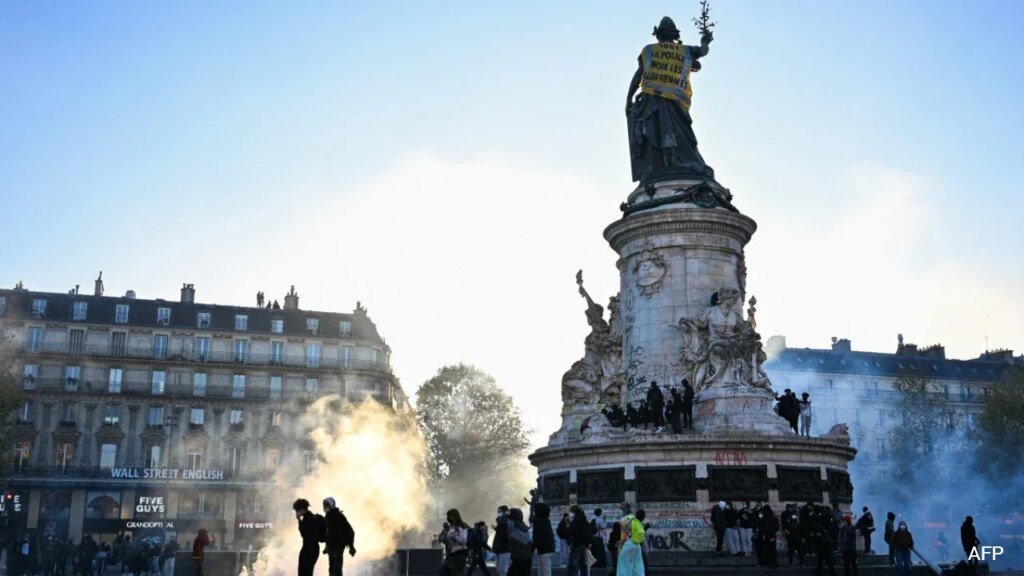
New Delhi: Europe is witnessing waves of protests across several countries, including France, Spain, Portugal, Italy and Albania, with the high cost of living, housing shortages and economic pressures emerging as common themes. While US President Donald Trump has linked the unrest in France to migration and Islam, Europe has mostly been dealing with the
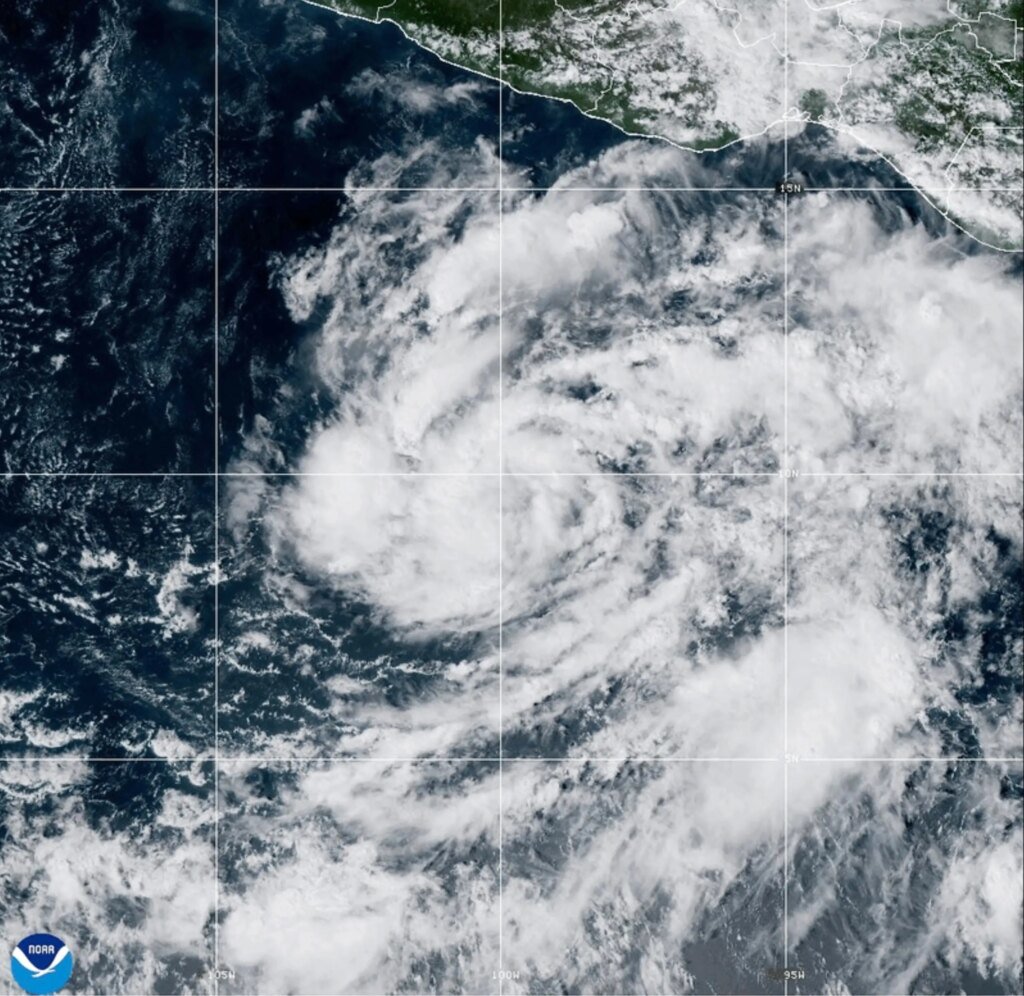
This satellite image from the National Oceanic and Atmospheric Administration shows Tropical Storm Vance strengthening in the Pacific Ocean on Wednesday, Oct. 21, 2026. (National Oceanic and Atmospheric Administration via AP) (Uncredited, National Oceanic and Atmospheric Administration) MIAMI – Tropical Storm Vance formed Wednesday in the Pacific Ocean, the National Hurricane Center said. The center
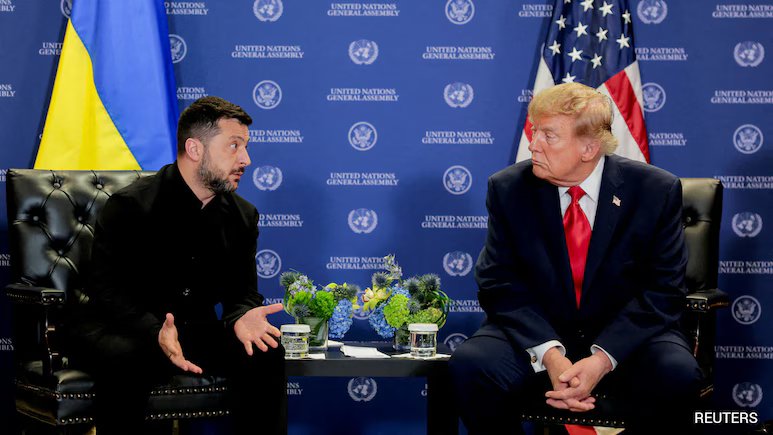
Europe woke up last Friday to another belligerent outburst from Donald Trump – this time berating Ukraine’s wartime leader Volodymyr Zelenskyy again. Just a few days after his diesel deal with the Kremlin, the US president said Zelenskyy was more difficult to deal with than Vladimir Putin and blamed Ukraine’s leader for rocketing oil prices
Regime change doesn’t translate into economic recovery or chart a country’s growth path, recent data from South Asia shows. Economic indicators in some South Asian countries have shown signs of gradual improvement following major political upheavals, but they have yet to fully recover, with persistent challenges regarding GDP growth, inflation and trade. Data compiled from
“INEVER MEANT to start a war…I just closed my eyes and swung,” sings Miley Cyrus in “Wrecking Ball”, a break-up ballad that seemed to play on every American radio in 2013. Though melodically a bit relentless, the pop song deserves a revival as a guide to the second-term statecraft of President Donald Trump. President Donald
In its competition with China, America sometimes commits self-sabotage. Under Donald Trump, cuts in federal support for universities have been particularly damaging. To convey their anguish, some American scientists have drawn attention to the advantage that their country’s strategic rival may gain from these retrenchments. China had been handed the future “on a silver platter”,
Albania: At 117, Qamile Marra is not particularly concerned with proving she may be the world’s oldest woman — or even persuading Albanian pension officials that she is not dead. For a woman born under Ottoman rule, who turned 36 a fortnight before the end of World War II and outlived Albania’s communist dictatorship, her
A slowdown in SpaceX’s Starlink satellite network that disrupted Ukraine’s drone operations was triggered by an order from company’s CEO Elon Musk, The Wall Street Journal reported on Tuesday, citing unnamed US officials and other sources. Elon Musk with US President Donald Trump. (AP/File) The move reportedly restricted Ukraine’s access to the satellite service, affecting
That compares to a net loss of $13 billion during the same period a year earlier, according to report. AI startup Anthropic recorded a net loss of more than $80 billion in the first half of this year, the Wall Street Journal reported on Tuesday, citing a draft initial public offering prospectus. That compares to
A ban was also issued for any public gatherings from 1800 GMT Tuesday in les Halles Paris police ordered a new curfew for parts of the city for Tuesday overnight, after one the previous night that authorities said resulted in calm being restored following weekend riots and looting. The fresh curfew runs from 2100 GMT
At least 2,400 people were arrested after rioters in cities across France on Saturday clashed with police, set cars on fire, stormed public buildings and engulfed a historic city hall in flames, during nationwide protests against rising living costs and poor conditions in schools. On Sunday evening, small groups set fire to trash bins, bicycles
Whenever thousands of people take to the streets in any corner of the world, the primary fear in the corridors of power is of a coup or regime change. The recent downfall of Sheikh Hasina in Bangladesh, the flight of the Rajapaksa family in Sri Lanka, and the political reshuffle in Nepal have further strengthened
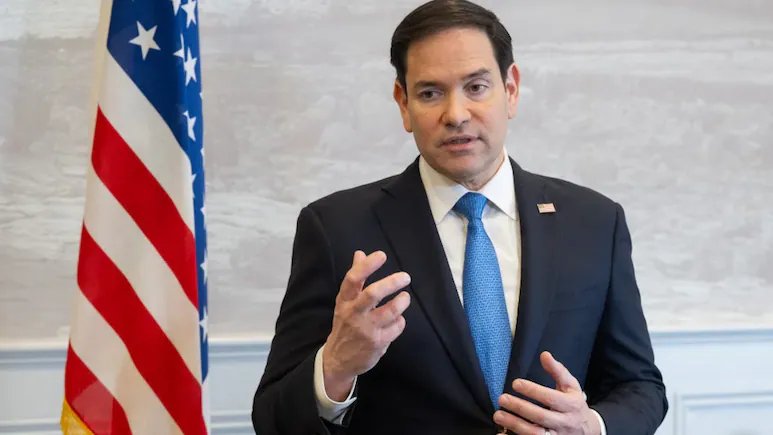
Rubio is on a visit to India US Secretary of State Marco Rubio said Tuesday that President Donald Trump was “frustrated” by accusations that he had deliberately harmed Ukraine, including claims he ordered intelligence sharing to be halted. “The president is frustrated because, first of all, he doesn’t like to be blamed for things that
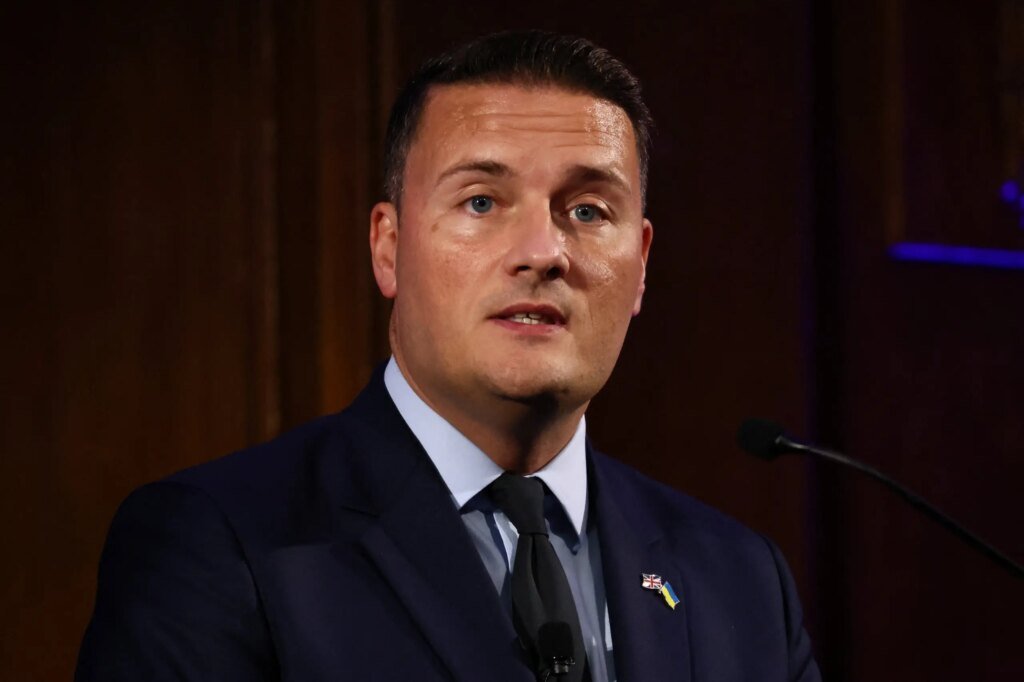
Defence Secretary Wes Streeting delivers the closing ministerial keynote at the U.K. Space Power Conference 2026 in London on Wednesday, Sept. 23, 2026. (Jack Taylor/Pool Photo via AP) (Jack Taylor, Jack Taylor) LONDON – Britain announced Tuesday that it is expanding military support for Saudi Arabia against the Houthis to include “defensive” air patrols by
County Hall Chichester. Image: LDRS A call from Reform UK councillors in West Sussex for the county council to withdraw from all voluntary refugee resettlement schemes has been voted down. The motion was tabled by group leader Tim Charters (Southgate & Gossops Green) during a meeting on Friday (October 16), and seconded by Callum Johnson (Ref,
WOL.COM launches Online World News The platform delivers timely updates about World, Business, Technology, Politics, Lifestyle, and Culture, with a focus on accuracy and international reach ATLANTA, GA, UNITED STATES, October 19, 2026 /EINPresswire.com/ — WOL.com today announced the worldwide launch of its digital news platform providing real time global coverage through a modern, mobile
Ukrainian strikes on data centres operated by Russian tech company Yandex have disrupted key digital services, leaving users struggling to access bank accounts, book taxis and unlock smart doors in their homes. The attacks signal widening of the conflict, bringing Russia’s digital infrastructure into the picture. A woman walks past a Yandex-branded car in Moscow,
Trump also told reporters that Russia has been “fine” with regards to Ukraine. US President Donald Trump on Monday said he thought someone other than Ukrainian President Volodymyr Zelenskiy should negotiate on Kyiv’s behalf as it seeks to end the war with Russia. “Maybe it’s time for Zelenskiy to get somebody else to negotiate,” said
US Defense Secretary Pete Hegseth last met Israeli PM Benjamin Netanyahu in Washington in July. US Defense Secretary Pete Hegseth met with Israeli Prime Minister Benjamin Netanyahu during an unannounced visit to Israel on Monday, Axios reported, citing two sources with knowledge. The Pentagon and Israel’s embassy in Washington did not immediately respond to requests
Saudi Arabia says it has executed 2 Bangladeshi nationals over “indecent acts” inside a mosque in Mecca. Bangladesh said that it hadn’t been informed of the executions beforehand. Meanwhile, Israeli police have arrested 10 suspects in connection with a wave of settler violence, including against a U.S. journalist and European diplomats in the occupied West