The following is a cross-post from Kyle Chan’s excellent High Capacity substack.
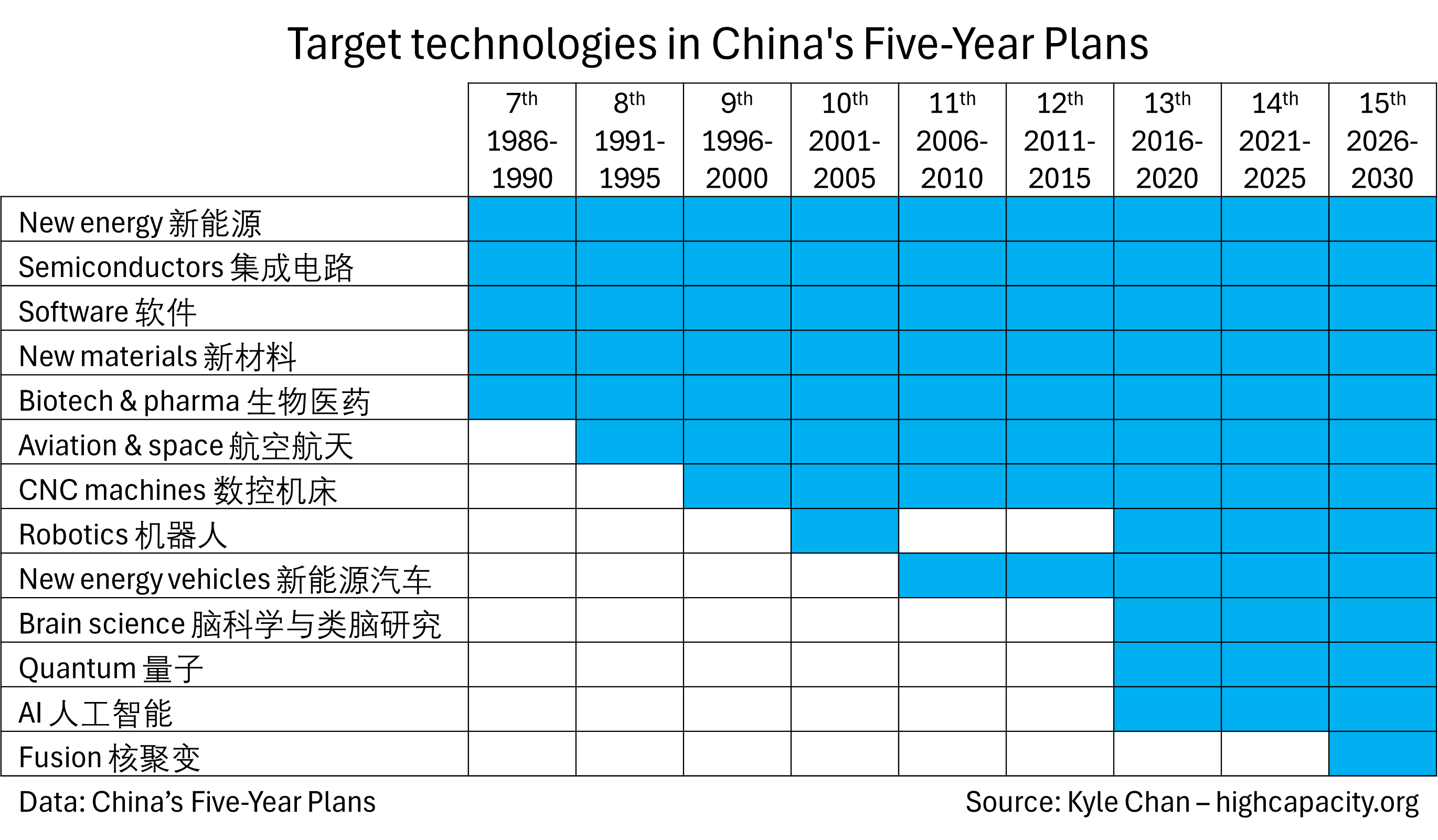
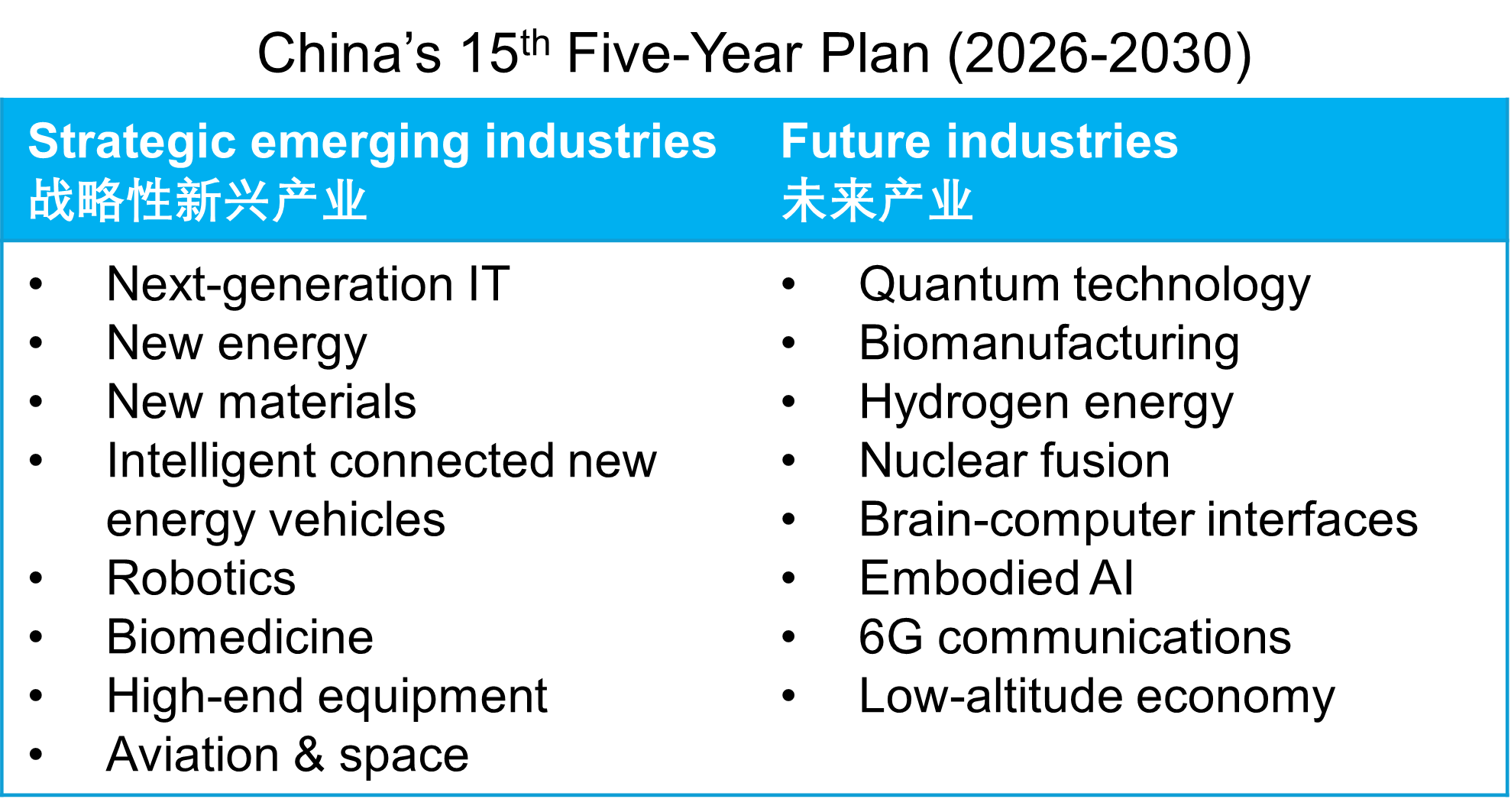
Technology is a central focus of China’s new 15th Five-Year Plan. China is aiming to develop “strategic emerging industries” (战略性新兴产业) such as robotics and smart EVs as well as “future industries” (未来产业) such as quantum, fusion, brain-computer interfaces, 6G, and embodied AI. With the end of catch-up economic growth and the real estate boom, China is searching for new engines of future growth—so-called “new quality productive forces” (新质生产力)—that will allow China to attain the per capita income of a “moderately developed country” (中等发达国家) by 2035.
But a focus on technology is not new for China. And China’s obsession with science and technology did not start with Xi Jinping. Hu Jintao, Jiang Zemin, and Deng Xiaoping all viewed technology as key to China’s development. In 1978, Deng Xiaoping gave a famous speech at China’s National Science Conference where he said:
The key to the Four Modernizations is the modernization of science and technology. Without modern science and technology, it is impossible to build modern agriculture, modern industry, and modern national defense. Without the rapid development of science and technology, there can be no rapid development of the national economy.
四个现代化,关键是科学技术的现代化。没有现代科学技术,就不可能建设现代农业、现代工业、现代国防。没有科学技术的高速度发展,也就不可能有国民经济的高速度发展。
That year, China launched the “National Science & Technology Development Plan, 1978-1985” (1978-1985年全国科学技术发展规划纲要), which sought to reform China’s scientific institutions in the wake of the Cultural Revolution and target key technologies, such as semiconductors, computers, renewable energy (including solar, wind, and geothermal), passenger aircraft, and biotech. Many of the target technologies identified by the 1978 plan have remained central to China’s tech-industrial policy ever since.
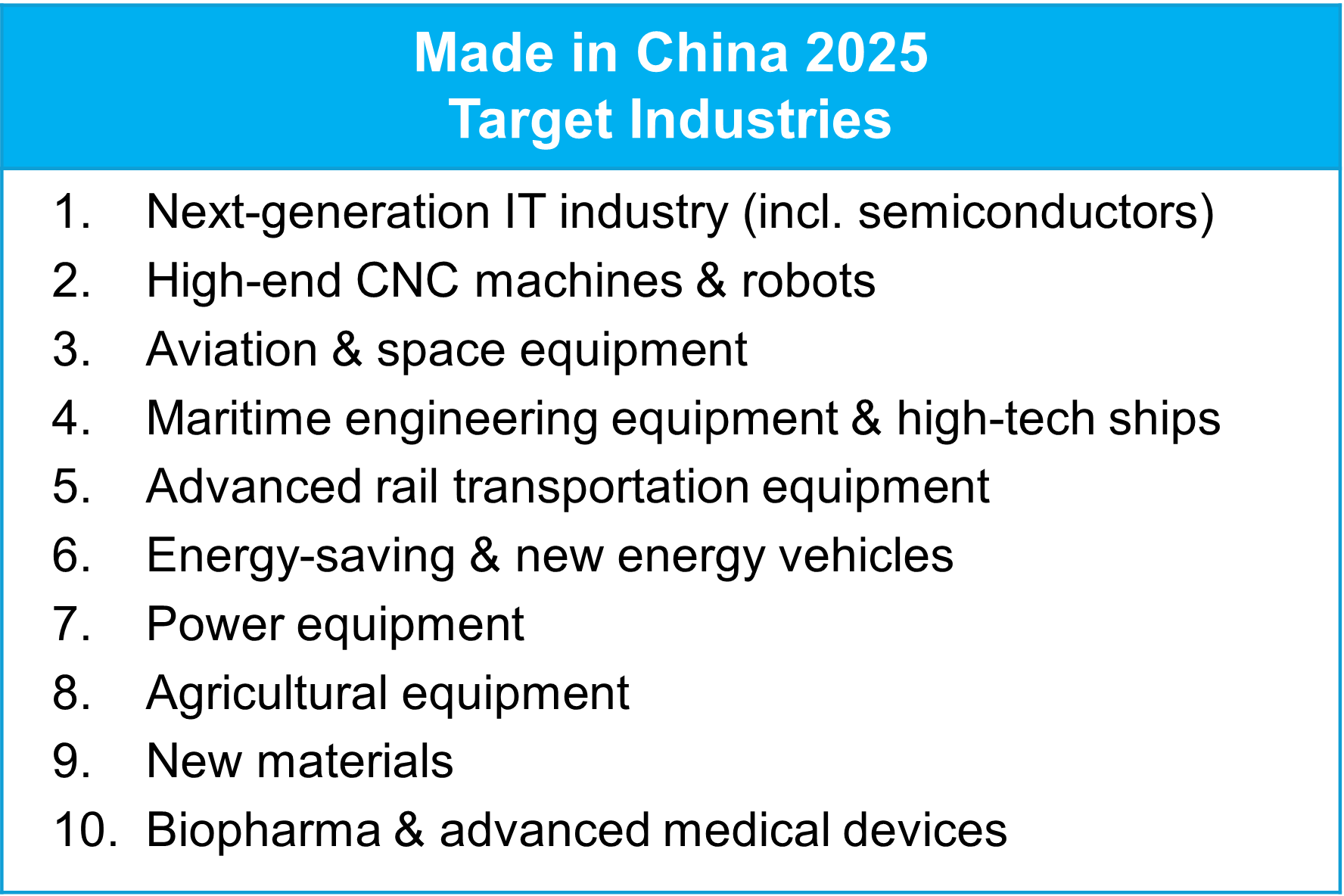
Over the past few decades, China has released multiple high-profile science & technology or industrial strategy plans. Some are broad and include lists of target technologies, such as the 863 program and Made in China 2025. Others are industry-specific, such as the 2012 New Energy Vehicle Development Plan, the 2014 National Semiconductor Industry Development Plan, and the 2017 Next-Generation AI Development Plan.
Along the way, China’s Five-Year Plans have captured China’s evolving focus on technology, including its changing approach to tech development as well as the target technologies it’s focused on. (For background on China’s Five-Year Plans, see Appendix A at the end. I’ve also put together China’s Five-Year Plans and other key official documents in this public database: ChinaDocs.org.)
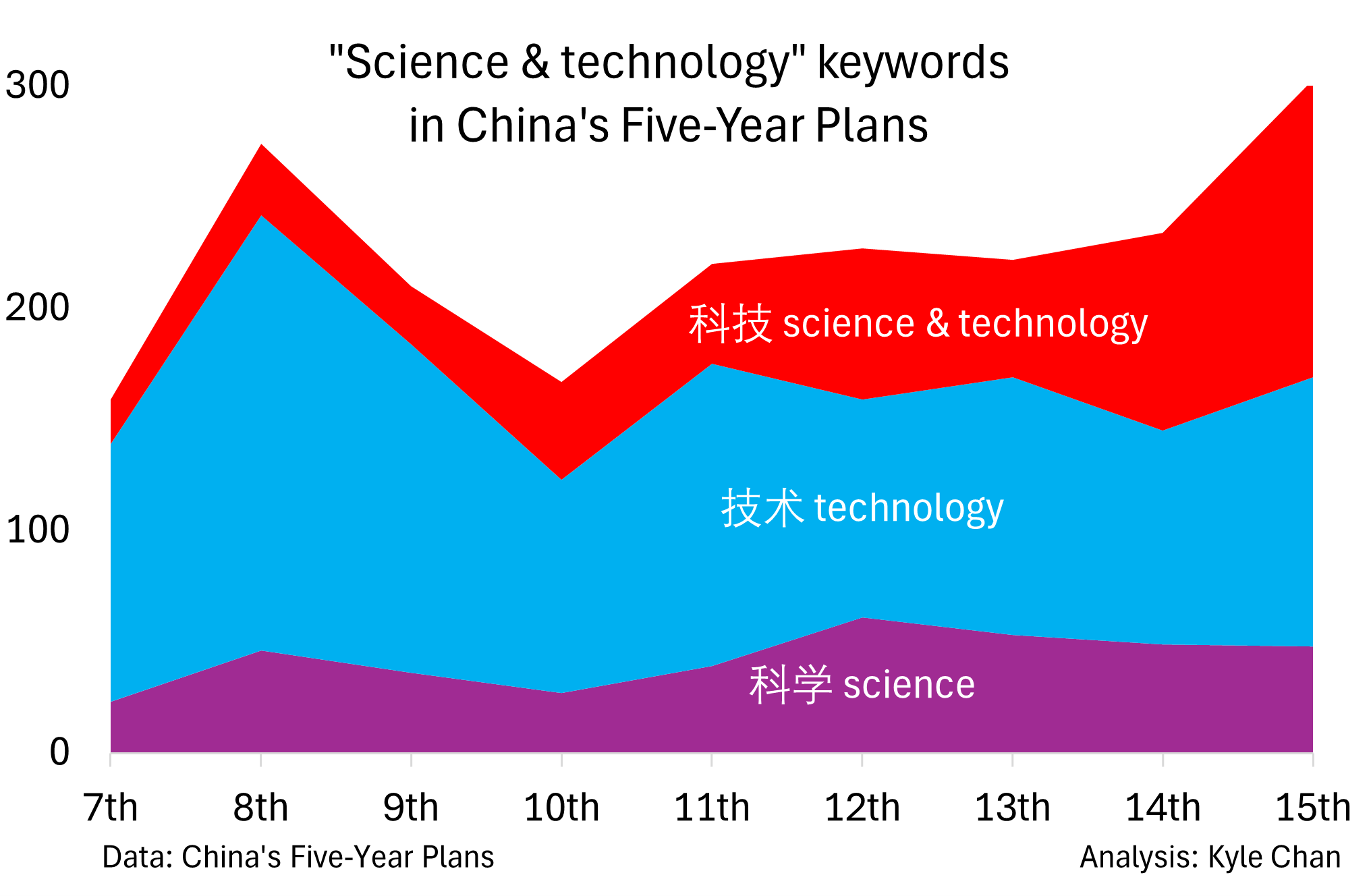
Reading through China’s Five-Year Plans reveals some interesting trends in China’s approach to technology over time. The charts below also show the changing frequency of keywords such as “innovation” (创新) and “key core technology” (关键核心技术) across the Five-Year Plans.
Here are the key trends I found:
Persistence: China has been relentlessly persistent at tackling the same core technologies over decades (see chart at very top). These are well-known technologies or industries with broad applications and positive spillovers: automotive, energy, semiconductors, shipbuilding, aviation, space, biotech, and so on. Many have long been the target of industrial policy around the world, especially in Japan and South Korea. Their recurring presence across China’s Five-Year Plans underscores their strategic importance to Chinese policymakers and, in some cases, the difficulty China faces in trying to catch up, particularly in semiconductors where the global frontier is a rapidly moving target.
Evolution: Some target technologies have appeared across Five-Year Plans but in new forms. Biotech was originally more focused on agricultural biotech and is now more focused on pharmaceuticals, genomics, and biomanufacturing. Automotive began as conventional internal combustion engine vehicles but branched into “new-type fuel vehicles” (新型燃料汽车) in the 11th Five-Year Plan and then eventually became “new energy vehicles” (新能源汽车). Information technology (信息技术) partly shifted focus to the “digital economy” (数字经济) and then eventually to AI (人工智能), which was first mentioned in the 13th Five-Year Plan (2016-2020) and is a core focus of the new 15th Five-Year Plan.
Global trends: China’s target technologies mirror some of the global tech trends of the times. China’s obsession with the information revolution and “informatization” (信息化) in the 2000s mirrored America’s 1990s dot-com boom. And this presaged in many ways China’s current obsession with AI where developments in the US, such as AlphaGo’s defeat of the top human Go player or the launch of ChatGPT, were like “Sputnik moments” for China on AI.
Energy security. China has been heavily focused on energy-saving technologies and alternative energy sources for decades, driven by long-standing anxieties over energy security. In earlier Five-Year Plans, China was more focused on energy-saving technology, such as energy-efficient industrial machinery and fuel-efficient combustion engines for cars. Over time, you can see China shifting more towards a massive push in clean technology, including solar, wind, batteries, hydropower, hydrogen, and electric vehicles. The seeds for China’s clean tech boom were already planted as far back as the 6th Five-Year Plan (1981-1985).
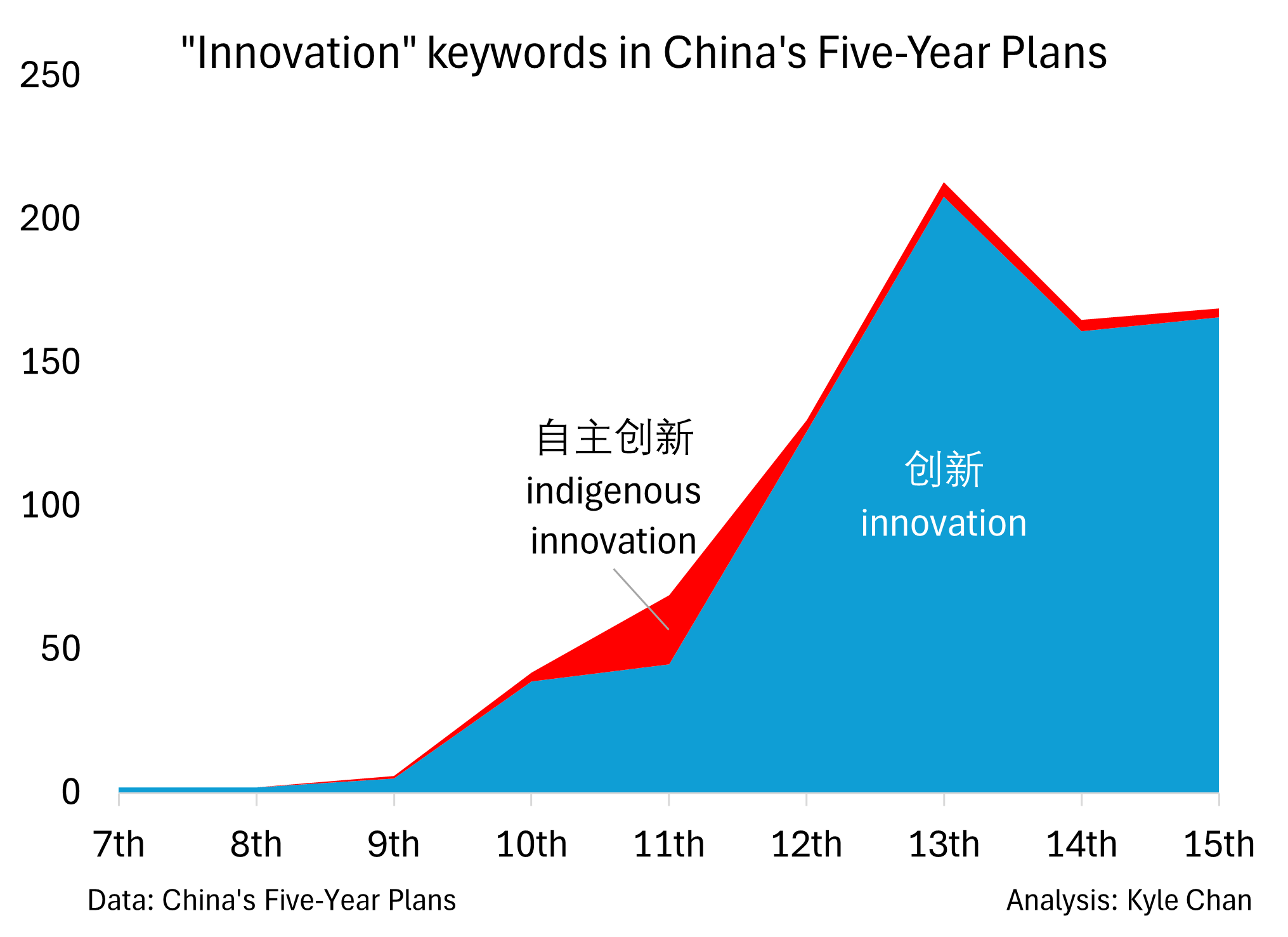
From catch-up to innovation. In earlier Five-Year Plans, China was focused on technological catch-up by “introducing and absorbing” (引进,吸收) foreign technology. 2006 marked a shift toward “indigenous innovation” (自主创新) with the launch of China’s Medium-and Long-Term Plan for the Development of Science & Technology (2006-2020). Rather than merely import foreign technology, Chinese leaders believed that China must be able to able to truly create and own the technology itself through innovation. It’s important to note that this push for “indigenous innovation” was started under Hu Jintao, long before Xi’s rise to power in 2012. China’s focus on innovation has only grown since (see chart above), becoming a key strategic factor and driver for future economic growth.
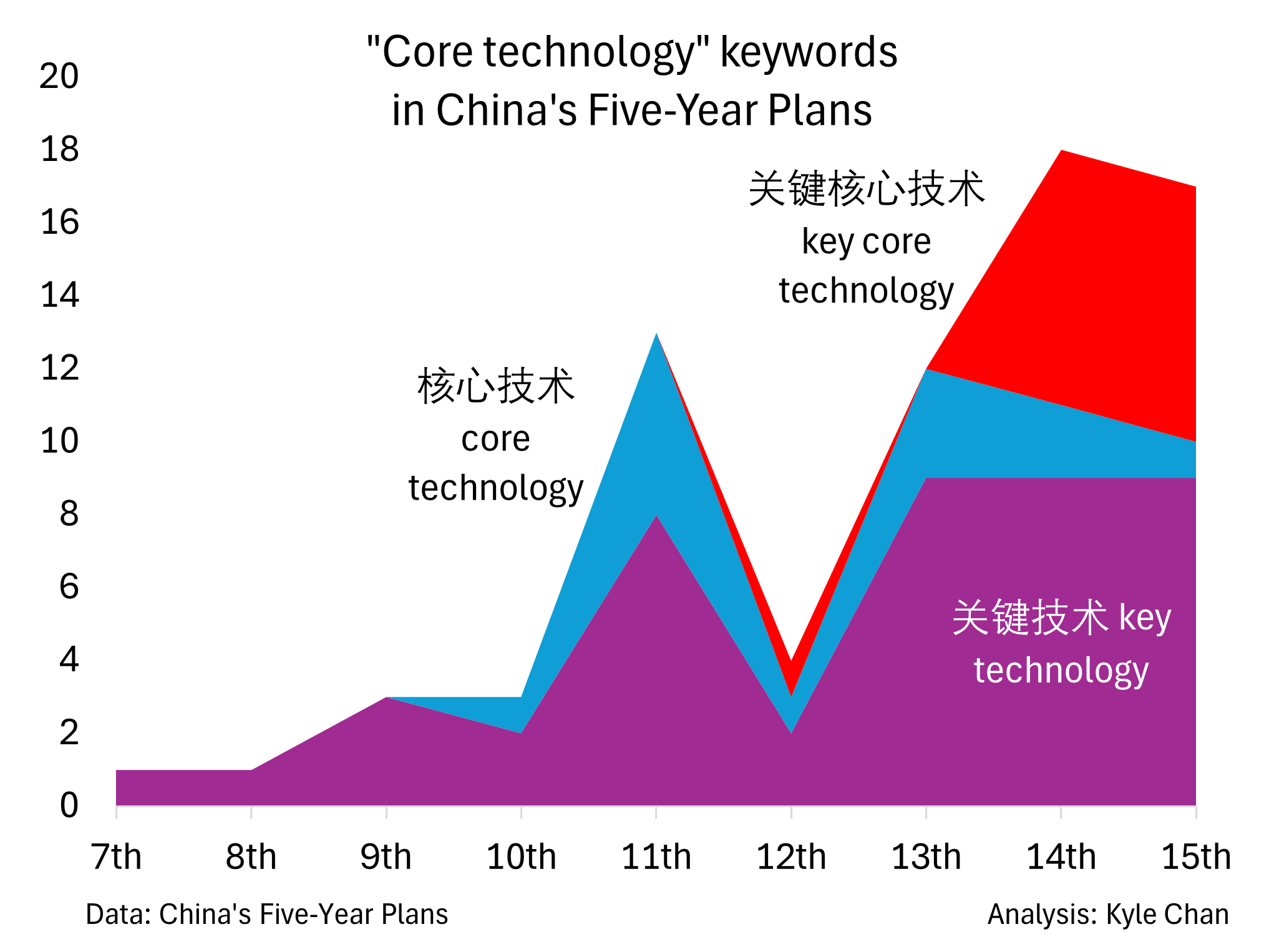
From opportunity to threat. During the first decades of the Reform era, China saw technology as an opportunity to catch up and modernize quickly. The language in those earlier Five-Year Plans sounded more optimistic with hopes that China might even do “leapfrog development” (跨越式发展) to skip over technological stages and leverage its “latecomer advantage” (后发优势). China’s attitude starts to shift with its 2010 plan on Strategic Emerging Industries (战略性新兴产业) where it sees itself as not merely catching up but competing on the international stage in a race for the next round of key technologies. Finally, the 14th Five-Year Plan (2021-2025) marks a pivotal shift following the first Trump administration’s near-crippling of Huawei and ZTE in 2018-19. China sees itself as painfully vulnerable to technological “chokepoints” (卡脖子技术) and races to develop “key core technologies” (关键核心技术), such as advanced semiconductors, high-end manufacturing equipment, and industrial software.
This section walks through technology in China’s Five-Year Plans grouped by decade, highlighting key changes in approach and target technologies.
The 6th Five-Year Plan marked the start of China’s modern tech-industrial policy as the first plan of the reform era. Already in the 1980s, China believed it needed to both catch up in foundational technologies and pursue emerging ones. In this early period, we see a dual focus on advancing high-tech sectors such as computers and semiconductors while also improving agricultural technology, such as new seed varieties and fertilizer production. This dual emphasis captured China’s development conundrum at the time as it sought to build the industries of the future while still dealing with the problems of a developing country. During this period, you also see a strong emphasis on energy-saving technologies and the start of China’s push into clean energy, like solar technology, driven by the oil shocks of the time and China’s persistent energy insecurity. Interestingly, the 6th Five-Year Plan has a specific line about developing rare earth resources and utilization technologies.
During this period, China’s 8th and 9th Five-Year Plans dedicate much more space to technology with a special focus on “high-tech industrialization” (高技术产业化) and basic scientific research. You see the full range of target sectors: computers, software, semiconductors, microelectronics, energy, transportation (including high-speed rail), chemicals, biotech, IT, new materials, aerospace, and manufacturing equipment. China’s 9th Five-Year Plan (1996-2000), which also includes longer-term “visionary goals” out to 2010, already talks about looking for areas where China can potentially “leapfrog” (跨越) over stages of technology and make “major breakthroughs” (重大突破) where the nation has an advantage. Quantum is referenced for the first time in the 8th Five-Year Plan, although just as an area of basic research.
The 10th and 11th Five-Year Plans are heavily focused on “informatization” (信息化) and “using informatization to drive industrialization” (以信息化带动工业化). In 2008, China even created a new super-ministry called the Ministry of Industry and Information Technology (MIIT, 工业和信息化部) which actually has the word “informatization” in the name. In both Five-Year Plans, IT is a powerful cross-cutting technology for boosting everything from manufacturing and infrastructure to services and defense—analogous to how China treats AI today. The IT revolution is seen as an opportunity for China to leverage its “latecomer advantage” and potentially “leapfrog” the West. In addition, this period focuses on cutting-edge technologies, such as nanotechnology, space launch, advanced jet engines, sub-micron semiconductors, high-performance computing, satellites, and broadband networking. The 10th Five-Year Plan is also the first to introduce the “National Innovation System” (国家创新体系), an “enterprise-centered” tech innovation system fosters collaboration across industry, universities, and research institutes.
The 12th and 13th Five-Year Plans mark a fundamental shift in China’s economic model away from low-wage, catch-up growth to an internationally competitive economy powered by high-tech industries. In 2010, China launched its “Strategic Emerging Industries” (战略性新兴产业) plan, targeting a new set of technologies that would reshape the global economy. In 2015, China launched “Made in China 2025” to turn the country into a high-tech “manufacturing great power” (制造强国). China’s Five-Year Plans during this period targeted cutting-edge technologies, including cloud computing, carbon fiber, superconducting materials, rare earths, high-end CNC machines, next-generation nuclear power, genetics, and biomanufacturing.
In the aftermath of the first Trump administration’s attack on China’s technology industry, including Huawei and ZTE, China pursues a dual-track approach to technology. On the one hand, China continues to charge forward on increasingly ambitious cutting-edge technologies, such as quantum, fusion, brain-computer interface, drones and flying cars, and AI. On the other hand, China is rushing to shore up its technological chokepoints (卡脖子技术) in a wide range of areas, including semiconductors, foundational software, and aviation. There is a new focus on technological self-reliance (科技自立自强) and an all-out effort to master “key core technologies” (关键核心技术) to make China more resilient to external threats, namely the United States. And this is the period, particularly with the new 15th Five-Year Plan, when China makes AI and especially embodied AI a core focus as a cross-cutting technology like IT or the internet that can turbocharge many other sectors.
What makes China’s tech-industrial policy remarkable is not some hundred-year master plan for technological supremacy or meticulously engineered blueprint for success. It’s China’s sustained focus on a set of obviously critical technologies over years and even decades. While the strategies and tactics—and even the technologies themselves—may change, China’s overarching persistence has yielded steady gains that have allowed it to catch up and even achieve global leadership in key technologies. China’s new 15th Five-Year Plan is but the latest chapter in a much longer technology story.
China has a long tradition of “Five-Year Plans.” During the Mao era, these were literally Soviet-style five-year economic plans (五年计划) that set hard targets for China’s command economy, such as steel production. The aim in those days was rapid industrialization and catch-up with a focus on heavy industry.
With the start of China’s reforms in the late 1970s, the Five-Year Plans began to evolve from top-down economic plans toward broader strategic frameworks for development. China’s 6th Five-Year Plan (1981-1985) expanded beyond economic planning, and the name was changed from “National Economic Development Plan” to “National Economic and Social Development Plan” (国民经济和社会发展计划). In 1998, China’s State Planning Commission (国家计划委员会), the main entity behind the Five-Year Plans, was restructured as the National Development and Reform Commission (NDRC, 国家发展和改革委员会). The 11th Five-Year Plan (2006-2010) marked a major shift with the Chinese word for “plan” changing from 计划 to 规划 and the addition of the term “outline” (纲要), signaling a shift from a top-down plan to a broader strategic guidance framework.
Today’s Five-Year Plans serve as strategic roadmaps for China’s development and include a mix of qualitative goals and hard quantitative targets. Each part of the Five-Year Plan is broken down by sector and annually. Central government bodies and local governments then break down the Five-Year Plan and develop their own implementation plans. Local government officials are evaluated in part on their performance in meeting the national plan’s goals and targets. In general, China’s Five-Year Plans are best understood today not as rigid, top-down “plans,” but as high-level signaling mechanisms that guide local governments and the private sector to align their efforts with national priorities.