In The Sandbox, we are all digitizable and disposable. The documentary from Kenya-Jade Pinto takes us inside cutting-edge technology, including artificial intelligence, and its role in surveillance, power politics and border control amid discussions about migration.
The Sandbox world premieres in the main competition of the 23rd edition of the Copenhagen International Documentary Film Festival, CPH:DOX on Tuesday, March 17.
“Director Kenya-Jade Pinto gives us an overwhelming insight into a global black box of migration, surveillance, control, and, not least, the mindset of those responsible,” the CPH:DOX website says about the doc. “From arms fairs in the U.S. to the southern borders of the EU and beyond, she has created a film that is immensely contemporary and relevant, both in its sharp political analyses and its visually accomplished report from a world of drones and infrared cameras. But the life and dignity of the individual are never lost sight of in Pinto’s cinematic mapping of the fault lines of the 21st century – and of a global matrix of high-tech militarization and security policy, where fear and power feed off each other.”
It concludes that The Sandbox is “a clear-eyed snapshot of a world in radical change.” Produced by Shasha Nakhai and Pinto, the film features cinematography by Luc Forsyth, Gabriela Osio Vanden, Pinto and Nick Wambugu. The editor is Jordan Kawai. Together Films is handling sales.
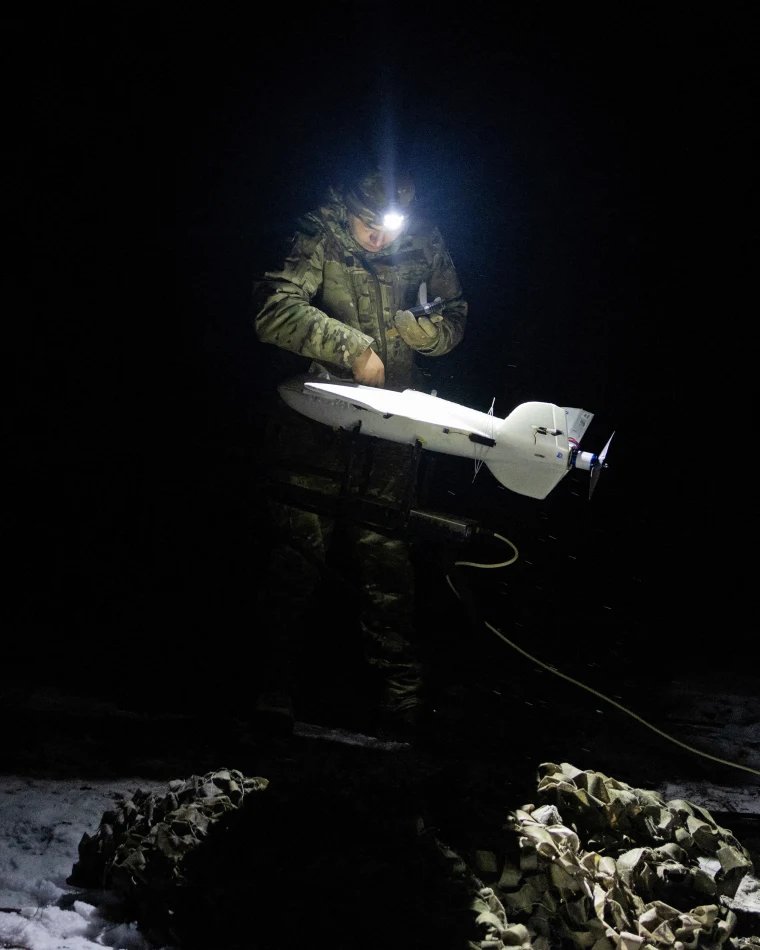
The doc travels from the Arizona desert to the drone-policed Mediterranean, meeting migrants, rescuers and border control agents alike. “Tools tested at borders spill into databases and daily life, collapsing distance between watcher and watched,” highlights a synopsis. “No villain stands at the center, only processes and protocols.”
Pinto talked to THR about her inspiration for making The Sandbox, the global scale of issues it explores, and why they require broader awareness and debate.
What inspired you to make The Sandbox, and how did your background in human rights law play into the decision?
I trained as a lawyer at the University of Ottawa, where I focused on refugee and international law. My family came to Canada and what’s called a human rights and compassionate grounds application. These are extremely discretionary, so you would really want a human to be deciding on them. But I learned a few years ago through a colleague that for these applications in Canada, they had started a pilot program to outsource these applications to algorithms. And it occurred to me then that if that had happened to my family, we may not have even ended up in Canada.

‘The Sandbox,’ courtesy of Kenya-Jade Pinto
So I started to become curious about what was happening, globally, in this space that was largely unregulated and quite opaque, the nexus of tech and migration. That’s when I started untangling this global surveillance net.
One takeaway from The Sandbox is that technology isn’t as neutral as we often think. Can you talk a little bit about that?
Absolutely. We are creating the technology around us, and a couple of lines in the film put this perfectly. One of them is that everything has a by-product. And I think that there’s something to consider there. What does that mean and what is the effect of that?
Also, there’s a long list of research about the effect of bias on tech and coding. But ultimately, technology is a tool, and it’s all about how we use that tool or choose not to. That reveals what the primary motivations of that technology is. And that’s what we see in the film playing out in different spaces.
That seems to be a key debate around AI as well. Do you see The Sandbox as a political film?
There was this feeling as we were making the film about: Is this a tech story? And there was a moment for me where I realized I’m not really trying to tell a tech story necessarily. This is a story about power. And as much as we can understand how these tools, AI or whatever it is, maps on to power, then we can deconstruct it.
My experience of making this film, and trying to understand the many actors and all of the tech bits and pieces that can get quite tedious, was that it can get to be confusing. But if we try to really look at the big picture of it and understand that these are just things that map onto power and it’s all about how we apply those structurally, we have the power to be critical of it.
‘The Sandbox,’ courtesy of Kenya-Jade Pinto
The film takes us to the U.S., the EU, and even Africa. How global are the issues The Sandbox explores, and how much power do traditional power centers of the world, like the U.S. and EU, yield here?
When we go to Kenya in the film and hear about how the digital labor component of migrants is what sustains the model and is a neocolonial way of mining people for their labor, for their biometric data, for their information, we realize that there’s definitely this power structure.
But what we tried to do with the film is, rather than paint a picture of an evil person or people or corporation, a single evil entity, to understand that it requires everyone to participate for it to be sustained. And that includes traditionally liberal institutions.
So I hope that people come away from the film thinking a little bit more critically, and not just about the current political moment. For example, in the United States, we actually filmed during the previous administration, and things were steadily moving along then, too. So the hope is to show that we should think critically about the world order that we all participated in creating and thinking that maybe this isn’t working and what are the ways that we can push back to think about a new way of organizing ourselves.
I also hope that the film feels evergreen in a way where we can think about the broader critical questions of what we want the rest of our lives to be like, and what we want the future of our world to be like.
Do you feel The Sandbox will speak more to people with certain political beliefs?
I hope that it resonates across the political spectrum. Obviously, it has a point of view, but there’s also a universality in being immersed in an experiential moment. And if you allow that, if you open your mind to that experience, I think that there’s a lot of good that can come from it. And I’m excited about the conversations. I think there’s a lot of opportunity for critical dialogue, and we’re not pointing fingers, but really just asking the audience and everyone to consider whether things are working and if they are okay with this.
‘The Sandbox,’ courtesy of Kenya-Jade Pinto
How did you find and choose the title The Sandbox?
I knew it pretty early. It’s always been the working title of the film, in part because it’s a play on what tech companies use when they’re trying new versions of their tech. They “sandbox” it in part because the sandbox is a place of play, of experiment. And so it felt quite fitting.
Are you working on or developing any new film projects?
I hope that the next project I work on will be in the fiction space. It’s based on a book. That’s what I’m working on right now, and it’ll allow for a new kind of creative exploration. But my throughline is exploring the nuances of what it means to be connected to each other in a world that is evolving and changing.
Documentary is a hard medium to work on, and I’m so in awe of documentary filmmakers, and I hope I get to make another feature doc. I just don’t have one right now.