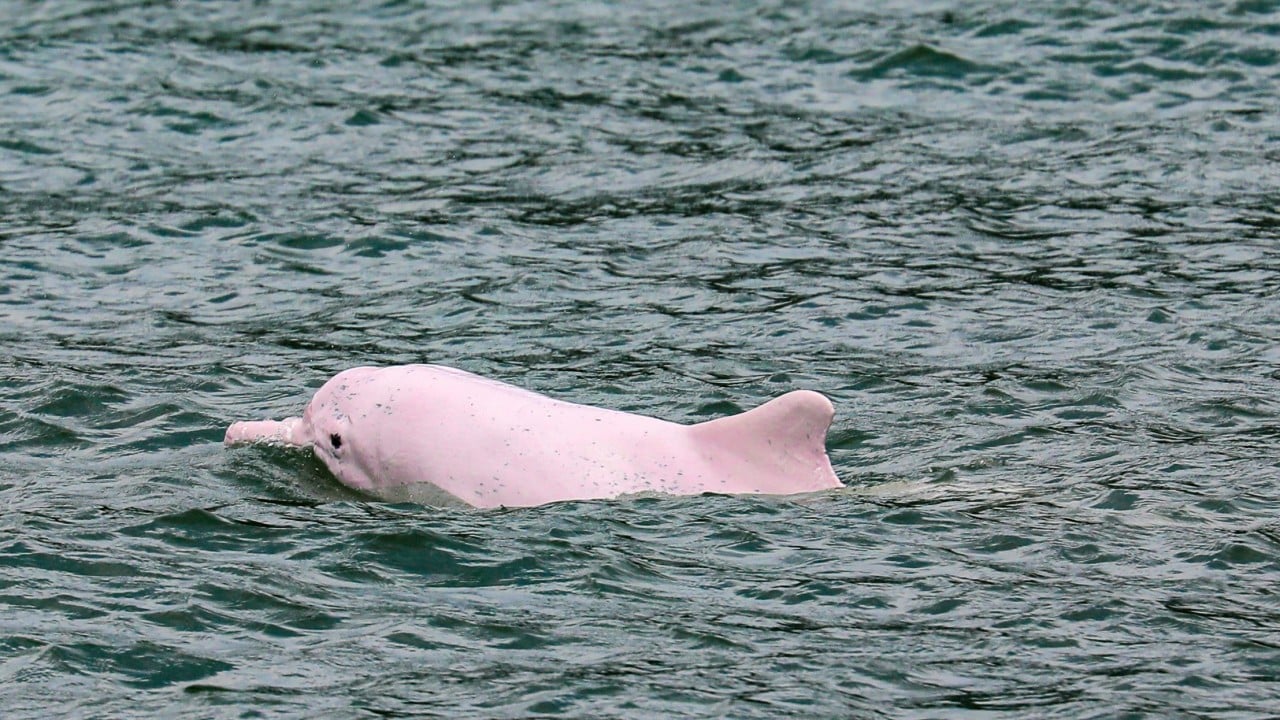
A Hong Kong researcher has called for stricter regulations and urged the public to use electronics more responsibly after a study found toxic pollutants from laptops, televisions and smartphones in the bodies and brains of endangered dolphins and porpoises that washed up on the city’s beaches.
Yuhe He, an associate professor at City University of Hong Kong and one of the study’s authors, said he was alarmed to find that liquid crystal monomers (LCMs) – the pollutants identified in the research – were capable of breaching the protective blood-brain barrier in dolphins, which is also found in humans and other animals.
LCMs are synthetic, organic chemicals used to manufacture liquid-crystal display (LCD) screens for laptops, television and smartphones.
In the study, researchers from City University and mainland China analysed 63 samples from 16 Chinese white dolphins and 26 Indo-Pacific finless porpoises that died after being stranded on the city’s beaches between 2007 and 2021.
The team performed tests on blubber, muscle, brain, liver and kidney tissues to look for 62 types of LCMs.
About 88 per cent of samples were found with detectable concentrations of LCMs, with the pollutants most concentrated in the blubber of dolphins and porpoises, followed by the muscles and brains.