After Iran’s shock, Beijing confronts its succession question

When Iran’s Supreme Leader was reported killed in a bombing attack, one question surfaced quickly: what happens when a political system built around one man suddenly loses him?

For decades, Iran projected durability. Authority was centralised. Institutions revolved around a dominant leader. Stability appeared fixed. Yet in a moment, succession — long managed behind closed doors — became urgent and destabilising.

Authoritarian systems are designed to look permanent. Applause is synchronised. Outcomes are predetermined. Power is personalised. But when power becomes too personalised, the future becomes fragile.

Succession is no longer procedural. It becomes the regime’s most dangerous moment.

That reality now hangs quietly over Beijing.

This week, China opens its annual Two Sessions, the country’s most choreographed political gathering.

Delegates will approve economic targets, signal policy priorities and showcase unity under President Xi Jinping.

What they will not address is the most sensitive question in Chinese politics: if Xi does not rule indefinitely, who comes next?

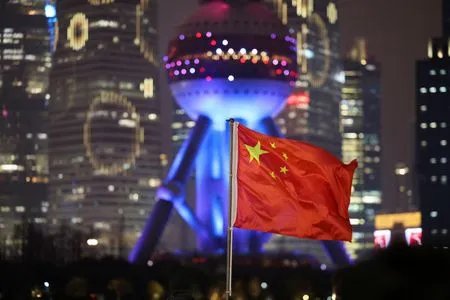
A big Chinese flag in front of a crowd

Events in Tehran have made one question stand out in China: in a system built around one man, what happens when he is gone? (Reuters: Tingshu Wang)

China once built a system

After Chairman Mao Zedong’s death, Beijing’s leadership understood that succession was the Achilles’ heel of one-party rule.

Mao had cycled through designated heirs who were later purged or sidelined. Power struggles had shaken the system.

To prevent that from happening again, the party gradually constructed a framework to manage transitions.

It was not democratic. But it was predictable.

Retirement ages were enforced. Informal term limits were observed. Younger leaders were elevated to senior roles years before taking the top job. Successors were groomed in stages, gaining experience in party management, government administration and the military.

By the 2000s, China appeared to have developed a repeatable pattern of leadership turnover. Jiang Zemin stepped aside. Hu Jintao transferred power to Xi in 2012 without visible rupture. Succession seemed institutionalised.

Xi has reversed that trajectory.

In 2018, presidential term limits were removed. In 2022, Xi secured a third term as party leader and filled the top leadership ranks with loyalists. No younger figure was elevated as a clear successor. The old age conventions weakened. Collective leadership faded.

The country is no longer governed primarily by a framework of rules designed to manage leadership change. It is governed by the authority of a single dominant figure.

That shift has strengthened Xi’s control in the present. It has made the future harder to read.

Loading

How successors were chosen

China’s constitution suggests that party institutions elect the top leader. In practice, the process has always been political.

In the post-Mao era, a typical succession followed a recognisable pattern.

First, age and timing. The likely heir was usually promoted to the top leadership tier while still in their late 50s or early 60s. That gave them time to consolidate authority before taking the highest post.

Second, national credentialing. The successor would typically rotate through key positions that demonstrated competence and built legitimacy: senior party management, high-level government roles, and eventually exposure to military leadership through the Central Military Commission.

Third, military credibility. Even though China is not ruled by generals, control over the armed forces is decisive in elite politics. A credible successor needs the confidence of the military establishment. That does not require battlefield experience. It requires trust, proximity and institutional familiarity.

In short, succession was signalled early and reinforced gradually.

Under Xi, that signalling has largely disappeared.

There is no obvious understudy. No figure has been publicly positioned through the traditional ladder of party, state and military credentials in a way that clearly marks them as next in line.

That ambiguity may be deliberate. Naming a successor too early weakens a strongman. But leaving the question unresolved increases long-term uncertainty.

Xi Jinping applauds while sitting down in a dark blue suit.

Beijing is wagering that embedding AI across manufacturing, energy, data infrastructure and scientific research will raise productivity and cushion demographic pressure. (Reuters: Ludovic Marin)

What to watch this week

The Two Sessions will not formally determine succession. But personnel signals still matter.

The clearest indicator is whether any leader under 65 is elevated to a genuinely powerful national role.

If a relatively younger official is promoted to executive vice premier, entrusted with a heavyweight cross-sector portfolio, or placed consistently at the centre of national policy execution, it would suggest that Xi is at least allowing space for future leadership preparation.

If no such figure appears, it strengthens the impression that succession will remain deliberately ambiguous and tightly managed.

It is also important to examine the age profile of those who are promoted. If appointments largely favour officials already in their late 60s and close to Xi’s own generation, that points to consolidation rather than transition planning.

Such a pattern would reflect a structure built around loyalty and control, not the grooming of a next generation.

A man speaks while seated along a row of men, all wearing suits

There is no visible succession crisis in China today.  (Reuters: Vincent Thian/Pool)

Another question is whether anyone gains meaningful exposure to the party’s internal machinery or to military structures.

Even if formal party posts are not reshuffled this week, new state roles can foreshadow future authority within the party itself.

A younger leader positioned to work closely with the party secretariat or to acquire visible links to the armed forces would stand out. Without that, the system remains firmly centred on Xi.

Finally, the tone of the policy messaging matters. This year’s planning cycle places heavy emphasis on artificial intelligence, industrial upgrading and technological self-reliance.

Beijing is wagering that embedding AI across manufacturing, energy, data infrastructure and scientific research will raise productivity and cushion demographic pressure.

The plan reflects confidence in central direction and mobilisation. It also reveals a governance style that relies on scale, discipline and state coordination.

That matters for succession because it underscores a broader shift: policy is being framed less around institutional evolution and more around central leadership executing a grand strategy.

Stability and risk

There is no visible succession crisis in China today. The Communist Party remains disciplined. The security apparatus is expansive. Xi faces no public challengers.

China is not Iran. Its bureaucracy is larger.

Its governance structures are more developed. Its economic system is deeply integrated into global markets. But the structural lesson is universal.

When authority rests overwhelmingly with one individual, uncertainty about his exit becomes a strategic vulnerability. Investors notice. Military planners notice. Foreign governments notice. Domestic elites notice.

The system China constructed after Mao was designed to reduce that risk. It relied on norms, sequencing and preparation.

Xi has prioritised control over predictability. That has strengthened his authority now. It has left the path after him less defined.

The Two Sessions will project confidence and continuity. Growth targets will be announced. Industrial plans will be detailed. Unity will be displayed.

What will remain unspoken is the question made stark by events in Tehran: in a system built around one man, what happens when he is gone?

That question does not need to be answered today to shape China’s tomorrow.

Source link

Visited 1 times, 1 visit(s) today

Related Article

Iranian President Masoud Pezeshkian and his Chinese counterpart, Xi Jinping, in Beijing, September 2, 2025.

Middle East turmoil constrains China, a crucial backer of Iran and major buyer of its oil

Iranian President Masoud Pezeshkian and his Chinese counterpart, Xi Jinping, in Beijing, September 2, 2025. SITE DE LA PRESIDENCE IRANIENNE/WANA VIA REUTERS Beijing has voiced its anger following the US and Israeli strikes against Iran and their impact, reaching the very top of the Iranian regime. Chinese Foreign Minister Wang Yi deemed it “unacceptable” on

Yili Raises 45 Billion Yuan in China's Tech Bond Program — TradingView News

Yili Raises 45 Billion Yuan in China’s Tech Bond Program — TradingView News

China’s technology financing drive is starting to produce outcomes that may not have been the original policy intent. Under the onshore technology and innovation bond program, Inner Mongolia Yili Industrial Group Co. has emerged as the largest issuer this year, raising 45 billion yuan, or about $6.5 billion, according to Bloomberg-compiled data. That total exceeds

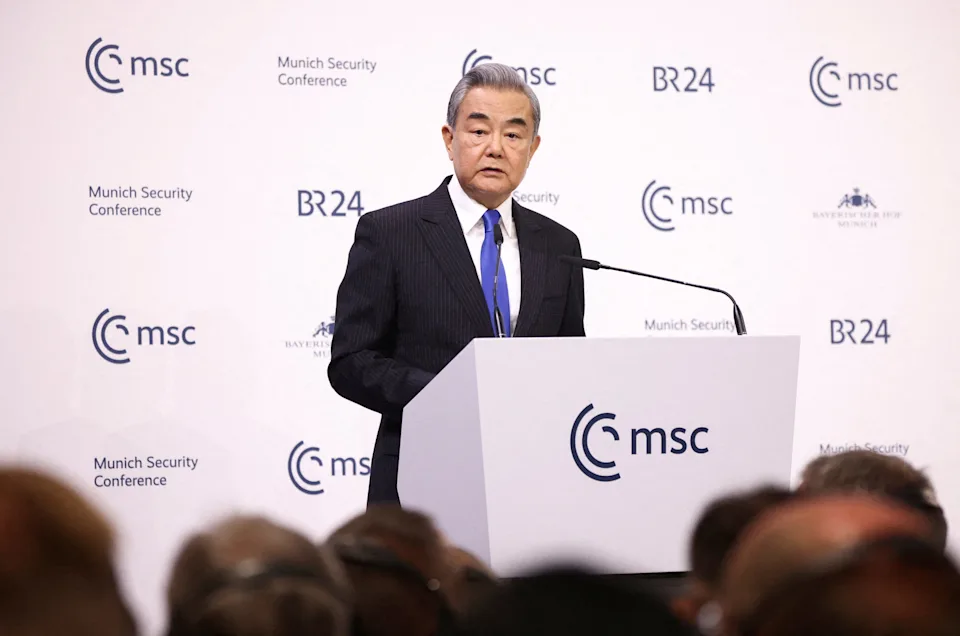
China's Foreign Minister Wang Yi speaks during the Munich Security Conference (MSC) in Munich, Germany, February 14, 2026.

China condemns Iran strikes, urges Gulf to oppose foreign influence

China’s government has condemned the joint U.S.-Israeli military strikes on Iran and urged Gulf states to work together to oppose foreign influence, as the Middle East erupts into a wider conflict. In the country’s initial comments Sunday, March 1, after the killing of Iranian leader Ali Khamenei, China’s foreign ministry called the attacks “a grave

China not told of US-Israeli strikes beforehand, spokesperson says

March 2, 2026, 1:07 p.m. ET China’s foreign ministry said it was not alerted ahead of time of Israel and United States’ plan to strike parts of Iran over the weekend. The attack has killed over 500 people in Iran, including supreme leader Ayatollah Ali Khamenei, dozens of top officials and a Chinese citizen as tensions

China's cheap AI designed to hook the world on its tech

China’s cheap AI designed to hook the world on its tech

Artificial intelligence (AI) is at a very Chinese time in its life. Recent moves from Chinese AI labs are throwing the dominance of American “frontier labs” such as Google and OpenAI into question. Last week ByteDance, the company behind TikTok, released an AI video-generating tool called Seedance 2.0 which produces high-quality film-like clips from text

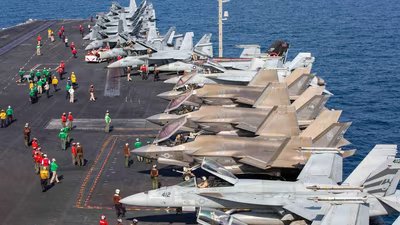
Aircraft attached to Carrier Air Wing (CVW) 9 on the flight deck of Nimitz-class aircraft carrier USS Abraham Lincoln (CVN 72) in support of Operation Epic Fury, at an undisclosed location on February 28, 2026. (Photo: US Navy/AFP)

Is Iran using Chinese missiles against US, Israel? Beijing reacts to reports

After reports in Chinese official media claimed on Monday that US planes crashed and some naval vessels were damaged “after being hit by Iranian missiles”, questions came up again about the origin of such advanced missiles. But China has now denied that it had finalised a deal with Tehran to sell CM-302 supersonic anti-ship missiles

China reports death of its citizen in Iran

China reports death of its citizen in Iran

Source: Getty Images + ↺ − 16px China has called for an immediate ceasefire and renewed diplomatic efforts to end the escalating conflict in the Middle East, after confirming that at least one Chinese citizen was killed in Tehran, News.Az reports, citing Al Jazeera. Speaking at a press briefing, Foreign Ministry spokeswoman Mao

China Set to Reveal Tech Strategy as Competition with US Intensifies

China Set to Reveal Tech Strategy as Competition with US Intensifies

China’s parliament will unveil its five-year technology blueprint this week, focusing on artificial intelligence, robotics, and space programs. The plan comes as Beijing seeks to transform recent tech breakthroughs into large-scale industrial advantages in its ongoing competition with the United States. China’s leadership will reveal their strategy for the next phase of technological competition with

China travel disruptions

Hundreds of Passengers Isolated in China Amid US-Iran Conflicts as Air China, Emirates, Qatar, China Southern, Etihad, Hainan and More Airlines Face 71 Cancellations and 1,697 Delays Across Beijing, Shanghai, Guangzhou, Chengdu, Zhengzhou and Beyond

Home » Airlines News of China » Hundreds of Passengers Isolated in China Amid US-Iran Conflicts as Air China, Emirates, Qatar, China Southern, Etihad, Hainan and More Airlines Face 71 Cancellations and 1,697 Delays Across Beijing, Shanghai, Guangzhou, Chengdu, Zhengzhou and Beyond Published on March 2, 2026 Image generated with Ai The ongoing US-Iran conflict

Space mouse

Mouse that lived on Chinese space station gives birth to 28 pups

A brave little mouse that spent two weeks floating aboard China’s Tiangong Space Station has given birth to a whopping 28 pups across three healthy litters since returning to Earth, leaving scientists buzzing about what short space trips might do for mammalian families. The adventure started with the Shenzhou-21 mission on October 31, 2025, when

image.png

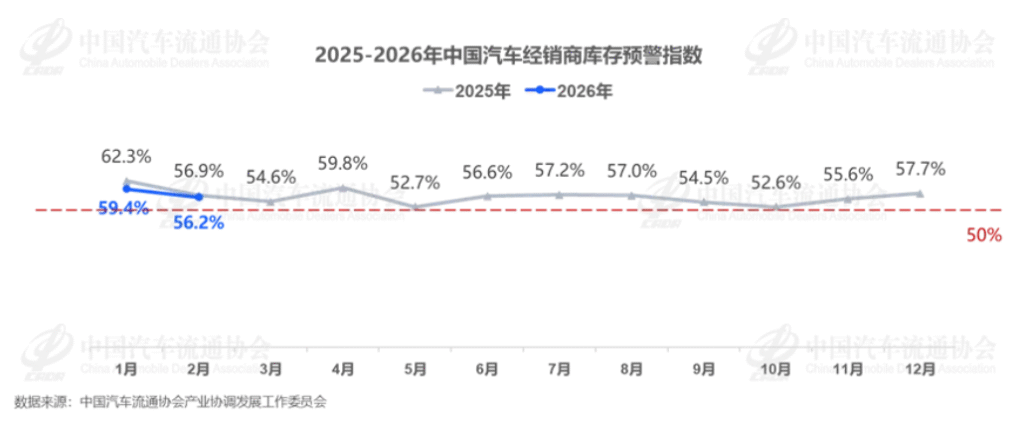
China Auto Dealer Inventory Warning Index at 56.2% in February

Gasgoo Munich- The China Automobile Dealers Association (CADA) released data on February 28 showing the inventory warning index for China’s auto dealers stood at 56.2% in February 2026. While that represents a decline of 0.7 percentage points year-on-year and 3.2 points from the previous month, the figure remains above the critical 50% threshold—signaling that operational

China’s Advanced Nuclear Efforts Are Pushing Frontiers

China’s Advanced Nuclear Efforts Are Pushing Frontiers

From the world’s first in-reactor thorium breeding confirmation to a dual PWR-HTGR plant and commercial supercritical CO₂ generation, China is assembling a vertically integrated advanced nuclear ecosystem. The breadth of activity signals a coordinated push toward fuel independence and industrial deployment. While the bulk of focus on advanced nuclear technology has honed in tightly on

Chinese carriers offer free changes as Middle-East conflict disrupts flights

Chinese carriers offer free changes as Middle-East conflict disrupts flights

Escalating hostilities between Iran, Israel and the United States have triggered sweeping air-space closures across the Gulf, forcing mainland airlines to scrap services to Dubai, Abu Dhabi and Riyadh. TVB News reports that Air China, China Eastern and China Southern introduced special refund and re-booking policies late on 1 March (news.tvb.com). Passengers holding tickets purchased

Brazil, Saudi Arabia and others join China’s unilateral visa-waiver list

Brazil, Saudi Arabia and others join China’s unilateral visa-waiver list

Travel And Tour World reports that China has quietly expanded its 30-day unilateral visa-waiver to a further group of long-haul markets including Brazil, Argentina, Saudi Arabia and New Zealand (travelandtourworld.com). Although the Foreign Ministry has not yet issued a formal notice, airport circulars seen by airlines confirm the additions took effect on 29 February. The

Israel's largest ever military flyover hammers Iranian military targets

The whole world watches Iran—but Russia and China take notes

NEWYou can now listen to Fox News articles! The world now knows that, in a daring daylight strike on a clear Saturday in Tehran, the United States and Israel opened what President Donald Trump, in his address to the nation, called “major combat operations” against the Islamic Republic of Iran. Operation Epic Fury is the

China’s visa-free push draws 30 million foreign visits, up 49.5 % in 2025

China’s visa-free push draws 30 million foreign visits, up 49.5 % in 2025

China’s National Bureau of Statistics (NBS) has confirmed that 30.08 million foreign nationals entered the mainland on visa-free schemes in 2025, a 49.5 percent jump on the previous year (businesstoday.com.my). The figure covers travellers using three channels: the 30-day unilateral visa-waiver (now open to 48 countries), the 144-hour transit-without-visa (TWOV) programme, and the newer 240-hour

Can the U.S. End China’s Dominance?

Can the U.S. End China’s Dominance?

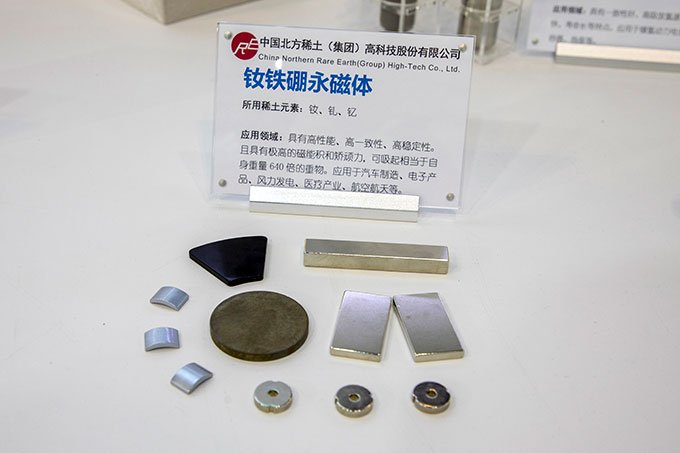
In the middle of the Mojave Desert, just off Interstate 15 between Los Angeles and Las Vegas, sits the Mountain Pass mine. Surrounded by a high plateau of pale rock and desert scrub, this 600-foot-deep open pit hums with activity. Trucks haul blasted rock to the surface, where it is crushed in pursuit of valuable

Explosions heard, flights canceled as U.S. and Israel strike Iran

Iran may ‘lash out harder’ following Khamenei’s death

Rescue forces operate at a building hit by an Iranian missile strike in Tel Aviv, Israel, on Sunday, March 1, 2026. Bloomberg | Bloomberg | Getty Images The escalating conflict in the Middle East is fueling fears that Washington’s pursuit of regime change in Iran, and Tehran’s retaliation, could destabilize regions from the Gulf to

How China Drives Global Green Energy Transition through Intelligent Manufacturing

How China Drives Global Green Energy Transition through Intelligent Manufacturing

HARBIN, China, March 1, 2026 /PRNewswire/ — As a vanguard of China’s power equipment industry, Harbin Electric Corporation (HE) is accelerating the development of new power systems centered on green and low-carbon vision. As China’s first state-owned enterprise for exporting large-scale power units, HE has been proactively participating in the Belt and Road cooperation as a

0
Would love your thoughts, please comment.x
()
x