TOPEKA, Kan. (KCTV) – A Kansas bill banning cell phone sin schools has ignited debate over student safety and local control.
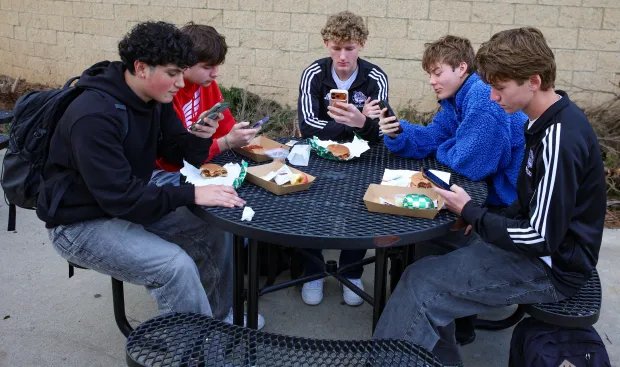
Senate President Ty Masterson announced on Wednesday, Feb. 18, that he is fast-tracking a bill that would bar students from using personal devices during school hours.
Senate Bill 302 was moved on Tuesday from the Education Committee to the Committee on Ways and Means, an unusual procedural shift.
The proposal has divided Kansas, with parents and law enforcement supporting the ban while school boards, teachers’ groups and students push back against what they call state overreach.
At least 240 Kansas school districts already have their own cell phone policies, according to the Kansas Association of School Boards.
Critics say a statewide mandate would undermine local decision-making and create confusion.
What the bill would do
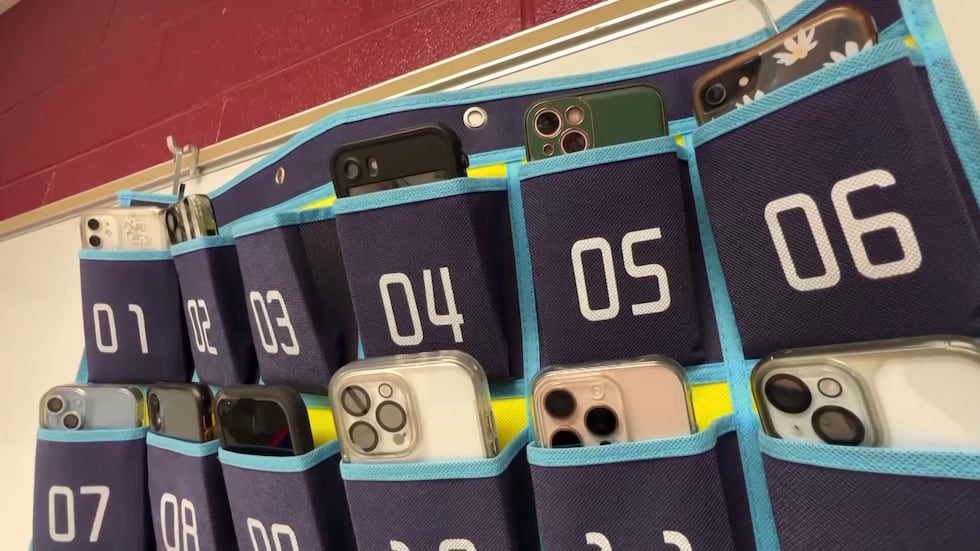
SB 302 would ban cell phones in public schools and state-accredited private schools during school hours. Non-accredited private schools would now be exempt.
The bill also would bar teachers from using social media to communicate directly with students, aiming to prevent inappropriate contact on unmonitored platforms.
Masterson said the measure addresses both classroom distractions and protects private school independence.
“The epidemic of cell phones disrupting classrooms and damaging our kids’ mental health is a top priority,” Masterson stated. “But a fix must not trample on the independence of private schools.”
The Kansas State Department of Education raised concerns about the bill’s language, noting confusion over whether the ban applies during “instructional time” or the entire “school day.”
The distinction matters as lunch and passing periods do not count toward required school hours.
Supporters: Phones enable predators, harm mental health
Parents and child safety advocates testified that cell phones expose students to predators and damage mental health.
Emily Brownlee, an Overland Park mother and former teacher, told lawmakers that social media platforms profit from harming children.
“Our children exist in a world where they are incredibly vulnerable to predation, addiction, depression, anxiety and suicidality – all of which are promoted and glorified on social media,” Brownlee said.
Retired Detective Kevin Cronister, who investigated internet crimes against children for seven years, said schools are a high-risk location for predators to contact victims.
“Based on my experience, I’ve identified that much of the conversations between predators and children take place in two high-risk locations: their bedrooms late at night and at school,” Cronister told legislators.
“Kids have enough freedom at school to sneak away briefly with their device to communicate in private, while not being worried about parental involvement,” he concluded.
Cronister said he has seen cases where predators used a victim to gain access to friends at school, turning one victim into multiple.
Other supporters include the Alliance for a Healthy Kansas, Kansas Action for Children, the Wichita Public School Board and the Kansas Coalition for Distraction-Free Schools.
Critics: Bill undermines local control, burdens teachers
Some school boards and education groups oppose the mandate, arguing local districts should make their own policies.
Leah Fliter of the Kansas Association of School Boards said the state should not override decisions made by locally elected officials.
“Our 2,000 locally elected board members – who are the parents, grandparents, and loved ones of Kansas students – are keenly aware of concerns about the impact of cell phone use on student achievement and student mental health,” Fliter stated. “In fact, as of July 2025, at least 240 Kansas school districts had implemented policies that regulate cell phone use during the school day.”
A state mandate would force districts to divert attention from local student needs, she claimed.
Kailey Howell, a Spring Hill High School senior, told lawmakers the bill unfairly punishes responsible students and would burden teachers with enforcement.
“As a 4.0 student involved in a variety of extracurriculars, I have always prioritized my learning,” Howell told legislators.
“Why should I now be unfairly stripped of my devices when I never did anything wrong to earn such a consequence?” she concluded.
Howell warned that teachers would become “police officers, keeping watch for a stray phone,” while students blame them for the restrictions.
The Kansas PTA and Unified School Administrators also oppose the bill.
What happens next
The Ways and Means Committee has not scheduled a hearing on SB 302. If the committee approves the bill, it would advance to the Senate floor for a vote.
If passed by the Senate, the bill would move to the Kansas House. The final passage would send it to Governor Laura Kelly’s desk to be signed into law or vetoed.
The bill was prefiled on Jan. 6. The Education Committee held a hearing on Jan. 15 before the bill was transferred to Ways and Means on Feb. 17.
Copyright 2026 KCTV. All rights reserved.