Back in 2018, when Donald Trump was first menacing the global trade system, the world’s largest car market suddenly went into reverse. After decades of uninterrupted growth, car sales in China began to backslide as its economy sputtered. Foreign carmakers, which then controlled around three-fifths of the market, were hit hard. Now forecasters are expecting China’s car market to once again go backwards. Local carmakers, which dominate the market today thanks to their prowess in electric vehicles (EVs), may bear the brunt this time. Even so, foreign carmakers will not be spared as Chinese rivals accelerate their expansion abroad.
A BYD ATTO 3 electric vehicle is displayed at the BYD Pakistan Metropole Experience Center, in Karachi, Pakistan July 23, 2025. (REUTERS)
The scale of the current reversal in China is still uncertain, but the hazard lights are flashing. Having returned to growth in 2021, annual sales of cars hit 23.8m last year, around 4% more than in 2024, according to the China Passenger Car Association (cpca), a government-backed trade body. Yet in the final quarter sales fell every month compared with the year before. The ever-hopeful cpca expects sales to remain flat this year, but others are far more pessimistic. Bernstein, a broker, predicts a decline of 5-9%.
There are other signs of trouble. Last month the China Association of Automobile Manufacturers, another state-backed trade group, appears to have deferred the publication of its weekly sales data—a sure sign of growing anxiety over weakening numbers. What is more, after years of bumper growth, even the sales of EVs may dip this year, thinks Gavekal, a research firm.
The slump has several causes. One, according to Gavekal, is that purchases of evs by companies and government bodies have run out of steam after a surge in demand in late 2024, when a subsidy was introduced for scrapping older cars, bringing sales forward. The scaling back of the subsidies this year will weigh on demand, as will the imposition of a new 5-10% purchase tax on evs. Sales figures will also suffer because of tighter restrictions on dealers registering new cars themselves, to boost sales figures, and then exporting them as “zero miles” second-hand vehicles.
As China’s car market shrinks, its long-running price war, fuelled by excess production capacity, will only intensify. That explains the government’s latest effort to rein in discounting. On February 12th China’s antitrust watchdog published rules banning the sale of cars for less than the cost to manufacture them. It is unclear how strictly this will be enforced, and less formal efforts to curb the price war have failed in the past. Executives at foreign carmakers, whose combined market share has fallen by half since 2018, say they hope the initiative succeeds. They cannot compete with Chinese rivals on price.
Unfortunately for carmakers outside China, a slowing domestic market will lead to even greater vehicle exports from the country, says Tu Le of Sino Auto Insights, a consultancy. These have surged in recent years as Chinese carmakers have sought more profitable markets abroad. Bernstein expects a further expansion in 2026 of 10-15%, reaching a total of 6.5m-7m vehicles, compared with around 750,000 in 2018. That will heap even more pressure on incumbent carmakers elsewhere, a number of which have recently been hit by vast write-downs on ev investments that were intended to help them keep pace with Chinese rivals.
It remains unclear how long China’s car market will remain stalled for. Even so, the reversal is yet another reminder to the world’s carmakers that what happens in the country steers the industry everywhere.
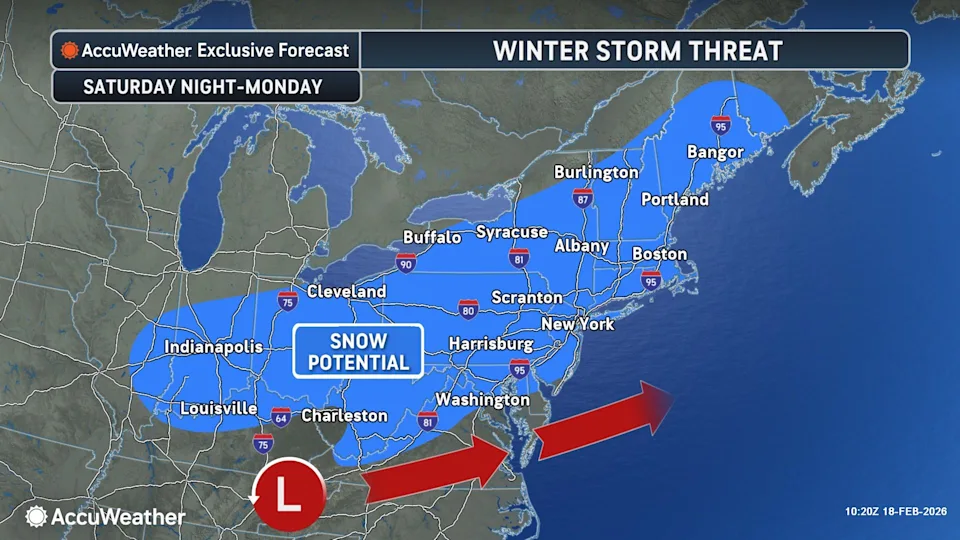
After a few days of warmer weather in Staunton reaching into the low 60s, the Augusta County region may see a mix of rain and snow on Sunday depending on storm’s track and whether it will be cold enough. It’s hard to believe that we may see temperatures as high as 68 degrees on Friday
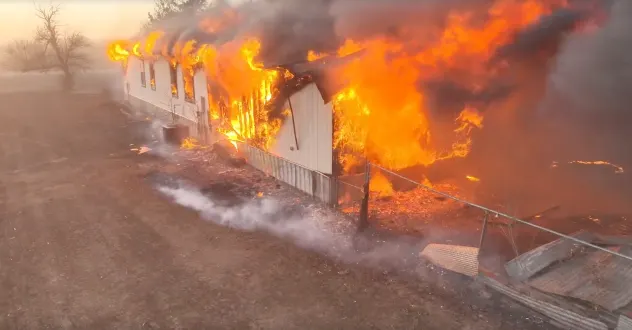
A volatile wildfire threat is unfolding across the southern Plains this week, with the largest blaze early in the 2026 wildfire season, the Ranger Road Fire, scorching huge swaths of land in western Oklahoma and southwestern Kansas. On Tuesday, the Oklahoma Department of Emergency Management reported widespread wildfire activity across Beaver, Texas and Woodward counties,
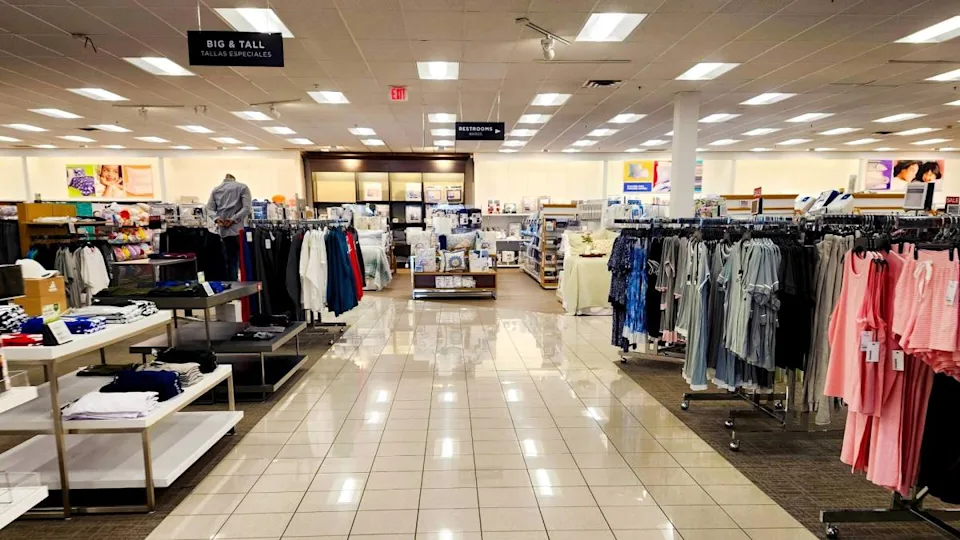
Over the past few years, Kohl’s has struggled to attract customers to its stores, despite recent turnaround efforts to boost low sales. In response to these ongoing challenges, the retailer is rolling out a bold new section in all locations to win back a key customer group. In the third quarter of 2025, Kohl’s saw
The astounding 313% gains that shares of Micron Technology (NASDAQ: MU) have clocked over the past year have brought the company’s market capitalization to around $463 billion, a big increase from the $100 billion-plus level a year ago. The stunning rise in Micron stock is justified by the phenomenal jump in the company’s revenue and
The Trump administration is disputing a new paper from the New York Federal Reserve asserting that US consumers and businesses are bearing the bulk of the higher costs from tariffs imposed last year. “The paper is an embarrassment,” National Economic Council Director Kevin Hassett told CNBC on Wednesday. “I think it’s the worst paper I’ve
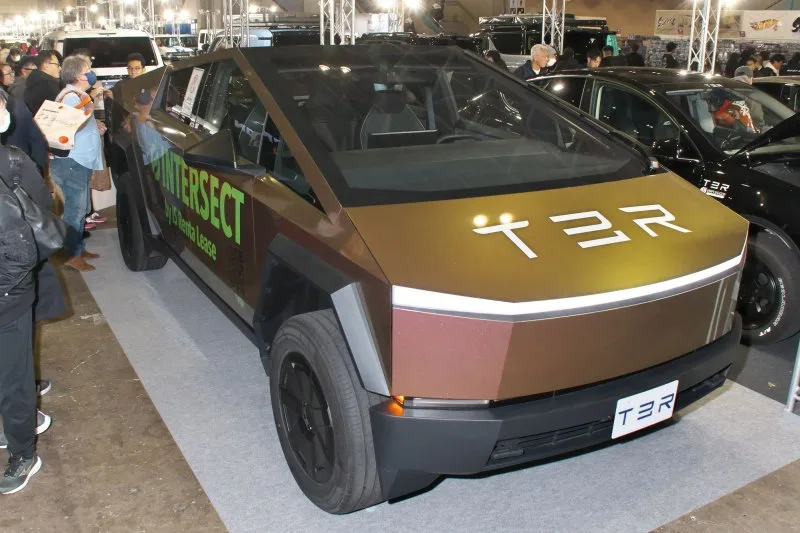
Tesla Cybertruck is on display during the Tokyo Auto Salon 2026 at Makuhari Messe in Chiba-Prefecture, Japan, in January. Tesla will no longer market its “Autopilot” driver-assistance system in California. File Photo by Keizo Mori/UPI Feb. 18 (UPI) — Tesla will stop using the term “Autopilot” in marketing of its vehicles in California, the state’s
The life of a Congolese asylum seeker granted permission to stay in the United States is in “grave danger” after ICE secretly flew her to an unknown African nation, while the woman’s husband – a widely feared local politician who allegedly had her father shot dead as she watched – continues to hunt her across
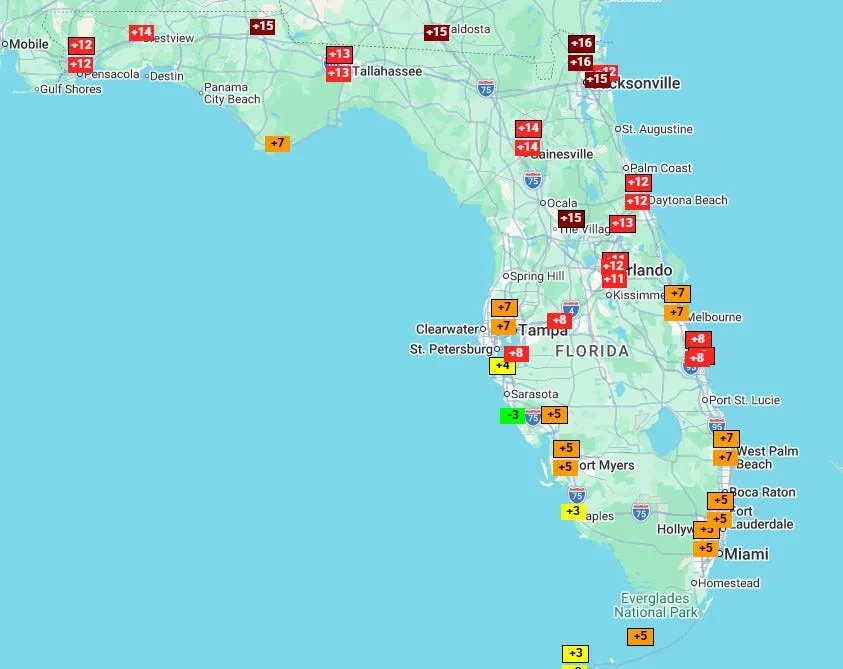
A splash of springtime heat will quickly turn to a wintry chill in the coming days as a meaty cold front descends through Florida promising a whiplash of seasons. Record-chasing high temperatures of up to 15 degrees above normal in some areas of the Sunshine State on Friday, Feb. 20 are forecast to dive into
One of the reasons people may find saving for retirement difficult is that it’s hard to come up with an end goal. If you’re trying to buy a $40,000 car, you need to save $40,000. It’s pretty simple. But there’s no set cost to retirement, so it’s hard to get a handle on how much
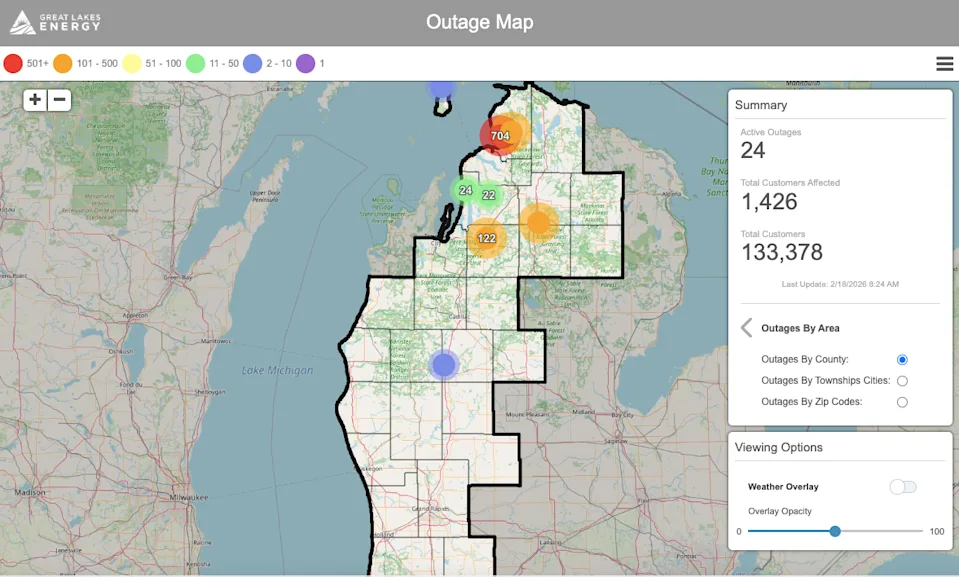
Thousands of Northern Michigan residents were without power on Wednesday morning as a winter storm moved through the region. As of 8:30 a.m., Great Lakes Energy was reporting 24 active outages affecting 1,426 customers. Presque Isle Gas & Electric had four active outages affecting 144 customers. Cloverland Electric Cooperative reported eight active outages affecting 898
The trans suspect who opened fire at a Rhode Island ice hockey rink on Monday killed his ex-wife and adult son, authorities said, while his daughter alleged he had a “vendetta” against the family. Robert Dorgan, 56, fatally shot his ex-wife, Rhonda Dorgan, at the Dennis M. Lynch Arena in Pawtucket as well as his
Bitcoin has the potential to double in value this year. Here’s why. With Bitcoin (BTC 0.78%) currently trading for less than $70,000, it might seem inconceivable that it could more than double in value to hit a price of $150,000 this year. Yet, that’s exactly what some top Wall Street firms are now predicting. So
YouTube experienced a widespread global outage on Tuesday, disrupting access for users across multiple countries, including India and the United States, with hundreds of thousands reporting problems loading videos and using related services. Users reported errors while opening the YouTube app and website, videos failing to play. Early during the disruption, Google acknowledged the issue
BRUSSELS—Belgium’s foreign minister summoned the U.S. envoy over comments Ambassador Bill White made regarding the country’s treatment of Jews, marking at least the third dispute in recent months between an American ambassador and the country of his posting. U.S. Ambassador to Belgium Bill White The U.S. ambassadors to France and Poland have also gotten into
Updated on: Feb 18, 2026 11:46:42 AM IST Despite progress in the talks between the US and Iran, tensions continue to linger. US Iran tensions live updates: Amid the tensions between the US and Iran, the US military has moved over 50 fighter jets to the Middle East. As per reports, this development comes just
The AI buildout is still going on at a strong pace. Finding the best artificial intelligence (AI) stocks for 2026 isn’t as hard as some market followers make it out to be. The trick is to again focus on the companies that benefit from the massive AI buildout going on right now. Chip designers, chip
Iran and the United States met for second round of indirect talks in Switzerland’s Geneva on Tuesday. While officials have stated that both nations have made progress, tensions continue to linger between Tehran and Washington. Iranian Foreign Minister Abbas Araghchi, speaks during the Conference on Disarmament, at the European headquarters of the United Nations in
Is a boneless chicken wing just a nugget? Can a cauliflower have wings? Can parts of a chicken be “reconstituted into some sort of Franken-wing?” Those are some of the big questions that a federal judge in Illinois answered on Tuesday, concluding that boneless chicken wings can be marketed as wings. In a 10-page ruling,
Here are two solid companies that have paid a dividend every year for over 50 years. Dividend stocks are great tools to help you achieve financial freedom. Quality companies with a long record of making dividend payments will automatically deposit cash in your account, usually on a monthly or quarterly schedule. And it’s a great
Update: YouTube issued an update noting that the homepage was back, but the team was working on a ‘full fix’. YouTube was reportedly down. (Unsplash) “An issue with our recommendations system prevented videos from appearing across surfaces on YouTube (including the homepage, the YouTube app, YouTube Music and YouTube Kids). The homepage is back, but