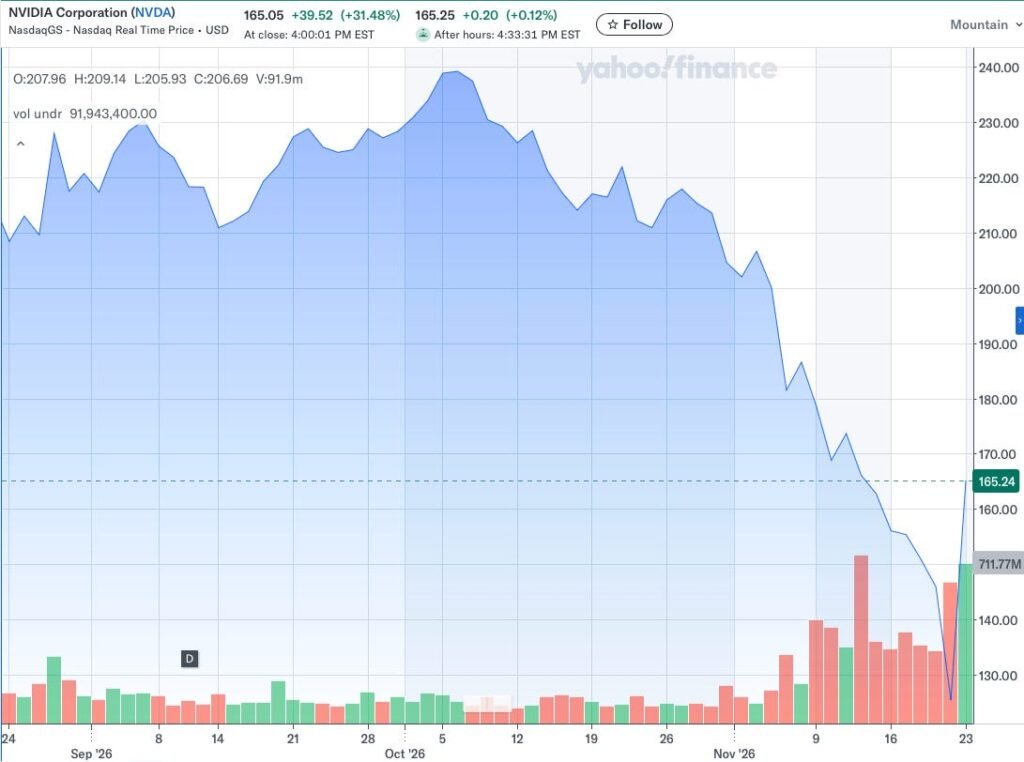
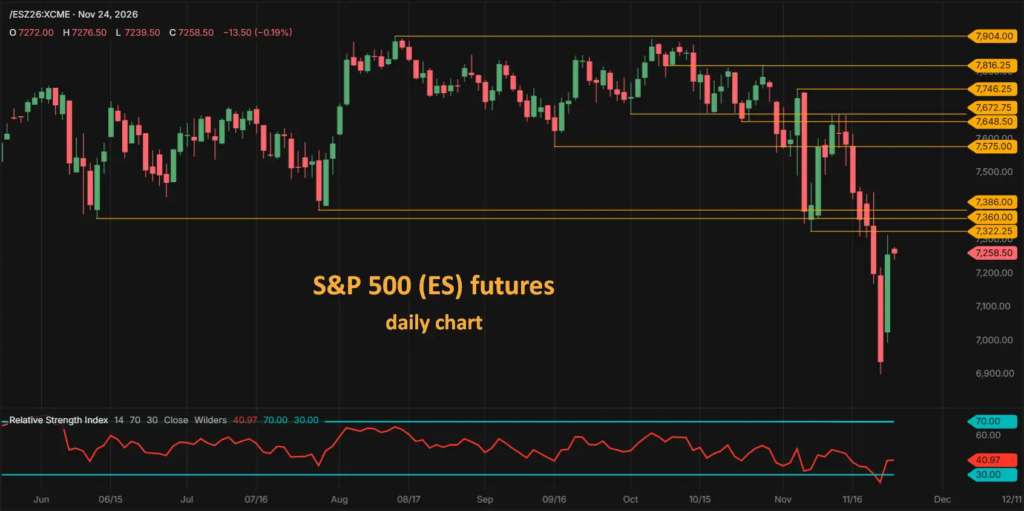
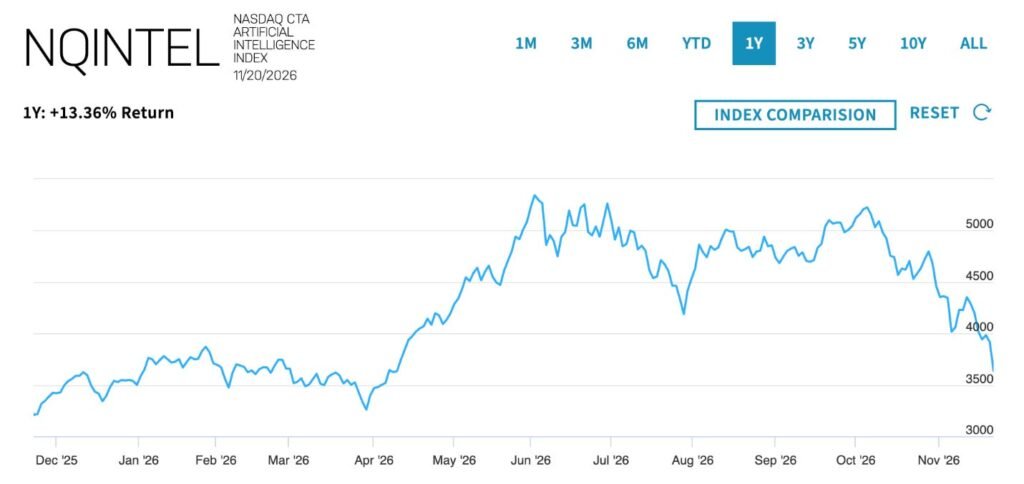
The first week of February was a doozy in markets. Anthropic, one of the more outspoken companies in the artificial intelligence space, rattled stocks with the seeming superpowers of its Claude chatbot, prompting a selloff across the software sector with potential obsolescence suddenly knocking at its door.
Marta Norton, chief investment strategist at Empower Investments, told Axios that it reminded her of the displacement of BlackBerry when iPhones redefined what a smartphone looked and felt like. Technically, the company survived, but BlackBerry stock is down 98% since 2008.
Bloomberg calculated that roughly $1 trillion of market value evaporated within a week. Still, one of Wall Street’s top voices sees a very different reality for the economy as a whole: a boom.
As investors fret over volatility in the tech sector and the potential for an AI bubble to burst, Torsten Slok, chief economist at Apollo Global Management, urged investors to look past the noise. The anxieties surrounding the software industry are unlikely to drag down the broader economy, he argued in his widely read Daily Spark column.
In a research note published on Feb. 8, Slok predicted “the problems in software will not become a macro problem because the underlying U.S. economy is about to take off.”
The three pillars of growth
He identified three strong tailwinds that are set to propel growth over the coming quarters, shifting the economic narrative from digital volatility to physical expansion.
First, the infrastructure backbone for the AI revolution is already paid for. Slok noted that “many financings for data centers have already been committed for 2026.” This suggests that regardless of short-term stock fluctuations in software companies, the capital expenditure on the physical hardware and facilities required to run them is locked in, providing a floor for economic activity.
The Financial Times’ Tim Bradshaw noted that Google, Amazon, and Meta surprised investors with a combined $660 billion in capital expenditure plans for 2026 in their latest earnings releases. Bank of America Research’s Vivek Arya forecasts AI capex quadrupling to $1.2 trillion by 2030, suggesting this will be a stable feature of the economy.
Second, the reindustrialization of the United States is gaining momentum, with “strong political support for bringing back production facilities for semiconductors, pharmaceuticals, and defense,” he explained. This reshoring effort represents a structural shift in the economy, moving investment into tangible manufacturing assets that are less susceptible to the fickle sentiment that often governs tech stocks.
And third, the government is keeping fiscal policy expansionary. Citing data from the Congressional Budget Office (CBO), Slok pointed out that government spending is projected to lift GDP growth this year by 0.9 percentage points.
A dangerous pivot?
This projected surge in economic activity leads Slok to a conclusion that might surprise investors hoping for relief from the Federal Reserve. “The bottom line is that it is very difficult to be bearish on the U.S. economic outlook,” he wrote.
Just a day earlier, Slok had argued that public markets are a “shrinking part” of the U.S. economy, presenting a collection of facts that strongly suggest people overreact to movements in equities such as the $1 trillion software selloff.
“Most of the time in financial markets is spent on discussing Nvidia, Apple, and Coca-Cola, but these firms and the rest of the S&P 500 companies only make up a very small part of the U.S. economy,” he wrote, noting that employment in S&P 500 companies is only 18% of the total in the economy, while capex by S&P 500 companies is only 21% of the total.
Privately owned companies account for nearly 80% of job openings, while 81% of firms with revenues greater than $100 million are private, he added.
However, a booming economy will bring its own set of complications, according to Slok. While the market’s current obsession is predicting when the Fed will cut rates, he warned that “later this year the conversation in markets will change from talking about Fed cuts to instead talking about the Fed having to hike.”
This forecast suggests the U.S. economy may be on the verge of overheating. If growth accelerates as Slok anticipates—driven by data center construction, a manufacturing renaissance, and fiscal stimulus—inflationary pressures could force the central bank to tighten monetary policy rather than loosen it.
For investors, the risk isn’t that the AI sector will eat the stock market. The real story is that the “old economy”—construction, defense, and manufacturing—is roaring back to life, potentially forcing a total reevaluation of interest rate expectations for 2026.