The January 24 purge of Zhang Youxia, China’s top general, was a Shakespearean moment in Chinese politics. Even after a decade of high drama in the People’s Liberation Army, the decision by Chinese leader Xi Jinping to remove Zhang from the PLA’s top governing body, the Central Military Commission (CMC), suggests a new level of intrigue. Xi and Zhang have known each other for decades: Xi’s father and Zhang’s father were comrades-in-arms during China’s ferocious civil war, and Zhang was widely seen as Xi’s closest ally in the army’s high command. As recently as 2022, after a flurry of purges of other senior leaders, Xi not only allowed Zhang to stay in office past the unofficial retirement age but also promoted him to the top position for a military officer. A relationship that long and deep is valuable in any setting, but especially in the vicious, low-trust world of Chinese politics.
Zhang’s dismissal is thus the ultimate illustration of just how little trust Xi has in the PLA. As we argued in our August 2025 essay on Xi’s efforts to remake the military, “Xi wants to ensure he can employ violence with confidence, but Xi’s confidence seems to be the rarest and most precious commodity for an otherwise well-resourced military.” But Zhang’s unceremonious dismissal also illustrates the depths of Xi’s ruthlessness in managing the PLA. It is one thing for a leader to show no mercy to his enemies; it is quite another for him to be so pitiless with his friends.
There is a lot of speculation about what Zhang did—or didn’t do—to provoke Xi’s ire as well as what the purge means for the Chinese leader’s grasp on power and his military objectives vis-à-vis Taiwan and the United States. While those elements of the saga may reveal themselves in time, what is clear now is Xi’s belief that power exists in its exercise. In making a public spectacle of pushing Zhang aside, Xi has laid bare a defining feature of his political style. No one is safe—not even those with deep personal connections to Xi. As PLA Daily, the military’s official periodical, stated the day after Zhang’s ouster, Xi’s campaign has “no off-limit zones.” Even by the standards of Xi’s unsparing rule, this is a seismic shift in Chinese politics.
TIMING IS EVERYTHING
The outstanding question for many observers is why Xi made this move against Zhang now. In its official account, PLA Daily declared that Zhang was removed for fueling “political and corruption problems that threaten the party’s absolute leadership over the armed forces and undermine the party’s governance foundation,” and his actions “caused immense damage to the construction of combat capabilities.” Given that corruption in the PLA is endemic, these claims are rightly seen by many outside observers as a pretext for removing Zhang rather than the true cause. This is especially true since Zhang previously ran the Equipment Development Department (formerly the General Armaments Department), which is responsible for procuring military supplies and is riddled with graft; as we highlighted in August, it was remarkable—and a sign of Xi’s faith in him—that Zhang had not been purged since several previous leaders of the department had already fallen.
The timing of the removal becomes more interesting when you consider that Xi could have easily waited until next year to let Zhang retire peacefully. After all, Zhang, who is 75 years old, is already past the unofficial retirement age of 68, and the next Chinese Communist Party Congress—which ushers in a new cohort of Chinese officials every five years—is only around 18 months away. Removing Zhang now thus looks and feels very similar to the political flex that Xi made at the last party congress in 2022, when he had his predecessor, Hu Jintao, publicly and forcibly escorted from the proceedings while Xi looked on impassively. Xi’s eviction of Hu—as well as his decision to force the rump remnants of Hu’s faction into an early retirement—seemed gratuitous at the time; Xi had already effectively marginalized Hu’s power base by either usurping his supporters’ authority or relegating them to inconsequential positions, and centralizing power in his own hands. But in the end, Xi’s moves signaled his desire for complete dominance of Chinese politics—and his ability to populate the uppermost echelons of the party with men he had known for decades, including Zhang.

The other intriguing element of the official rationale for Zhang’s removal was that it was not just for corruption but also for “political” problems that could affect the party’s control over the military. Some have read this to mean that Zhang intentionally flouted or challenged Xi’s rule. Although this is a possibility, it is unlikely given their long-standing relationship. Moreover, if Zhang posed a political challenge to Xi, Zhang probably would have been the first to go down in the most recent anticorruption push, which got underway in 2023, rather than the last.
Given the paranoid streak in Chinese politics, it is always possible that Xi may have merely suspected that Zhang posed some kind of challenge to his power. If that is the case, it raises questions about whether Xi is succumbing to the pervasive and damaging suspicion that afflicts so many other dictators. But Xi has a long and well-documented history of hardhearted rationality. He does not generally act without reason. It is more likely that Zhang simply outlived his usefulness to Xi. Having relied on Zhang to consolidate his own power in the PLA and eliminated most of Zhang’s generational cohort, Xi may have calculated that it no longer made sense to keep an aging and corrupt officer in the top job.
THE GRAND FINALE
In this way, Zhang’s purge should be seen as the climax in a longer drama. The ouster, after all, did not occur in a vacuum. For more than a decade, Xi has endeavored to puncture the military’s insularity, assert his control, and bend the organization to his will. Zhang’s removal seems to be the culmination of Xi’s campaign not just to extirpate corruption from the PLA high command but also cull nearly an entire generation of senior officers from service. Xi seems to have concluded that virtually none of the military leaders in the current leadership generation were up to the twin tasks he had set for them: ensuring that the military is thoroughly politicized and thus willing to fulfill its role as the ultimate guarantor of party rule should it be challenged by internal unrest; and building a military that can fight foreign adversaries if he needs it to, including the U.S. military.
The result is that of the seven members who were on the CMC at the start of Xi’s third term in 2023, only one uniformed member and one civilian (Xi) are left standing. Tellingly, the lone military survivor is the officer responsible for overseeing corruption investigations; he was promoted to vice chairman last fall amid a different wave of military purges. The virtually wholesale removal of the commission’s leadership now affords Xi a blank slate. Ahead of next year’s party congress, he can both repopulate and even restructure the commission, choosing not only who will serve but also which parts of the military are represented.
Xi has already done this kind of overhaul once: a decade ago, he renovated and streamlined the high command, in part by kicking the service chiefs off the CMC. Xi could make additional tweaks this time around, or he may have concluded that the effort to reform the PLA has failed and that the PLA cannot reform itself. Given the dearth of senior officers left, he has fewer options for replenishing the top ranks. He may instead install more civilians on the commission—traditionally, a second civilian is installed only when he becomes the heir apparent—which would help cement party control of the military.
Xi’s desire to revamp the PLA goes far beyond corruption or effectiveness. Just months after Xi joined the CMC as a vice chairman in the fall of 2010, the Arab Spring unfolded, and he watched several authoritarian regimes collapse because their security services put their own interests above the ruling party’s. Breaking the military’s capacity to resist the party’s commands, especially in a crisis, is of utmost importance to Xi—even more so than ensuring combat readiness. His driving concerns about party control of the military are not just operational; they are existential.
EYES ON THE PRIZE
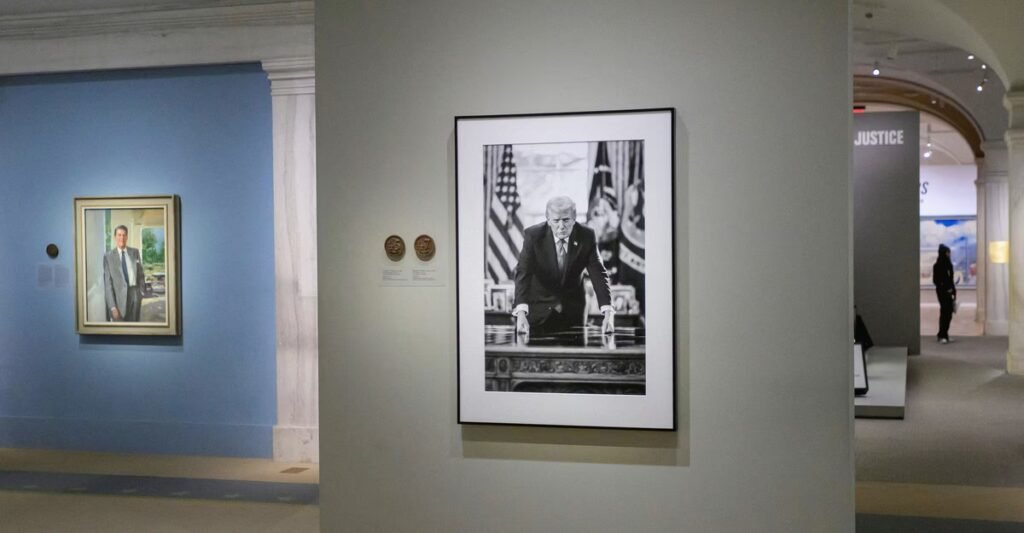
Xi’s willingness to strip the high command down to its studs and renovate it at this moment is also a signal that he is relatively comfortable with China’s external environment—especially the cross-strait dynamic. The Trump administration does not seem to be especially ready to defend Taiwan: U.S. President Donald Trump said “it’s up to Xi” what China does regarding Taiwan, and the National Defense Strategy released by his administration last month omitted any mention of Taiwan. Meanwhile, the political dynamic in Taiwan seems to be shifting in Beijing’s favor ahead of the island’s next national election in 2028. Support for Taiwanese President Lai Ching-te and his Democratic Progressive Party, which takes a harder line against Beijing, has declined since its failed effort last summer to recall legislators in the opposition party, the Kuomintang, and a new leadership in the Kuomintang is calling for more reconciliation with Beijing.
But cutting this deeply into his own network to excise the rot in the PLA does not indicate that Xi is distracted from the possibility of military conflict over Taiwan. Instead, it shows just how serious he is about ensuring that the military is ready for such an unwelcome eventuality. He is taking advantage of the cross-strait calm to prepare. And as the PLA’s major military drills around Taiwan in December demonstrated, China can already respond to provocations and even inflict punishment on the island short of an invasion. It has built a significant lethal force that could respond in a variety of ways if called on.
Who, exactly, will field the call, should Xi make it, is a mystery for now. But whenever he names a civilian to the CMC, that person will be seen as the de facto front-runner to succeed Xi as China’s next leader, thus injecting a new character into this swirling drama. It is worth remembering that Xi began his anticorruption campaign around 2012 after the downfall of Bo Xilai, who had been his rival to succeed Hu Jintao. In its lurid details, that case evoked an airport novel: Bo’s wife had murdered a British businessman who had been a fixer for the family. Although we do not yet know what operatic feuds or basic miscalculations led to Zhang’s demise, his ouster is a reminder about the folly of applying algebraic logic to the dramatis personae of China’s political hierarchy. There are likely to be many more acts in this unfolding play. The real question for Xi is whether he can author the denouement that so far seems to have eluded him: a military that lives up to his unforgiving standards of party loyalty and operational proficiency.
Loading…