With Venezuela raid, US tells China to keep away from the Americas

  • Beijing bet big on relations with Caracas
  • American operation deals blow to Chinese strategy in the Americas
  • Trump’s China policy includes both concessions and assertive new stances

WASHINGTON, Jan 11 (Reuters) – Among the many goals of last week’s U.S. military operation that captured Venezuelan President Nicolas Maduro was to send China a message: stay away from the Americas.

For at least two decades, Beijing has sought to build influence in Latin America, not only to pursue economic opportunities but to gain a strategic foothold on the doorstep of its top geopolitical rival.

Sign up here.

China’s progress – from satellite tracking stations in Argentina and a port in Peru to economic support for Venezuela – has been an irritant for successive U.S. administrations, including that of Donald Trump.

Several Trump administration officials told Reuters the U.S. president’s move against Maduro was intended in part to counter China’s ambitions, and Beijing’s days of leveraging debt to get cheap oil from Venezuela were “over.”

‘WE DON’T WANT YOU THERE’

Trump made the message explicit on Friday, expressing discomfort with China and Russia as a “next-door neighbor,” in a meeting with oil executives.

“I told China and I told Russia, ‘We get along with you very well, we like you very much, we don’t want you there, you’re not gonna be there,'” Trump said. Now, he said, he will tell China that “we are open for business” and that they can “buy all the oil they want from us there or in the United States.”

The success of the January 3 early morning raid, in which U.S. commandos swept into Caracas and grabbed the Venezuelan president and his wife, was a blow to China’s interests and prestige.

The air defenses that U.S. forces quickly disabled had been supplied by China and Russia, and Trump said 30 million to 50 million barrels of oil under sanctions, much of it previously bound for Chinese ports, will now be sent to the U.S.

Analysts say Maduro’s capture exposed Beijing’s limited ability to exert its will in the Americas.

The attack exposed the gulf between China’s “great-power rhetoric and its real reach” in the Western Hemisphere, said Craig Singleton, a China expert at the Foundation for Defense of Democracies think tank.

“Beijing can protest diplomatically, but it cannot protect partners or assets once Washington decides to apply direct pressure,” he said.

In a statement to Reuters, the Chinese embassy in Washington said it rejected what it called the United States’ “unilateral, illegal, and bullying acts.”

“China and Latin American and Caribbean countries maintain friendly exchanges and cooperation. No matter how the situation may evolve, we will continue to be a friend and partner,” said Liu Pengyu, the embassy’s spokesperson.

The White House did not respond to a request for comment.

But one administration official said “China should be concerned about their position in the Western Hemisphere,” adding that their partners in the region increasingly realize China cannot protect them.

TRUMP’S UNCLEAR CHINA POLICY

The Trump administration’s policy toward Beijing appears contradictory, with concessions aimed at calming a trade war on one hand and more assertive U.S. support for Taiwan on the other.

The Venezuela operation appeared to tilt U.S. policy in a more hawkish direction.

Indeed, the timing of the U.S. attack amplified Beijing’s embarrassment.

Just hours before being toppled, Maduro met China’s special envoy for Latin America, Qiu Xiaoqi, in Caracas, his last public appearance before becoming a U.S. captive.

The meeting, staged on camera even as U.S. military forces were secretly poised to launch their operation, suggested Beijing was blindsided, said another U.S. official.

“If they knew, they wouldn’t have gone so publicly,” the U.S. official told Reuters.

For years, Beijing poured money into Venezuela’s oil refineries and infrastructure, providing an economic lifeline after the U.S. and its allies tightened sanctions from 2017.

Along with Russia, China has also provided funding and equipment for Venezuela’s military, including radar arrays recently billed as able to detect advanced U.S. military aircraft. Those systems did little to impede a raid U.S. officials boasted had been conducted without any losses.

“Any nation around the world with Chinese defense equipment is checking their air defenses and wondering how safe they actually are from the United States,” said Michael Sobolik, a senior fellow at the Hudson Institute think tank.

“They are also noticing how China’s diplomatic assurances to Iran and Venezuela resulted in zero meaningful protection when the U.S. military arrived.”

China is now studying what went wrong with those defenses so they can shore up their own systems, according to a person briefed on intelligence about their response.

CHINA FACES OTHER REGIONAL RISKS

China may soon be under pressure elsewhere in the region.

It has sought to increase its influence in Cuba, and the U.S. suspects Beijing runs an intelligence-gathering operation there. China denies this, but last year pledged better intelligence sharing with Cuba.
In the days after the Venezuela operation, Trump said U.S. military intervention in Cuba, which has suffered from the loss of Venezuelan oil, was likely unnecessary because it appeared ready to fall on its own.

The Trump administration also continues to push Chinese companies away from port operations around the Panama Canal, the critical waterway linking the Atlantic and Pacific Oceans.

A State Department official said the U.S. “remains concerned” about Chinese influence near the canal, but appreciates Panama’s actions to curb this, including by exiting Beijing’s Belt and Road Initiative and auditing the Panama ports concession under contract to Hong Kong-based CK Hutchison (0001.HK), opens new tab.

While China may be on the back foot in the region, analysts caution that extended U.S. military involvement in Venezuela or deterioration in the security situation there could open a door for Beijing to reassert itself.

Daniel Russel, a former senior State Department official now with the Asia Society, said the dramatic shift in Washington under Trump from a rule-of-law posture to a “spheres-of-influence logic focused on the Western Hemisphere” could play into China’s hands.

“Beijing wants Washington to accept that Asia is in China’s sphere, and no doubt hopes that the U.S. will get bogged down in Venezuela,” he said.

Reporting by Michael Martina, Trevor Hunnicutt and David Brunnstrom; Additional reporting by Jeff Mason, Steve Holland and Bo Erickson; Editing by Don Durfee and Rod Nickel

Our Standards: The Thomson Reuters Trust Principles., opens new tab

Source link

Visited 1 times, 1 visit(s) today

Related Article

The defining narrative of 2025 extends beyond China leading 66 of 74 critical technologies—the nature of those leads has evolved from manufacturing to mastery.

Analyzing China’s Lead in 66 of 74 Technologies (Complete List)

Global power dynamics have evolved into a silent race, spanning from the chips in our devices to the quantum algorithms shaping future wars. On December 1, 2025, the Australian Strategic Policy Institute (ASPI) released its latest strategic technology assessment, revealing a staggering reality: China now leads in 66 out of 74 critical technologies. The United

China applies to put 200,000 satellites in space after calling Starlink a crash risk

China applies to put 200,000 satellites in space after calling Starlink a crash risk

Chinese firms have signalled plans to launch more than 200,000 internet satellites, filing submissions with a UN agency just as Beijing accused Elon Musk’s SpaceX of crowding shared orbital resources. A dozen or so submissions from various Chinese satellite players were filed with the International Telecommunication Union (ITU) at the end of last month. The

Record trips underscore Greater Bay Area connectivity deepening

Record trips underscore Greater Bay Area connectivity deepening

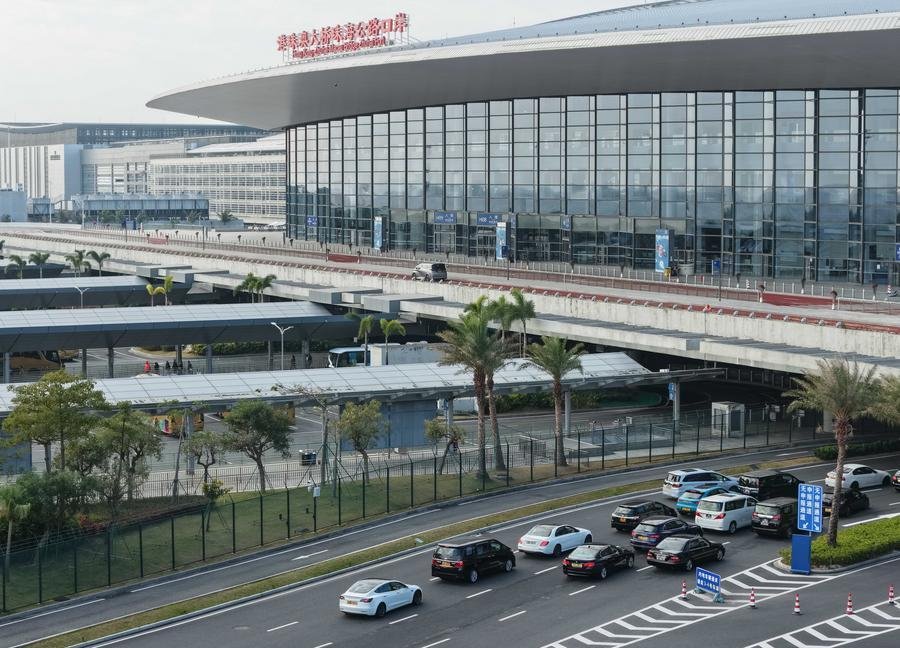
A drone photo shows vehicles waiting to be inspected at the Zhuhai port of the Hong Kong-Zhuhai-Macao Bridge in Zhuhai, south China’s Guangdong Province, Jan. 6, 2026. (Xinhua/Deng Hua) The Zhuhai land port of the Hong Kong-Zhuhai-Macao Bridge has handled over 100 million inbound and outbound passenger trips as of Tuesday since it opened to

the Transformation of China’s Fashion Industry Via AI

the Transformation of China’s Fashion Industry Via AI

From initial hype to tangible industrial momentum, the 2025 China Apparel Industry AI Technology Application Summit emerged as a key battleground where fashion companies demonstrated their technological advancements. In early 2025, the AI upheaval sparked by DeepSeek not only rattled U.S. stock markets but also ignited widespread enthusiasm across various Chinese industries, including fashion, which

Expanded drone utilization boosts low-altitude economy in China's Greater Bay Area

Expanded drone utilization boosts low-altitude economy in China’s Greater Bay Area

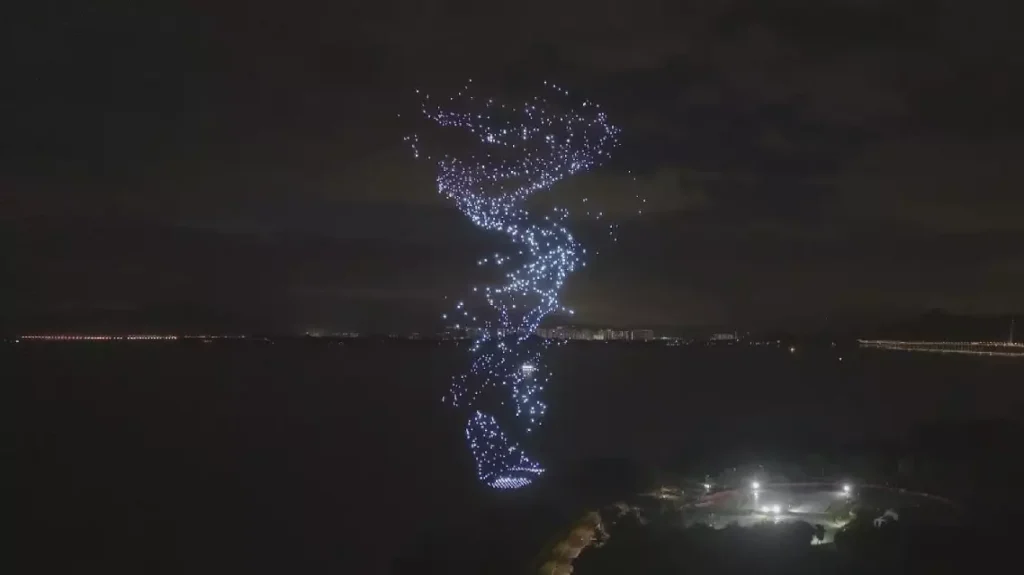
China’s Guangdong–Hong Kong–Macao Greater Bay Area (GBA) is experiencing a boom in its low-altitude economy as companies continue to expand the range of applications for drones. One very popular use of drones in recent years is drone-performed light shows. At a drone show company in Shenzhen City, south China’s Guangdong Province, formation designers are working

China's Greater Bay Area attracts int'l enterprises, forging new tech hub

China’s Greater Bay Area attracts int’l enterprises, forging new tech hub

A growing number of international enterprises have launched operations at the Hong Kong Park of the Hetao Shenzhen-Hong Kong Science and Technology Innovation Cooperation Zone, positioning it as a global technology hub just one month after its official launch. The park was set up on December 22, 2025 and established under the vision of “one

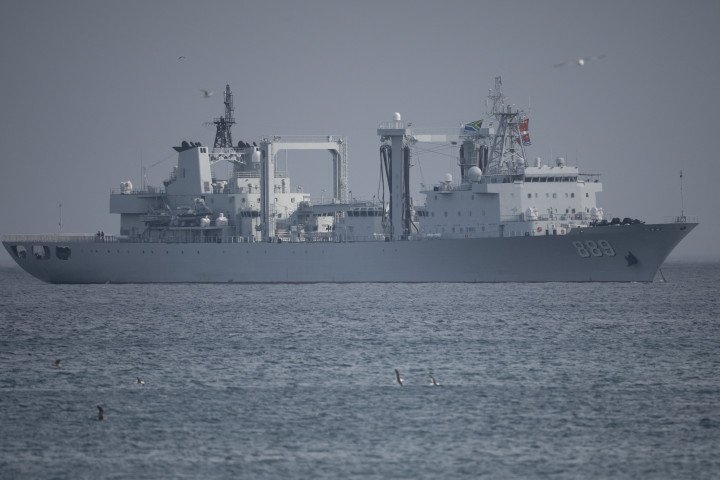
Chinese supply ship Taihu (Hull 889) moored in False Bay near Simon’s Town ahead of the Will For Peace 2026 drills with BRICS Plus navies. (Source: Getty Images)

China Leads Warships From Russia and Iran in Show of Force Near South Africa’s Key Trade Route — UNITED24 Media

Naval forces from China, Russia, Iran, and South Africa have launched a multinational maritime exercise near one of the world’s key shipping corridors, signaling a coordinated demonstration of naval capability outside of traditional Western-led frameworks. According to Army Recognition on January 10, the China-led exercise, named Will for Peace 2026, is being held from January 9 to 16 in South African territorial waters, particularly around Simon’s Town

Nvidia CEO Jensen Huang to the US and China: World wants you two to figure out your relationship, the idea that..

Nvidia CEO Jensen Huang to the US and China: World wants you two to figure out your relationship, the idea that..

Nvidia CEO Jensen Huang urged Washington and Beijing to resolve their differences, deeming economic decoupling “naive.” He believes the US-China relationship is crucial for global stability, advocating for technological independence alongside economic interdependence. Huang is optimistic about resuming sales of advanced chips in China, a market worth billions, despite geopolitical complexities. Nvidia CEO Jensen Huang

Venezuela-style strike on Taiwan’s leader could prove tricky for China

Questions linger on combat showing of China’s latest weaponry Taiwan readied for years to fend off ‘decapitation’ attacks on leaders Maduro capture inspires some online Chinese users HONG KONG/TAIPEI, Jan 9 (Reuters) – (This Jan 9 story has been corrected to say Democratic Progressive Party, not Democratic People’s Party in paragraph 4) Some Chinese online

South Africa's strained ties with US face new test

South Africa’s strained ties with US face new test

Mayeni JonesAfrica correspondent, Johannesburg SA National Defence Force The participation of warships from China, Iran and Russia in military exercises hosted by South Africa could further strain the country’s relationship with the US, which are already at an all-time low. A News24 report suggesting South Africa is hoping to persuade Iran to become an observer

The team of engineers deployed a second shield tunnelling machine to excavate from the opposite direction underneath the Yangtze for a mid-river docking. Photo: Handout

How China turned a mega-project failure into a defining moment in modern engineering

China has pulled off a daring underground feat, using a multimillion-dollar tunnel boring machine (TBM) to recover its stranded twin beneath the country’s largest river. The rendezvous between the TBMs was achieved with just 2mm (0.078 inch) of vertical error and no horizontal deviation under the Yangtze’s riverbed, setting a benchmark for precision in deep

Integrated supply chains propel Greater Bay Area's low-altitude economy growth

Integrated supply chains propel Greater Bay Area’s low-altitude economy growth

The Guangdong–Hong Kong–Macao Greater Bay Area (GBA) is emerging as a key engine for China’s fast-growing low-altitude economy by leveraging its dense industrial networks, efficient logistics systems, and rapid innovation capacity. From logistics and manufacturing to urban services, the region is building an integrated industrial chain that allows low-altitude industries to scale up at unprecedented

share

China closing the technological gap with the US

Despite facing challenges in chip manufacturing, Chinese artificial intelligence (AI) researchers are optimistic about narrowing the technological gap with the United States, driven by an increasing culture of risk-taking and innovation. At an AI conference in Beijing on Saturday, key industry leaders discussed the growing confidence within China’s AI sector, with particular focus on the

Town cashing-in on China's billion-dollar appetite for luxury durian

Town cashing-in on China’s billion-dollar appetite for luxury durian

Getty Images China’s surging demand for durians is shaping South East Asia’s farming towns Driving around Raub, a small town in Malaysia, it’s impossible to miss the prickly fruit that powers its economy. You can smell it from the steady stream of trucks winding through mountain roads, leaving a faint fragrance on their trails. You

Denmark Greenland Trump

Security fears and dreams of minerals behind Trump’s push to ‘own’ Greenland, experts say

To hear President Donald Trump tell it, a push to take control of Greenland is a “national security” necessity, critical to reinforcing control of the Arctic against possible threats from Russia and China. For America’s allies and Greenlanders themselves, however, Trump’s threats to seize the semi-autonomous Danish territory cut much deeper, and threaten to shatter

Tim Cocks

China, Russia, Iran start ‘BRICS Plus’ naval exercises in South African waters

Item 1 of 4 A Russian vessel arrives at the Simon’s Town Naval base ahead of the BRICS Plus countries which include China, Russia and Iran for a joint naval exercises in South Africa’s, in Cape Town, South Africa, January 9, 2026. REUTERS/Esa Alexander [1/4]A Russian vessel arrives at the Simon’s Town Naval base ahead

Robert Scammell, Senior Tech Editor, Business Insider.

China’s Probe Into Meta’s Manus Deal Is a Warning About ‘Singapore Washing’

China has a message for US tech firms: Hands off our AI talent and tech. That’s what Beijing is signalling by announcing a probe into Meta’s acquisition of Manus, analysts told Business Insider. The probe, confirmed by China’s Ministry of Commerce in a Thursday press conference, will investigate whether the acquisition complies with the country’s

0
Would love your thoughts, please comment.x
()
x