The contrast between China’s three biggest financial markets is grim.
The CSI 300 Index, which tracks the biggest stocks listed in Shanghai and Shenzhen, is headed for a third straight year of losses with a decline of 14 per cent, the worst run since its inception in 2005. The 82-member Hang Seng Index in Hong Kong has lost 15 per cent, and is set for an unprecedented four-year losing streak. In all, more than US$1.2 trillion has been lost in the three exchanges this year.
“Some investors will shift their focus to the Beijing exchange after the impressive rally, which is rarely seen in recent months,” said Dai Ming, a fund manager at Huichen Asset Management in Shanghai. “There are opportunities to make some big bucks for investors who have been severely burned on the main board this year.”
Beijing’s stock exchange is a new kid on the block in China’s three decades-old markets, and was once shunned for its illiquid and weaker companies. Starting with 10 debutants in November 2021, the bourse is now home to 236 listed companies with a combined market capitalisation of 412.4 billion yuan, or 1.75 billion yuan per stock.
The average capitalisation for companies on the Shanghai bourse stands at 20.3 billion yuan and at 10.9 billion yuan for the Shenzhen exchange. China’s onshore equity market is worth US$9.5 trillion.
The Beijing bourse’s combined 412.4 billion yuan in market capitalisation is dwarfed by those of the Shanghai and Shenzhen exchanges, at 46 trillion yuan and 30.9 trillion yuan, respectively. The biggest company is carbon and graphite products maker BTR New Material, which is capitalised at 25.9 billion yuan, according to data provider Shanghai DZH.
Suzhou Jcon Building Technology, a building contractor, is the smallest with a 528 million yuan capitalisation. BTR has fallen 15 per cent this year while Suzhou Jcon has advanced 84 per cent.
The exchange creates an alternative funding avenue for the nation’s start-ups, as envisioned by its chief promoter, President Xi Jinping, in September 2021. It complements similar-minded boards – the Star Market in Shanghai and the ChiNext in Shenzhen.
More than US$6.3 billion has been raised from 229 initial public offerings (IPOs) in Beijingsince its inception. While the market is limited to qualified foreign investors, China has pledged to widen access. Hang Seng Indexes Company, which compiles indices in Hong Kong, is also looking to add Beijing-listed stocks to its family of indices.
“There are gems on the Beijing exchange which investors had long overlooked, causing mispricing,” said Wu Kan, an investment manager at Soochow Securities in Shanghai. “The value discovery is underway on this market and this process is not over yet.”
The BSE 50 Index closed at 1,008.76 on Friday, capping a 7.1 per cent gain this year. The market was destined for a miserable year, when the index hit a record-low on October 23, only to come alive the following day. The index surged 43 per cent in the ensuing eight weeks.
Retail investors are behind the throng of activity, as account openings rose 24 per cent in the two months through November, according to stock exchange data. Average daily trading has risen to 10 billion yuan over the past month, more than double the level before the late October surge.
The exchange simplified the procedure for account openings by scrapping a risk-taking test required to assess new investors, while also allowing more brokerages to register new retail traders online. A minimum 500,000 yuan is needed to start trading.
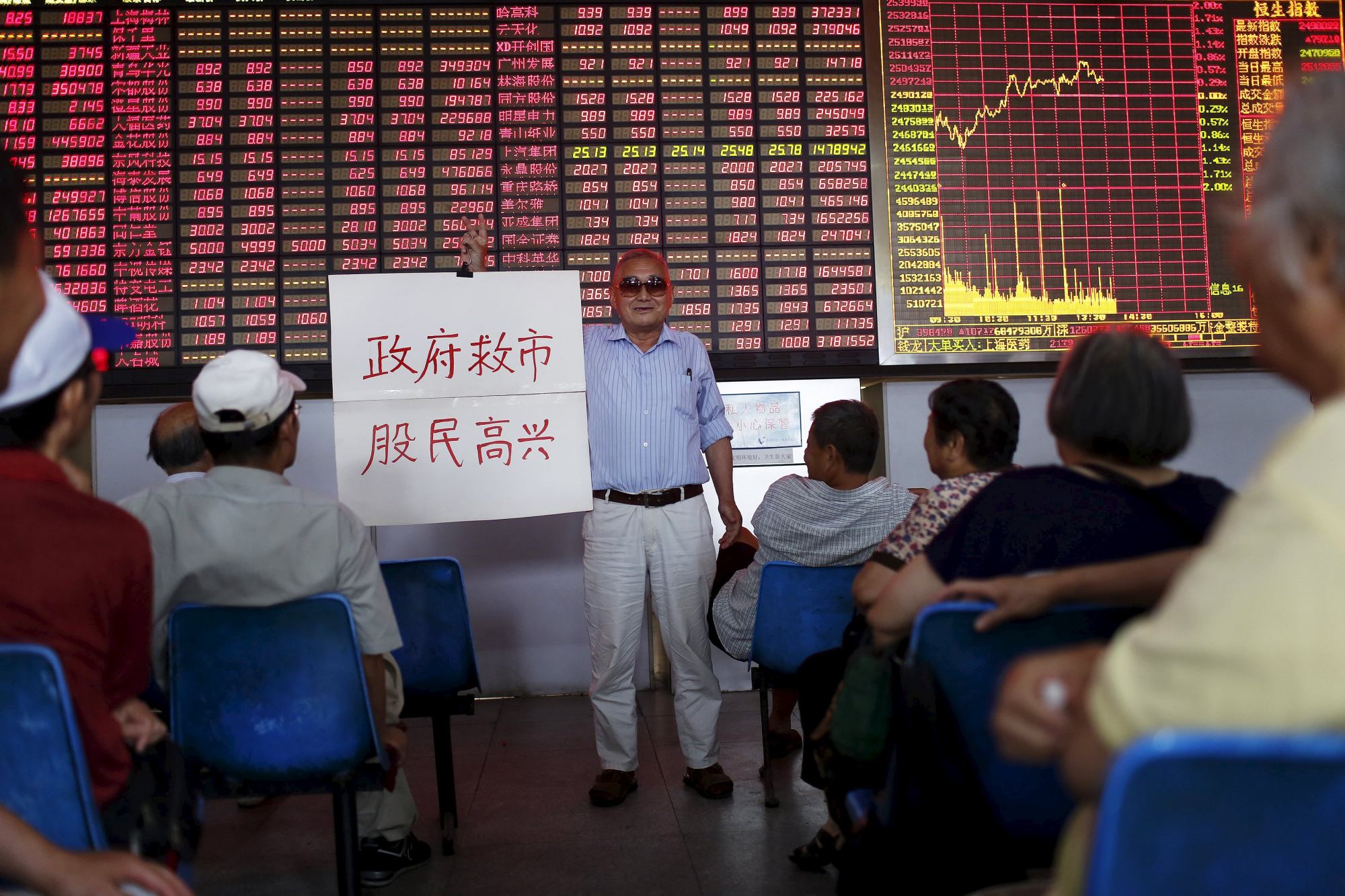
Some seasoned fund managers are alarmed by the turn of events, saying the retail frenzy in Beijing has parallels to stock market collapses in 2008 and 2015. A sentiment-fuelled rally, against the backdrop of a patchy economic recovery, is fragile at best, according to Jingxi Investment Management.
Two of the biggest moments of frenzy in China’s stock market history both ended in mayhem.
The Shanghai Composite Index lost almost half of its value in 2015 after a 150 per cent surge, wiping out US$5 trillion in market value, when regulators cracked down on illegal margin trading. In an earlier episode, the gauge jumped six-fold over a two-year period through 2007, only to crash 70 per cent in 2008, when China cooled an overheated economy and the Lehman Brothers crisis unfolded.
Chinese stocks set unwanted records as 2023 losses stun market bulls
Chinese stocks set unwanted records as 2023 losses stun market bulls
“The companies on the Beijing exchange are mini-capitalisation stocks, so they are very prone to manipulation.” said Wang Zheng, a money manager at Jingxi, the Shanghai-based fund. The exchange has become a hotbed for all kinds of speculation, he added, despite the weak economic outlook.
The bourse allows a 30 per cent daily rise or fall in stock prices, compared with a narrower 20 per cent swing for small-cap companies listed in Shanghai and Shenzhen. There is no restriction on daily stock price movements on Hong Kong’s GEM board of smaller companies and the main board.
Policymakers have inadvertently given their seal of approval to the rally over the past two months with a series of market-friendly measures.
Asia’s first Saudi ETF gains in debut in milestone for China-Middle East ties
Asia’s first Saudi ETF gains in debut in milestone for China-Middle East ties
The Beijing exchange also has a favourable place in China’s efforts to deepen the services industry. A plan promulgated last month by the State Council entails more funding support for its listed entities by lowering the requirements for loan collateral, among others.
At a forum last month, the bourse’s vice general manager, Sun Li, said listing rules are being revised to expand the pool of IPO candidates. For now, the stock exchange only accepts applications from companies that have been trading on the nation’s over-the-counter market for at least 12 months.
“Values have now emerged as the government constantly rolls out supportive measures and the market reforms take hold,” said Zhu Haibin, an analyst at Kaiyuan Securities. “Furthermore, it will be easier for more long-term capital to be allocated to quality companies after they are included in more index-based fund products.”

“We have placed [companies with unusual gains] under close surveillance and urged members to strengthen management of clients’ trading behaviours and disclose relevant risks to investors in a timely manner,” the Beijing exchange said on November 27. “We will continue to strengthen oversight of trading.”
Some of the stocks with extremely abnormal trading patterns, including Tianjin Kaihua Insulation Material and Hebei Raisesun Information Technology, were placed under close monitoring, according to the exchange. The BSE 50 index has dropped 8.4 per cent since reaching a 16-month high on November 27.
Chinese man arrested for spreading rumours about stock market
Chinese man arrested for spreading rumours about stock market
Xu Shenjun, an analyst at Jianghai Securities, sees the pullback as a minor hiccup. The market has plenty of room to advance in 2024, chiefly on valuation appeal. Index inclusion from as early as December could be another magnet for fund inflows, others said.
Beijing-listed stocks trade at about 22 times their earnings, compared with 39 times multiple for Shanghai’s Star Market and 32 times for Shenzhen’s ChiNext board, according to Kaiyuan Securities. A rule issued in October spelled out ways for companies to migrate to the Shanghai or Shenzhen bourses, potentially allowing them to enjoy higher valuations.
So far, three companies – Guandian Defense Technology, Highbroad Advanced Material and Shiyan Taixiang Industry – have gained “promotion” to the Shanghai and Shenzhen exchanges. Another nine including Shaanxi Tonly Heavy Industries and Suzhou Hechang Polymeric Materials are the most likely candidates for the transfer, according to brokerage Shenwan Hongyuan Group.
Domestic institutional investors have been slow to participate in Beijing-listed stocks so far. Mutual-fund managers had invested only 6.3 billion yuan, or 4 per cent of their assets as of June this year, according to Shenwan Hongyuan. ETFs tracking the BSE 50 Index from China Asset Management and China Southern Asset Management have each attracted only 400 million yuan from investors, according to Jianghai Securities.
That could change in the near future. Index compiler China Securities Index said Beijing-listed companies could join the CSI index family of indices from as early as this month. That will facilitate fund inflows into such quality companies, according to Zhu at Kaiyuan Securities.
“On the whole, valuations are still attractive [relative to peers in other markets],” said Xu, the analyst at Jianghai Securities. “When sentiment recovers, some bets with low valuations and solid earnings are still worth investing in.”