AI finds its real-world footing at Hong Kong’s RGC Research Summit

[The content of this article has been produced by our advertising partner.]

Hong Kong’s first Research Grants Council (RGC) Research Summit, held at Hong Kong Science Park on December 11, arrived at a watershed moment when technological breakthroughs such as AI are no longer simply scientific discoveries within ivory towers but are directly impacting our daily lives. 

Presenting their work at the Summit, Hong Kong researchers often in partnerships with scholars and experts in the Greater Bay Area (GBA) and internationally, put AI to use across a wide range of applications in health care, transport systems, manufacturing settings and environmental protection. 

The Summit, which coincided with the RGC’s 35th anniversary, highlighted the maturing of Hong Kong’s globally connected academic research community with continuous government investment and public funding over the last three and half decades.

It is against this backdrop that the Summit sought to set a direction for the years ahead, when universities are challenged by disruptive technological transformation and geopolitical tensions, particularly in areas where cutting-edge technologies are becoming more critical for Hong Kong’s future development.

Strategic direction from the UGC and RGC
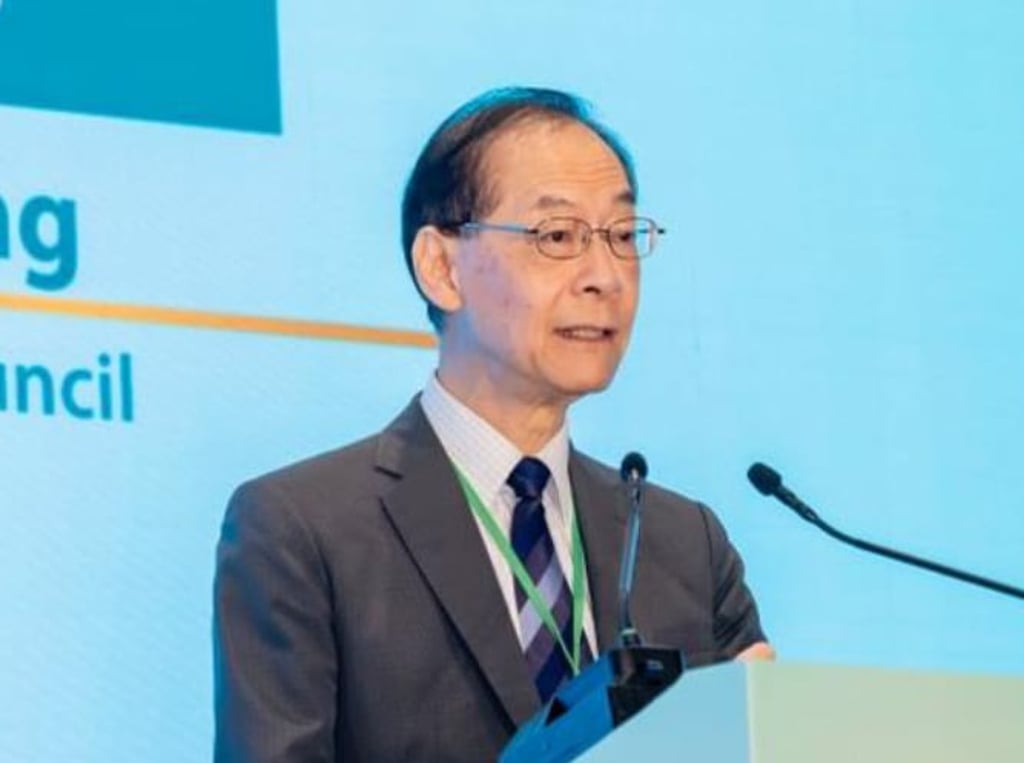
Professor Timothy W. Tong, Chairman of the RGC, set the Summit against the Council’s longer history. When the RGC was set up in 1991 over three decades ago, it managed HK$100 million per year, whereas the current annual commitment stands at HK$2.7 billion, he said.

Professor Timothy W. Tong, Chairman of the Research Grants Council, speaks at the opening of the RGC Research Summit marking the Council’s 35th anniversary.

More than 20 competitive funding schemes are now in operation and more than 1,500 new projects receive support every year, he said, adding that collaboration has become far more common, with overseas partnerships rising from a few thousand a decade ago to more than 7,000 today. 

Hong Kong’s research ecosystem, Professor Tong pointed out, has developed the expertise, talent and momentum for the next phase of scientific discovery, which he expects will bring more impactful work that would benefit society and the economy. 

Plenary discussions on Research Future and Hong Kong’s role
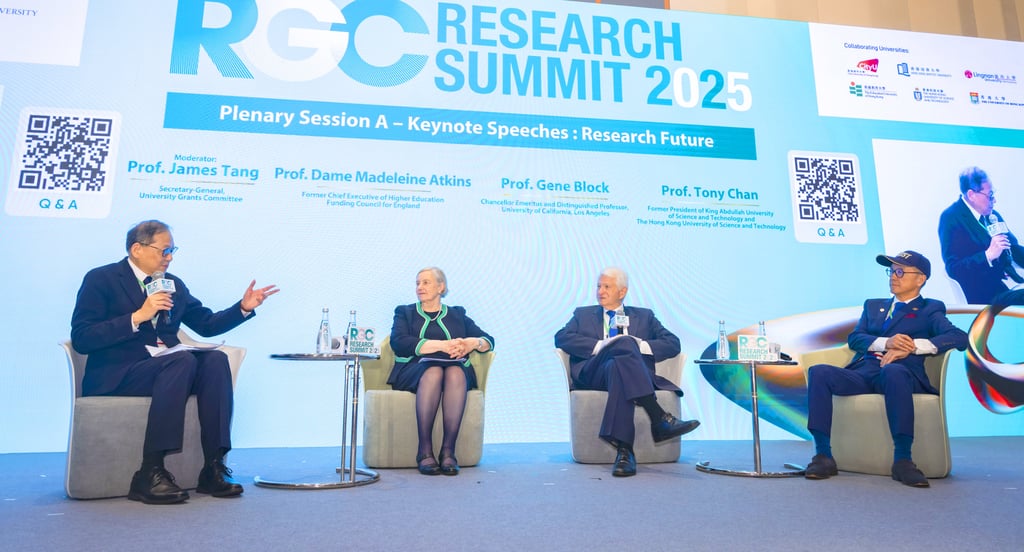
The opening plenary of the Summit brought together three eminent academic leaders as keynote speakers: Professor Gene Block, Chancellor Emeritus  of UCLA from the United States, Professor Dame Madeleine Atkins, President Emeritus of Lucy Cavendish College, University of Cambridge from the United Kingdom,  and Professor Tony Chan, former President of HKUST and KAUST in Saudi Arabia, who spoke about the future of research and addressed the challenge with the widespread use of AI and disruptive technologies for academic research and the development of higher education globally. 

Speakers at Plenary Session A discuss the growing use of AI in research and the need for applying revolutionary technologies safely and responsibly.

The panelists addressed the problems that may arise when decisions are made by opaque models, while the need for openness, human supervision, fairness, privacy and secure handling of information was acknowledged.

While they viewed AI as a useful research tool, the consensus was that the scientific community, especially our younger generation would need to maintain scepticism and judgement that are key to academic work. Discussion also shifted towards the way funding bodies around the world are trying to support work that can be put to the test in real-world settings more quickly than before, especially with rising competition from big tech corporations and other players beyond the existing academic boundaries.

Moderating this session, Professor James Tang, Secretary-General of the University Grants Committee (UGC), called for research with purpose and collaboratively with partners outside of academia and globally. He noted that Hong Kong has reached a point where knowledge can be used in ways that were not possible even five years ago.

He said that the Summit was organised to encourage research in new areas of enquiry and to work across institutions in different fields such as data science, sustainable technologies and biomedicine which increasingly require collaborations across disciplines and institutions around the world.

On Hong Kong’s privileged position as an interface and super-connector, he said that the city’s links with the Chinese Mainland and the wider world internationally give it an unusual combination of access to Chinese scientific communities and those elsewhere with unparalleled opportunity for scientific collaborations globally.
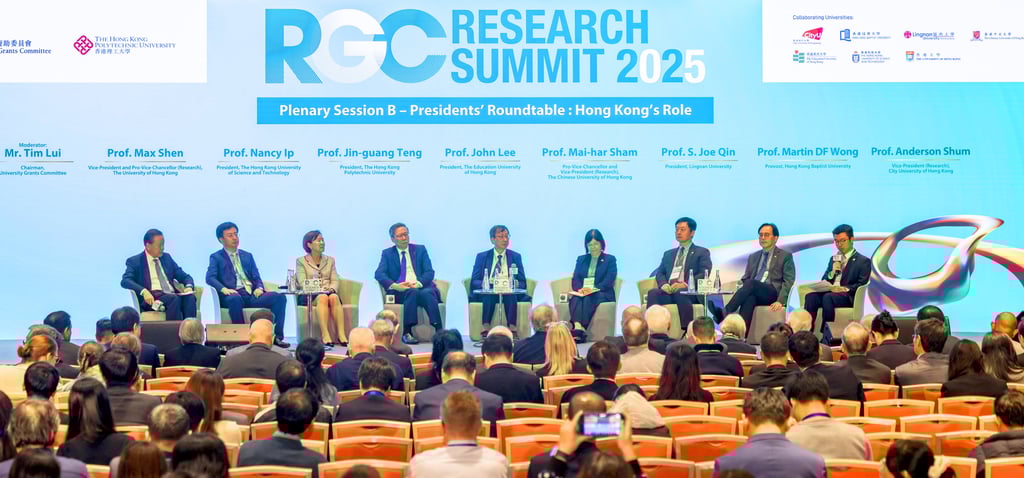
The second plenary session brought together presidents and senior staff from the eight UGC-funded universities, including Professor Anderson Shum of CityU, Professor Martin DF Wong of HKBU, Professor S. Joe Qin of LU, Professor Mai-har Sham of CUHK, Professor John Lee of EdUHK, Professor Jin-guang Teng of PolyU, Professor Nancy Ip of HKUST and Professor Max Shen of HKU. 

University presidents and senior leaders from the eight UGC-funded institutions take part in a roundtable discussion on collaboration, talent development and Hong Kong’s role in research.

They spoke about working with partners in the GBA and abroad, noting a steady pipeline of joint projects across Hong Kong’s research community and the value of channelling talent, knowledge and technology through the city.

The need for more space for labs and research centres was raised, alongside calls for recruitment policies that attract more young researchers to develop their careers in Hong Kong. Much of the discussion focused on keeping university research open to partners in the Chinese Mainland and overseas, while finding ways for knowledge transfer to benefit society as whole.

Research projects show AI entering everyday use

The Summit highlighted some exciting application of pioneering research work put into practical use by showcasing a number of projects supported by the Collaborative Research Fund (CRF) and the Research Impact Fund (RIF).

AI-empowered robots in the operating theatre

One exemplary case in point was a project on intelligent surgical robotic assistants, developing robotic systems that combines visual analysis, sound recognition and robotic control to support surgeons during complex procedures. Image datasets from stomach operations and speech recordings are being used to train models that can recognise instruments, organs, and language, enabling robots to follow procedural flow and respond to spoken commands. The objective is to reduce human errors and ease the strain on clinical teams, with tests carried out on endoscope robots and automated scrub nurse robots in cadaveric procedures.

Digital twins for autonomous driving

Another project on digital twin networking for autonomous driving demonstrated how AI-empowered digital twin services can facilitate the transition of autonomous driving to public roads, making an important impact on improving our daily lives. The team is building a network that links virtual models of roads, vehicles and user behaviour with real-time traffic data. This approach may prepare autonomous driving systems for varied conditions, utilizing digital twin services provided by multiple service providers, and could support real-time simulations for future traffic management.

Sensing through future 6G networks

On the telecommunications side, research into sensing within future 6G networks showed how mobile infrastructure may be put to work in two ways at once. The team is examining how base stations, which already transmit data, may also sense their surroundings. If workable, factories could monitor equipment without extra sensors and vehicles could read their environment with network support. Trials with single and multi-station sensing are under way.

Edge computing for faster AI tasks

Edge computing was the focus of another CRF project. The group is studying ways to bring together devices with different processing strength so that they can run AI tasks quickly as a shared system. The work covers hardware abstraction, resource scheduling and methods for producing optimised code, with autonomous driving used as an example setting.

Studying bridge performance in harsher conditions

One project used decades of data from the Tsing Ma Bridge to study how long-span sea-crossing structures may hold up under more frequent extreme weather. The team is drawing on climate projections, temperature records and wind patterns to suggest updates to design codes and maintenance regimes.

Engineering support for urban greenery

Work on tree root systems in compact cities offered a different example of applied research. The group aims to find ways for trees to grow in road systems without causing disruption or failing in storms. Their methods include using breathable materials within road structures, shaping root paths, improving drainage and reducing pavement heave. The project may help to bring more greenery into dense urban areas while reducing hazards.

Health resilience in a changing climate

This RIF project builds on an earlier study of Hong Kong’s extreme heat, now focusing on the often-overlooked risks of winter cold. It examines how future weather patterns, particularly sudden temperature drops, may affect the physical and mental health of older adults. By combining epidemiological records, climate projections, and social factors, the study identifies vulnerable groups. Co-creating knowledge with NGOs and care providers, the project translates findings into actionable strategies, enhancing public health planning and community support for aging societies.

Policy signals for the next phase of research

In her remarks, Secretary for Education, Dr Choi Yuk-lin said Hong Kong’s universities have raised their profile internationally and that government support for postgraduate and postdoctoral research has been expanded.

Initiatives to bring in more students from abroad, relax admission routes and set up new pathways in medicine and related fields were cited as steps to grow the city’s pool of young researchers, supported by RGC schemes and closer links with international institutions.

The fast spread of AI across transport, health, culture and business will also call for graduates with a mix of technical and practical knowledge, alongside a sound understanding of digital tools, she added. 

 

Source link

Visited 1 times, 1 visit(s) today

Related Article

Over 99% of Hongkongers have low immunity against ‘super flu’: researchers

Over 99% of Hongkongers have low immunity against ‘super flu’: researchers

More than 99 per cent of Hong Kong residents have low immunity against the new “super flu”, a team of researchers has found, as they urged the public to get vaccinated against the rapidly spreading strain. Despite the low level of immunity among the city’s population, the team from the University of Hong Kong’s (HKU)

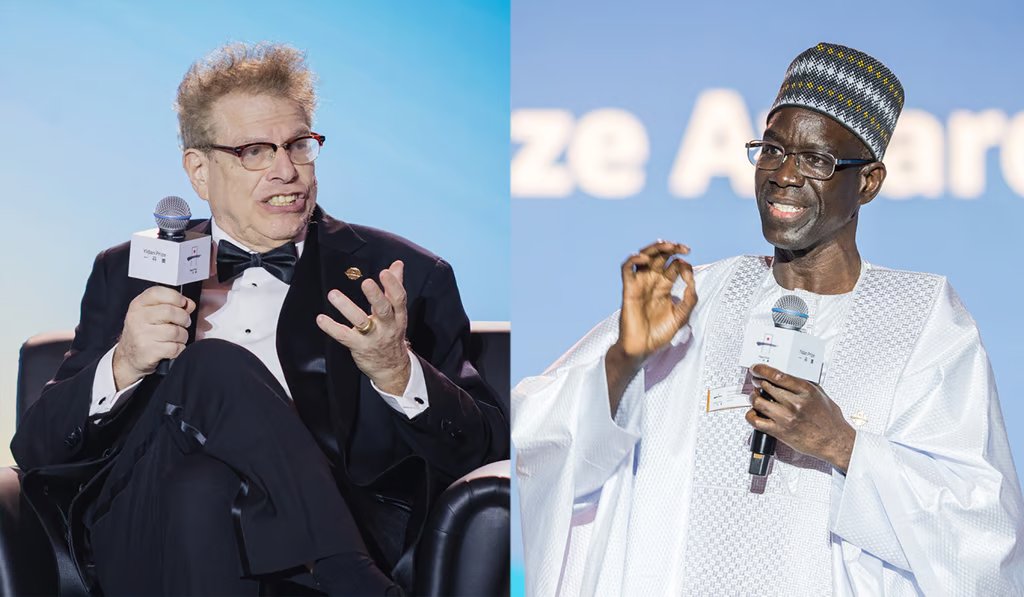
The 2025 Yidan Prize laureates Professor Uri Wilensky (left) and Mamadou Amadou Ly help remove barriers to education by transforming how learners access and engage with knowledge.

How this year’s Yidan Prize laureates reshape modern literacy and skills worldwide

Education has long been considered one of the strongest forces for social progress, shaping safer, healthier and more equitable societies. But as the world changes, learning must evolve with it – a belief that is at the heart of the Yidan Prize, which recognises innovations with the power to transform education and bring lasting change

The new southbound travel scheme kicked off on Tuesday. Photo: Handout

Hong Kong to add more compatible chargers for Chinese EVs as Guangdong cars hit roads

Hong Kong will provide more chargers compatible with Chinese electric vehicles, the transport chief has said, as the first batch of cars from Guangdong province enter the city’s urban areas under a new scheme. Secretary for Transport and Logistics Mable Chan said on Tuesday that nearly 100 mainland Chinese cars entered Hong Kong on the

Professor Timothy W. Tong, Chairman of the Research Grants Council, speaks at the opening of the RGC Research Summit marking the Council’s 35th anniversary.

AI finds its real-world footing at Hong Kong’s RGC Research Summit

[The content of this article has been produced by our advertising partner.] Hong Kong’s first Research Grants Council (RGC) Research Summit, held at Hong Kong Science Park on December 11, arrived at a watershed moment when technological breakthroughs such as AI are no longer simply scientific discoveries within ivory towers but are directly impacting our

Hongkongers urged to quickly sign up for eMPF platform as defence against scams

Hongkongers urged to quickly sign up for eMPF platform as defence against scams

Cybersecurity experts have urged Hong Kong residents to prioritise the use of an official one-stop digital identity app to register their accounts on the city’s new centralised pension fund platform to prevent theft after scammers stole HK$1.8 million. Some also questioned why the Mandatory Provident Fund Schemes Authority (MPFA), which manages the eMPF platform, did

FORMS Syntron delivers digital platforms and compliance-focused fintech solutions for financial institutions.

Cyberport enterprises scale from infrastructure to impact

FINNOSafe is a compliance-led Web3 technology platform for digital asset issuance, custody and settlement. It enables financial institutions to bridge traditional and decentralised finance by using distributed ledger technology.  FINNOSafe supports cross-border payment settlement and asset tokenisation. It has already been used in the Hong Kong Monetary Authority’s Project Ensemble. FINNOSmart is a GenAI platform

Hong Kong tightens rules for waterfront event space after hot-air balloon fiasco

Hong Kong tightens rules for waterfront event space after hot-air balloon fiasco

Hong Kong has tightened rental and operating rules for a new waterfront event space in Hung Hom following a hot-air balloon fiasco in September that left customers frustrated after the organiser failed to obtain a licence for its advertised rides. The Development Bureau on Monday also said that it had beefed up the terms and

房協卓越ESG表現獲三獎   「房屋實驗室」為民創建優質房屋   共融智慧社區

房協卓越ESG表現獲三獎 「房屋實驗室」為民創建優質房屋 共融智慧社區

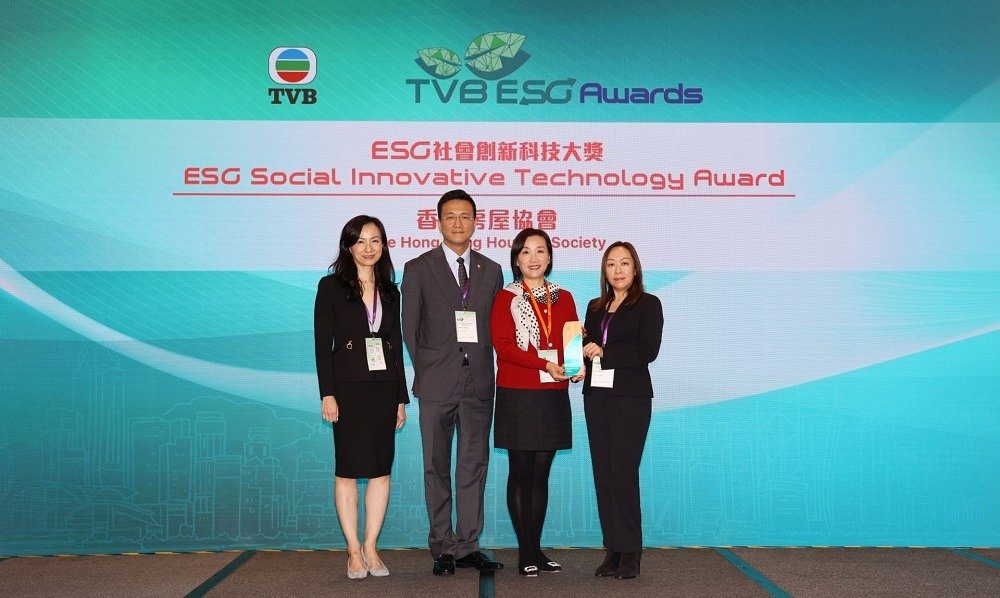
香港房屋協會致力將環境、社會及管治(ESG)和可持續發展原則融入營運核心及各業務層面,為市民創建優質房屋及宜居的生活環境。憑藉卓越的ESG表現,房協連續三年分別獲得電視廣播有限公司(TVB)及灼見名家頒發ESG嘉許,印證房協對ESG的承諾及努力成果。房協一直擔當的角色,除積極採用智慧科技提升建屋與服務質素,以及管理及營運效率,近年更將「跨代共融」的理念全方位融入房屋發展、物業管理、商業租賃,以至社區及長者服務等業務,建立「長、中、青、幼」共融的生活環境,提升居民幸福感,營造共融的智慧社區。於TVB主辦的「環境、社會及管治大獎2025」中,房協連續第二年勇奪「ESG社會創新科技大獎」和「ESG環境創新科技大獎」兩大獎項,表揚房協推動可持續和共融社區的先驅角色,包括率先引入「組裝合成」建築法(MiC)多功能辦公室革新工地文化和提升工人福祉;於工程項目試行氫燃料電池系統;成立全港首個房地產科技共享工作室;於物業管理應用物聯網技術提升營運效率及安全,實踐智慧屋邨管理。較早前,房協在灼見名家與香港恒生大學ESG研究中心協辦的「灼見名家 x 香港恒生大學 ESG 大獎」中,亦榮獲「ESG 傑出嘉許獎」,表揚房協實踐可持續發展及永續創新的卓越表現。房協於2022年成立跨部門可持續發展工作小組,識別六個相關的聯合國可持續發展目標,以制定全面的可持續發展策略,並以「可持續居所」、「低碳轉型」及「裝備未來」三大策略支柱為方針,同時訂立可持續發展的績效指標,引領各部門以統一的目標及行動推動可持續發展。 Source link

Hong Kong online investment scams surge 20% as losses hit HK$3.08 billion

Hong Kong online investment scams surge 20% as losses hit HK$3.08 billion

Hong Kong recorded a 20 per cent increase in online investment scams in the first 10 months of the year, with victims losing HK$3.08 billion (US$395.9 million), according to police. Superintendent Theodora Lee Wai-see of the force’s Anti-Deception Coordination Centre also revealed on Monday that 83 per cent of all fraudulent messages were disseminated through

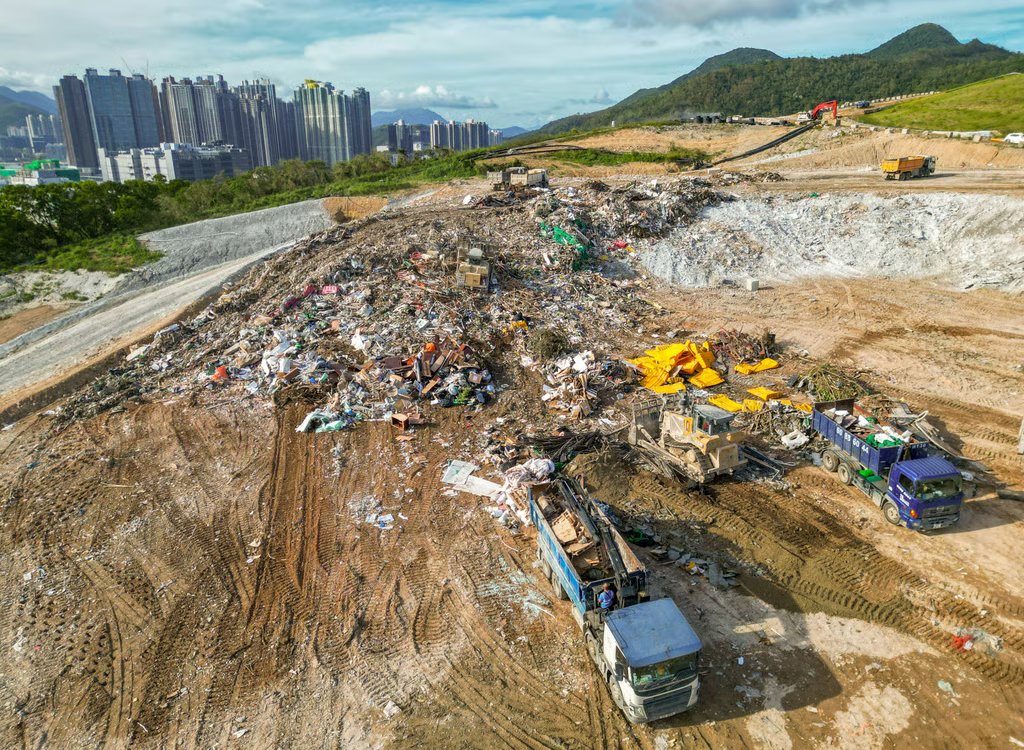
Aerial view of the Southeast New Territories Landfill in Tseung Kwan O. Photo: Sam Tsang

Hong Kong’s solid waste levels dip for third year, but green groups still worried

Hong Kong’s municipal solid waste levels at landfills fell to 3.85 million tonnes in 2024, marking three straight years of declines, but green groups have warned the trend could be short-lived following last year’s shelving of a controversial waste-charging scheme. The latest figures from authorities on Monday also showed the average daily quantity of waste

The average daily turnover on the Hong Kong stock exchange in the year’s first 11 months expanded 43 per cent from a year earlier to HK$230.7 billion. Photo: Dickson Lee

Hong Kong world’s No 1 fundraising venue with US$35.4 billion from 106 listings: HKEX

Funds raised in Hong Kong reached nearly HK$275 billion (US$35.4 billion) from 106 initial public offerings (IPO) as of December 12, helping the city become the world’s top listing venue, the stock exchange operator said in a year-end review. “2025 has been a year of momentum – global investors returned with conviction, and innovation from

Carbon monoxide leak leaves 6 workers unconscious at MTR station in Hong Kong

Carbon monoxide leak leaves 6 workers unconscious at MTR station in Hong Kong

A carbon monoxide leak at a Hong Kong railway station caused six workers to fall unconscious on Monday, with four of them later being sent to hospital. Police said a staff member from Mong Kok East MTR station filed a report to the force at 2.41pm saying that the six workers had been found collapsed

The tram trip is between Hong Kong’s Central district and Victoria Peak. Photo: May Tse

Hong Kong’s famed Peak Tram to increase standard fares by up to 40%

Hong Kong’s famed Peak Tram will raise its fares from next Monday, with standard ticket prices for children and the elderly increasing by nearly 40 per cent. The Peak Tramways Company announced on Monday that return tickets for adults would cost HK$116 (US$15) while one-way tickets would be HK$82, a rise of 7 to 8

Bridge project connecting Hong Kong, Shenzhen technology parks launched

Bridge project connecting Hong Kong, Shenzhen technology parks launched

A strategic bridge project connecting two technology parks on either side of the boundary between Hong Kong and Shenzhen has been launched and will facilitate cross-border integration, according to the city leader. Chief Executive John Lee Ka-chiu was upbeat at the opening ceremony of the Hong Kong side of the Hetao Shenzhen-Hong Kong Science and

Gold takes centre stage as Hong Kong hosts first committee to build commodities ecosystem

Gold takes centre stage as Hong Kong hosts first committee to build commodities ecosystem

Hong Kong is putting gold at the centre of its push to become a global commodities trading hub, with officials prioritising plans for an international gold trading centre alongside a broader strategy to expand the city’s role in physical trade, derivatives and logistics. The government’s newly formed Commodity Strategy Committee held its first meeting on

Tristan Greene

Hong Kong Proposal to Let Insurers Invest Capital in Crypto

Key Notes Hong Kong is proposing to allow insurers to invest in crypto and infrastructure projects, with a 100% risk charge to protect policyholder funds. Regulated stablecoins will be assessed risk charges based on the underlying fiat currency rate. This initiative aligns with Hong Kong’s “Fintech 2030” strategy to transform the nation into a global

Hong Kong restaurants eye Lunar New Year boost after weak winter solstice sales

Hong Kong restaurants eye Lunar New Year boost after weak winter solstice sales

Hong Kong restaurants are looking towards Lunar New Year for a rebound in business after weak sales over the winter solstice weekend, as the city continues to reel from the Tai Po fire tragedy. Restaurant operators said they hoped business could take off in February around the Lunar New Year holiday. On Sunday, one Chinese-style

0
Would love your thoughts, please comment.x
()
x