German carmaker expands partnership with Korean firm amid tightening carbon rules, rising China risk
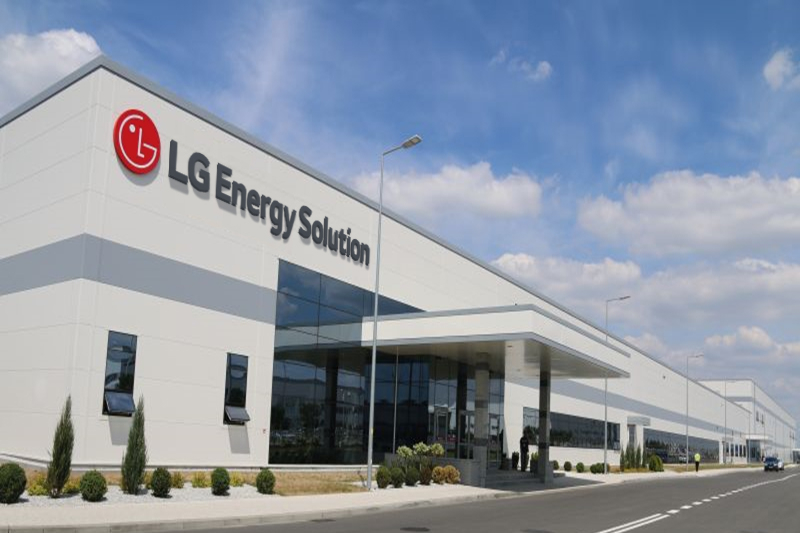
LG Energy Solution has secured an additional 2 trillion won ($1.4 billion) battery supply contract with Mercedes-Benz — likely targeting midpriced electric vehicles, according to industry sources — further strengthening its presence across both premium and mass-market segments and widening its lead over Chinese rivals.
According to the company’s regulatory filing Monday, the latest deal accounts for 8 percent of LG Energy Solution’s revenue last year and covers battery supply to North America and Europe from March 1, 2028, to June 30, 2035. An LG Energy Solution official said the specifics could change upon further negotiations with the automaker, noting that additional details remain confidential.
The announcement marks the fourth major supply agreement between the two companies and significantly expands a partnership that once focused on a single EQC Mercedes model. It follows last year’s 50.5-gigawatt-hour deal valued around 6 trillion won and two contracts signed in September worth roughly 15 trillion won for a combined 107 gigawatt-hours. These earlier contracts cover Mercedes-Benz’s premium EVs to be launched in North America and Europe from around 2028 to 2038.
Those deals involve the supply of 46-millimeter cylindrical batteries with high energy density, a format used in Mercedes-Benz’s luxury EV lineup that can boost driving range by around 20 percent. They were viewed as a breakthrough for LG Energy Solution because Mercedes-Benz had historically favored Chinese suppliers such as CATL and Farasis Energy due to their strong price competitiveness.
Sources say the newly secured volume will likely be allocated to midpriced EVs, signaling LG Energy Solution’s deeper penetration into the mass-market battery segment — an arena long considered dominated by Chinese battery-makers.
Mercedes-Benz recently announced plans to roll out over 40 new models by 2027, necessitating a broad battery portfolio for both high-end and entry-level EVs. Its decision to source batteries from LG Energy Solution in both major Western markets underscores strategic efforts to reduce reliance on China amid shifting geopolitical and regulatory pressures.
A researcher from a leading Korean battery producer noted that while Europe traditionally offers more favorable market conditions for Chinese firms compared to the US, tightening regulations — particularly the EU’s new battery carbon-footprint standards — are increasingly reshaping supply chains.
“European OEMs cannot afford heightened geopolitical risks,” the researcher said. “Relying too much on Chinese suppliers creates uncertainty.”
Starting in the first quarter of next year, companies selling EV batteries in the EU must measure emissions across the entire life cycle — including mining, manufacturing, logistics, usage and disposal. Batteries exceeding emissions thresholds could be barred from sale in the region. Chinese manufacturers are most exposed given their reliance on coal-heavy production and processing infrastructure.
The researcher added that the supply volume of 1 trillion to 2 trillion won does not require new factory expansion. LG Energy Solution can likely use existing facilities in the US or Poland, enabling the company to fulfill the order without major new capital commitments.
While LG Energy Solution has not disclosed the exact chemistry for batteries to support Mercedes-Benz’s midpriced EV lineup, sources point to nickel-cobalt-manganese cells with a nickel content of around 60 to 70 percent — balancing performance and cost. The company is also preparing to expand its lineup of midnickel high-voltage and lithium iron phosphate products, offering additional cost-competitive options to automakers.
Despite recent wins, the competitive landscape remains fierce. Market tracker SNE Research reported that from January to November 2025, the combined global EV battery usage share of Korea’s top three battery-makers fell 6.3 percentage points year-on-year to 37.6 percent. In the same period, China’s CATL increased its share from 27.2 to 29.2 percent, while BYD jumped from 4.1 to 7.6 percent.
hyejin2@heraldcorp.com