Netflix co-CEO Ted Sarandos told investors on Friday that he was “highly confident in the regulatory process” and will win approval of the streaming giant’s proposed purchase of Warner Bros., but there are plenty of hurdles ahead.
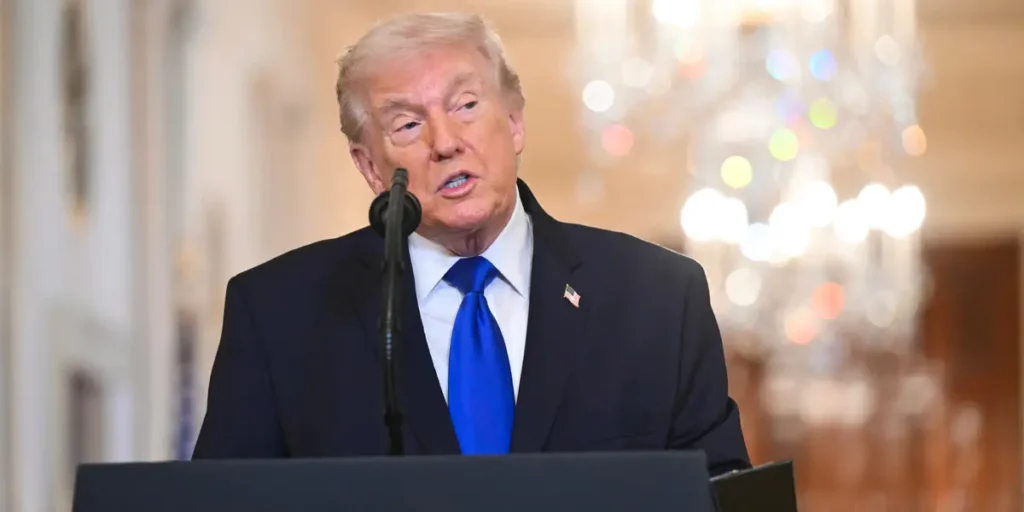
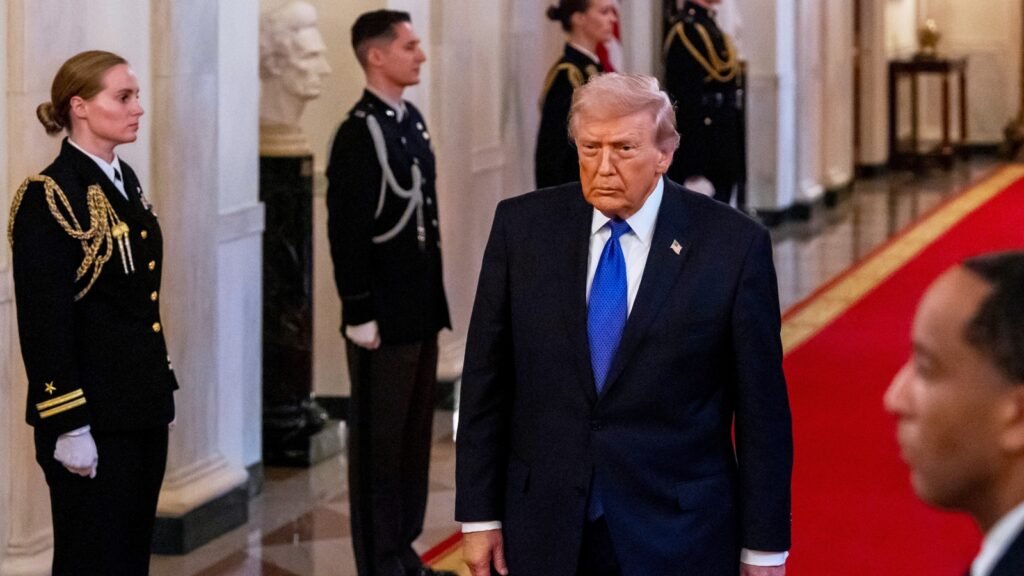
First and foremost, given all the publicity surrounding the Warner Bros. Discovery auction, is the Donald Trump factor, and how his administration ultimately handles its review of the transaction.
In the hours since it was announced, Trump has not yet weighed in, and the White House has said little. It declined comment on reports that David Ellison, CEO of rival bidder Paramount, met with administration officials on Wednesday, while there also has been speculation that Netflix executives have also held confabs with administration figures.
Unlike Paramount’s bid for all of Warner Bros. Discovery, Netflix’s proposal is to buy the Warner Bros. film and TV studio, HBO and HBO Max. That would come after WBD completes its spinoff of other assets, including cable channels like CNN and Discovery, into a new entity.
On the investor call, Sarandos said that the transaction would be “pro-consumer, pro-innovation, pro-worker, pro-creator. It’s pro-growth.” That’s pretty common language for any executive pitching regulatory prospects.
New Street Research’s Blair Levin wrote in a research note on Friday that the Trump Department of Justice is “more likely than not” to challenge the deal, but there are steps that Netflix could take, what he calls the “Trump Transaction Tax,” to boost its chances of getting the deal approved.
Levin wrote that he would guess that Netflix offered “price guarantee” that those subscribing to both Netflix and HBO Max could have a price cut. Netflix executives on Friday alluded to the possibilities of a bundle of the two streaming services. Levin also suggested that Netflix would benefit from pledges to produce series in the United States, another issue that has been on the mind of the president.
Netflix has been boosting its presence in D.C. in recent months, with plans to take much higher profile, storefront space for its lobbying and public policy offices, with designs for hosting screenings and other events. Sarandos has been a prominent donor, mainly to Democrats, although he met with Trump for dinner at Mar-a-Lago before the president started his second term. Sarandos said that they didn’t “talk any shop,” but that the president mentioned that “Melania and Barron were big fans” of the streamer.
Also pending is a response from Paramount, and if and how they challenge the deal, such as making their case for all of WBD directly to shareholders.
That Netflix emerged the winning bidder is itself a surprise, as many in Washington believed that Paramount had the inside track, in part because of an expected easier path to a regulatory green light in the Trump era.
In that regard, there’s little doubt that Paramount has forged stronger ties to the president himself, as evidenced by Trump’s own words of praise for its new owners, the Ellisons and stories in the New York Post. Meanwhile, the president has a long history of attacking the other bidder, Comcast (“Concast”) and its CEO, Brian Roberts, while Netflix reportedly has been the topic of White House officials over antitrust concerns.
During Trump’s first term, the notion that the president was trying to block AT&T’s acquisition of Time Warner was seen as something controversial, as there was at least the appearance of deferring to the independence of the regulators. Now such influence on regulatory decision making seems to have become part of the equation.
As the bidding process has played out, there were a fair degree of White House and D.C. officials attempting to put their thumbs on the scale for a favored winner.
Earlier this week, as press reports pointed to Netflix’s increasing chances of winning the auction, Sen. Mike Lee (R-UT), who chairs the Senate antitrust subcommittee, railed against a Netflix-WB deal.
Lee wrote on X that such a transaction “should send alarm to antitrust enforcers around the world.
“This potential transaction, if it were to materialize, would raise serious competition questions—perhaps more so than any transaction I’ve seen in about a decade. When Netflix has real competition, viewers and artists win. Netflix built a great service, but increasing Netflix’s dominance this way would mean the end of the Golden Age of streaming for content creators and consumers.”
Yet getting government approval for a deal is not quite as simple as getting POTUS’ yea or nay, as much as that step in a merger process now is being taken as a given.
Here’s a rundown of the process:
The FCC likely will not be involved. Because WBD holds no broadcast licenses, there will be no transfers of ownership, something that triggers an FCC review. This is a big deal for any transaction, as the agency examines transactions for whether they are in the “public interest,” a rather broad term that has given the agency some leeway in judging mergers.
When AT&T proposed buying Time Warner in 2016, the latter actually shed broadcast assets to avoid this step, albeit they ultimately faced a lengthy legal battle as the Trump 1.0 DOJ unsuccessfully sought to block it. More recently, as Skydance sought approval for its purchase of Paramount, FCC Chairman Brendan Carr cited the public interest standard in claiming the need for changes at CBS News and to the diversity, equity and inclusion policies. Skydance agreed to an ombudsman and committed to abandoning DEI efforts.
Carr has since doubted that the FCC would have a role in a review.
The Justice Department will look at the transaction. The DOJ has traditionally scrutinized proposed media mergers for their impact on competition, as opposed to the Federal Trade Commission taking such a review, even as there is some overlap in their antitrust enforcement.
The current head of the antitrust division, Gail Slater, was confirmed in a 78-19 vote in March, bipartisan support that reflected the faith that Republicans and Democrats had that she was qualified for the job.
At her confirmation hearing, she gave indications that she would pursue aggressive antitrust enforcement in areas like big tech, but the settlement of a Hewlett Packard Enterprise merger with Juniper Networks last summer raised eyebrows. After reports that Slater opposed the settlement but was overruled by Attorney General Pam Bondi, Democrats seized on it as an example of political interference from Trump-supporting lobbyists.
Still, Slater is viewed as a serious enforcer by some Democrats and others, even as other areas of the Justice Department have drawn scorn for acting as if it were the president’s own law firm.
But even if Slater were a figure who was merely following the president’s wishes to say, block a transaction, she would still have to make the case for doing so.
For instance, were the DOJ to challenge a Netflix buy of Warner Bros., the latter could take the government to court, where a judge would decide whether such a transaction violates competition laws.
Netflix is likely to make the case that it would have a positive impact on consumers, the latter being a key element of antitrust scrutiny.
Another key battle would be how the DOJ and, if it gets that far, a judge, establishes what the relevant market is to measure the merger’s impact on competition. As Levin wrote, “If we consider antitrust jurisprudence, it all comes down to market definition.”
While Netflix is dominant in the subscription streaming space, LightShed Partners’ Rich Greenfield made the case in a recent report that the picture “changes dramatically” if the relevant TV market is one that combines linear and streaming share, “with Disney far larger than Netflix, Paramount and Comcast’s NBCUniversal,” and YouTube at top. Based on data of Nielsen “engagement share,” Greenfield’s analysis showed that “adding just HBO to either NBCU or Netflix still leads to a company smaller in TV time spent share than Disney standalone today, whereas Paramount including all of WBD vs. just HBO would actually be the largest single player in TV, above YouTube.”
That said, there are plenty of reasons to believe that the DOJ would examine the transaction more narrowly, through the lens of subscription streaming, as it is the most direct impact on the consumer.
It’s not just Lee and other GOP lawmakers sounding raising issues over Netflix’s growing power, but some key voices in the creative community. The Directors Guild of America said on Thursday that they would be meeting with Netflix “to outline our concerns and better understand their vision for the future of the company.”
“We believe that a vibrant, competitive industry — one that fosters creativity and encourages genuine competition for talent — is essential to safeguarding the careers and creative rights of directors and their teams,” a guild spokesperson said.
Another wild card in the process: Netflix rivals, including Paramount and Comcast, can present their arguments against the transaction to Justice Department officials in private, unlike the FCC, which requires disclosure. Paramount has in its corner Chief Legal Officer Makan Delrahim, who led the DOJ Antitrust Division during Trump’s first term.
Any DOJ effort to block a deal also depends on the willingness of a suitor to challenge it, meaning the investment of legal costs. But even a prospect of a bidder losing in court carries with it the advantage of keeping WBD out of the hands of a rival for two or even three years, noted Andrew Jay Schwartzman, senior counselor at the Benton Institute for Broadband and Society. Even if the DOJ wins, he said, it “keeps a rival away for two to three years.” Netflix agreed to a $5 billion breakup fee if the transaction goes south.
Another element of the process is if the DOJ reaches a settlement with a bidder, such as a consent decree that requires the sale of assets or some restrictions on business conduct. Such an agreement would need the final OK of a judge after a public comment period.
The EU. Any transaction would also need signoff from European regulators, which is something that raised hackles at Paramount as signs pointed to Netflix as the winner.
According to a letter obtained by CNBC, Paramount’s attorneys sounded the alarm over the “fairness and adequacy” of the bid process. They cited, among other things, reports that Gerhard Zieler, president of WBD’s international business, met with the E.U. Commission Vice President Hena Virkkunen to discuss the merger prospects. Citing sources close to Zeiler, German newspaper Handelsblatt reported that “concerns were raised that the Ellison family’s planned acquisition of Warner Bros. Discovery could lead to excessive media concentration.”
“The implications of such a meeting, if it occurred, are clear and evince a tacit resistance to, if not active sabotage of, a Paramount offer,” Paramount attorneys wrote.
While the letter added a further wrinkle to the bidding process, it underscored the concern that companies have over the EU regulatory hurdles, which can be far different and more stringent than those in the U.S.
State AGs. A state attorney general, or group of them together, could challenge a merger, even if the DOJ gives, say, a Paramount-WBD transaction the greenlight.
Diana Moss, vice president and director of competition policy at the Progressive Policy Institute, said in October that concerns over the politicization of federal merger reviews put “way more focus on state and private antitrust enforcement.”
Although not many states have sought to challenge entertainment mergers, they have on consolidation of hospitals and supermarkets, among other things, she said. Challenging a major media merger “is entirely possible,” she said, and states may band together. “We are absolutely seeing more state activism given the big concerns about consolidation,” she said.
“Media and communications has got an enormous bullseye on it for the current administration to weaponize antitrust enforcement,” she said.
The two states that will see the biggest impact from a WBD sale, New York and California, have Democratic AGs.
While Congress does not directly have a say on whether a merger is approved or not, lawmakers can raise enough hackles to get state officials’ attention. Already, figures like Sen. Elizabeth Warren (D-MA) and Rep. Jamie Raskin (D-MD) have been pressing Skydance-Paramount for more answers on how that merger went down, and it’s likely that they will have something to say about WBD.
Foreign Owners. The news that Paramount’s bid included Middle East wealth funds is something that may trigger a “CFIUS” review, or the Committee on Foreign investment in the United States.
The committee determine the effect of such transactions on the “national security” of the United States, and it’s something that has had a pretty broad meaning. The committee is made up entirely of members of the Trump administration, but the Senate Finance Committee, which includes Warren, has oversight over the body.