The technical term might be “vertical integration.” Or, on reflection, perhaps that is not quite right, and it would — in the jargon — be known as “synergy.” Maybe those are the same thing. Either way, the concept is best encapsulated by Jack Donaghy, the vulpine executive portrayed by Alec Baldwin in the presumably now problematic sitcom “30 Rock.”
In one of the show’s later seasons, Donaghy has an epiphany. Kabletown, the insufficiently rapacious corporation he serves, already controls a television network, NBC, and the cable infrastructure that delivers it to people’s homes. The logical next step, he decides, is to take control of the full gamut of the viewing experience. It is time to start making couches.
For some time, there has been an assumption that — at one point or another — the Premier League will inevitably alight upon its own version of this approach. England’s top flight is, in essence, a content generator; for nine months of the year, it churns out the most popular sporting event on the planet.
For three decades, though, it has outsourced the next stage in the process, the production and broadcasting of that content, to various third parties, who pay a healthy premium for the privilege.
Donaghy’s understanding of capitalism — one that the unbound free marketeers of the Premier League would doubtless recognize — would identify that as an imperfect synergy. The Premier League might make even more money by taking control of that stage of the process, too. Its logical next step is to become its own broadcaster. The couches can come later.
At this point, the idea has substance. The prospect of the Premier League’s abandoning the model that has made it a global behemoth and streaming its own content through its own platform — “Premflix,” to use the cumbersome, absolutely unofficial working title — has hovered, as both possibility and threat, for some time.
Almost a decade ago, the league was starting to “build its expertise and capacity in direct-to-consumer” — a synonym for streaming — according to its chief executive, Richard Masters. It set up a “club broadcast advisory group” to explore its options. It toyed with running a trial in Singapore. “We will be ready next time, should the opportunity arise,” Masters said in 2020.
Given what has happened since, it was hard to interpret that as anything other than a warning to the league’s broadcast partners, both domestically and around the world — a reminder about the precise nature of the power balance in their relationship. Yet if anything, the Premier League is hewing ever closer to the comforting familiarity of tradition.
This week, the league announced yet another record-breaking — if you look at the numbers in a certain way, at least — domestic television deal. For the sum of $8.4 billion, Sky and TNT Sports, a division of Warner Bros. Discovery, will broadcast at least 267 Premier League games a season across the four campaigns starting in 2025.
As the league gleefully pointed out in its announcement of the contract, it is the largest media rights deal ever concluded in Britain. The fact that more games are being televised, and that the deal runs for four years, rather than the traditional three, were rather glossed over; it is not quite as triumphalist to point out that the Premier League has become just a little bit cheaper.
More noteworthy than the price point, though, was the identity of the successful bidders. Amazon has been broadcasting Premier League soccer in Britain since 2019, enticed to do so by the league itself. This time, reports suggested, it elected not to bid at all. That means the Premier League will not work with a streaming service — domestically, at least — until the end of the decade. The idea that it might launch its own platform seems more distant than ever.
There are, broadly speaking, two reasons for that. One is simple: The status quo works for the league. “They are too happy with the deals they have made” to start experimenting, said Francois Godard, a senior media and telecoms analyst at Enders Analysis. The Premier League is the richest, most coveted and most popular sports league in the world. There is not, Godard said, “an incentive to try things.”
There are plenty of justifications, too, for avoiding any disruption. Broadcasting is costly, complicated and full of risk. A broadcaster has to pay for “producing, distributing and marketing the games and their coverage,” said Jack Genovese, a research manager at Ampere Analysis. It requires “perfect execution when it comes to the product design, packaging, distribution, technology, and pricing,” he said.
Fall short of that, and the product itself can suffer. “There have been numerous cases of live streams of high-profile events being disrupted by buffering, lags, or entirely breaking down,” Genovese said. “And even assuming everything goes smoothly, it takes time to generate a return from subscriptions that would match the revenues generated from licensing the rights to third-party broadcasters.”
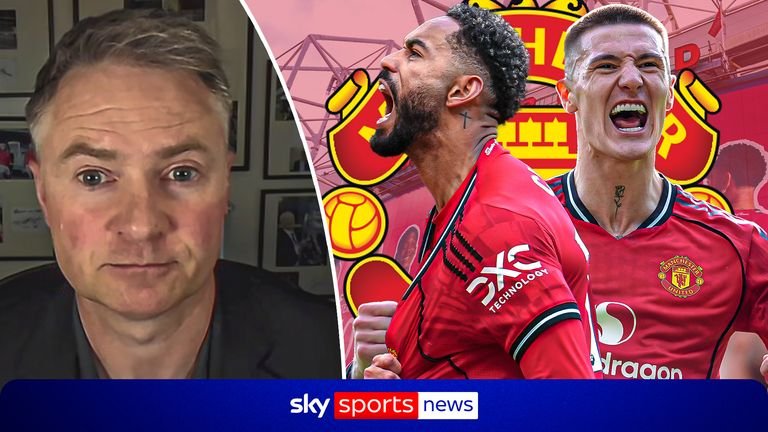
The second reason for preserving the existing model is more complex, and possibly more consequential. Watching the deal be announced on Sky Sports News — the rolling news channel operated by Sky and dedicated, in no small part, to promoting the greater glory of the Premier League — was a curious experience.
The tone oscillated between factual and celebratory. It was not clear, at times, whether coverage of the rights announcement was intended to be a news report or an advertisement.
It is testament to the increasingly evident symbiosis between the Premier League and Sky: The league needs its loyal, longstanding broadcast partner, but not nearly as much as the broadcaster needs the league. “Sky is more dependent on the Premier League than any other pay TV operator is on any sport elsewhere,” Godard said.
The league is the “tent pole” of Sky’s business, he said. Unlike Canal+, the French broadcaster, say, Sky does not have a longstanding reputation for creating and delivering original content, or enjoy the cultural cachet that comes from playing a prominent role in financing domestic cinema. Sky instead offers a panoply of prestigious imports — it is the British landing spot for much of HBO’s output, for example — but it is soccer that acts as both its hook and its chain.
“Traditionally, the idea was that you sell the channel to people through soccer and then retain them with series and films,” Godard said. “Soccer is perfect for that. It is not a one-off event, like the Olympics. It is a long season, longer than most American sports, say. It means you have something people want to watch from August until May.”
Sky’s response to the fracturing of the media landscape has been robust. It is inured to cord-cutting by both its broadband infrastructure and its “aggregation model,” to use Godard’s term, in which streaming services use its platform to sell themselves to viewers.
Quite how important the Premier League is to its business, though, is clear from how much Sky is willing to pay for it — more, Godard believes, than it likely recoups from selling its sports package.
That part of its approach would, most likely, be wholly alien to the fictional Donaghy. It is striking, looking back on most of the Premier League’s domestic rights auctions, quite how much the price has ballooned given the apparent scarcity of the competition.
Neither TNT nor any of its predecessors have ever seemed intent on wrestling the bulk of the coverage from Sky, and yet until now the sums on offer — admittedly in a blind bidding process, one that is often full of feints and weaves and fearful whispers — have consistently risen sharply.
But then lowballing the Premier League is not really in Sky’s interests. The broadcaster relies on the league’s popularity to sell its products, and the league’s popularity depends, to some extent, not just on hard-wired tribal loyalty but on the projection of power and glamour and significance.
Sky needs the Premier League’s clubs to buy the best players on the planet, to rank as the best in Europe, to back up its marketing spiel. Sky is not just paying to acquire the rights; it is contributing to keeping the ball rolling.
That dynamic applies to some extent outside Britain, too. If the league were to experiment with streaming — as it may still do, one day — it would make sense to do so abroad, in one of its smaller markets. But then most of its broadcast partners rely on its content almost as much as Sky; NBC, for example, has used its Premier League offering to drive viewers toward its streaming product, Peacock, in the United States.
It is that, more than anything, which ensures the Premier League’s clubs see no need to break with tradition, to tear up their model, to seek full vertical integration in the digital age. The league has so much power, and so much control, that it does not need to build its own platform. The way things work now gives it all of the rewards. It is so important, so valuable, that there is no shortage of others who are more than happy to bear all of the costs, and all of the risks.
The Franchise
Los Angeles has seen bigger stars than Carlos Vela, without question: Gareth Bale made a brief but bright cameo at L.A.F.C., of course, and noted shrinking violets David Beckham and Zlatan Ibrahimovic once had low-key spells at the Galaxy, the city’s original Major League Soccer outpost. Vela might not be as famous as those players; in an M.L.S. context, though, he has arguably been just as consequential.
This weekend may be the last time the Mexican, now 34 and reaching the autumn of his career, represents L.A.F.C. His contract expires at the end of this season and there is a chance he will not, or will not be able to, extend his stay.
Vela will, if that is the case, be able to look back on six years of valuable service: six years in which he helped to turn a start-up team into one of the most consistent in the league, in which he regularly ranked as one of its finest players. It is not for this newsletter to take sides, of course, but if Vela was to sign off with a second straight M.L.S. Cup after Saturday’s final against Columbus, it would be a fitting farewell.
331
It is not quite goodbye to Christine Sinclair, not yet. The 40-year-old striker might have played her final game for Canada on Wednesday — a victory against Australia, extracting a very small measure of revenge for defeat at the World Cup — but she will play on, for one more year, for the Portland Thorns. She will be 41 when she does, finally, call it a day.
Sinclair withdraws from international soccer, though, with a legacy that is close to untouchable. It is just about conceivable that, at some point, someone will score more than 190 international goals (though Cristiano Ronaldo has only managed 128, and he spends an awful lot of time playing against Liechtenstein and Estonia). It is essentially impossible that anyone will ever match her tally of 331 appearances for her country.
Longevity is not the most striking, the most glamorous or the most spectacular trait in an athlete. The traits that it encompasses, though, the determination and the resilience and the consistency, are some of the rarest, the most precious.
Summer Planning
Correspondence
To prove that this section of the newsletter is not simply an exercise in self-indulgent narcissism, let’s start with some withering criticism from Thom Elkjer. “Big egos, bad behavior, two-faced communication,” he wrote of last week’s newsletter on Kylian Mbappé and Paris St.-Germain. “These are common in all industries, all sports, all arts. What is special to your chosen sport about this?”
This is quite right: The tensions at play inside P.S.G. are not unique to soccer, and in my defense I’m not sure I claimed they were. They are, though, an excellent illustration of the friction between two contradictory currents: the cult of the coach and the primacy of the star player. That, too, doubtless occurs in other spheres. I suppose the difference is that not quite as many people watch.
Right, back to the narcissism. Lloyd Mallison sent in a double whammy of excellent questions. “Given the rising spate of injuries and conversations around load management, have you heard any inkling that managers are starting to think of their teams in terms of ‘starters’ and ‘finishers’?” he asked.
This is a really good question. I haven’t heard those terms discussed, but looking at the way some managers use the depth at their disposal, it seems reasonable to believe they are at least thinking along those lines. Perhaps that is a specialization that will develop as the game considers it more deeply: a kind of formalized position for the longstanding idea of the so-called supersub.
Lloyd’s second inquiry, though, is a triumph. “Why are there suddenly so many Joãos in Portuguese soccer?” (He did, admittedly, offer some context for that thought, but it is funnier to let it stand alone.)
As far as I can tell, there have always been a lot of Joãos in Portuguese soccer, largely because there are a lot of Joãos in Portugal. I have a dull memory that Portugal has the smallest pool of first names in Europe, but I cannot find any proof of it from an admittedly cursory Google search. Any help establishing that as fact or fiction would be much appreciated. You can send it, along with any other thoughts or ideas or scathing accusations, to askrory@nytimes.com.