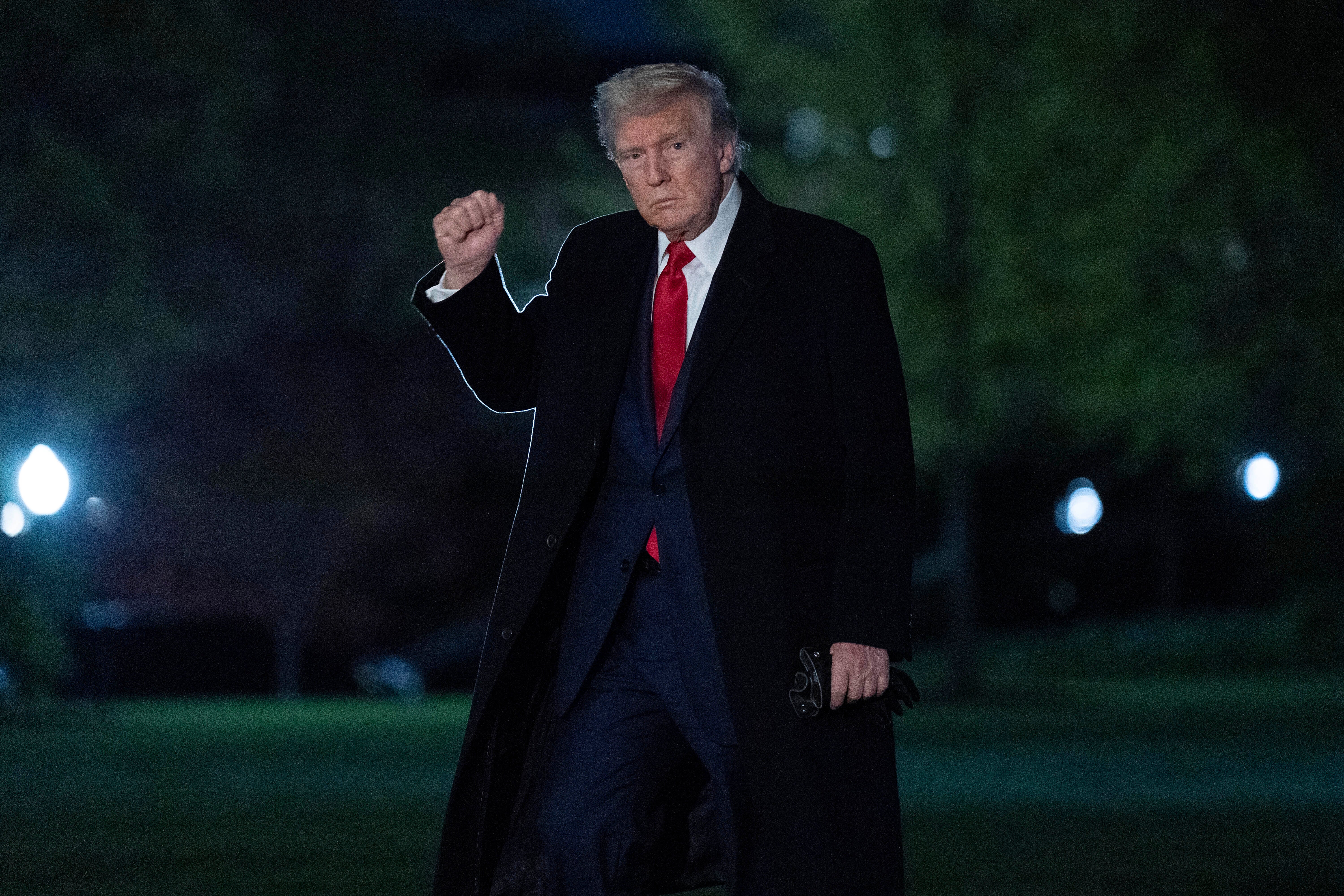
Donald Trump says no country is “off the hook” for “unfair trade balances”, ahead of his expected new tariffs on powerful computer chips.
The president said he would detail the new tariffs on superconductor chips this week, just days after the White House excluded smartphones and other electronics from the ultra-high levies on goods from China.
But the president said those goods were not exempted from tariffs entirely, rather they had been put in a new “tariff bucket” and remain subject to the broad 20 percent tariff hike the White House had previously placed on Chinese goods in its fight against fentanyl.
“NOBODY is getting “off the hook” for the unfair Trade Balances, and Non Monetary Tariff Barriers, that other Countries have used against us, especially not China which, by far, treats us the worst!” he wrote on his Truth Social platform on Sunday.
Trump said he wants companies to make chips and semiconductors in the U.S. so the American economy is not “held hostage” by other countries.
“We are taking a look at Semiconductors and the WHOLE ELECTRONICS SUPPLY CHAIN in the upcoming National Security Tariff Investigations,” he said.
How U.S. tariffs have changed
Donald Trump announced sweeping and aggressive tariff increases on nearly every American trading partner on April 2, a day he dubbed “liberation day”.
Since then, however, there have been many changes, so here is a brief recap of the tariffs:
- Trump announces new “baseline” tariffs on nearly all countries that export to the U.S. of at least 10 percent, including the UK and New Zealand
- Dozens of other countries, primarily poorer developing nations, were hit with “reciprocal tariffs” of as much as 49 percent
- All tariff increases above the baseline 10 percent were paused just days later to allow for negotiations, the Trump administration said.
- China has been the exception: Trump initially raised tariffs to 104 percent but then lifted them to 145 percent after China retaliated by placing levies of 125 percent on U.S. goods.
- Trump has since announced exemptions for electronic goods such as smartphones, but has also said he will raise tariffs on chips – a key component of electronics.
Rachel Clun14 April 2025 09:02
China halts rare earth exports in escalating trade war
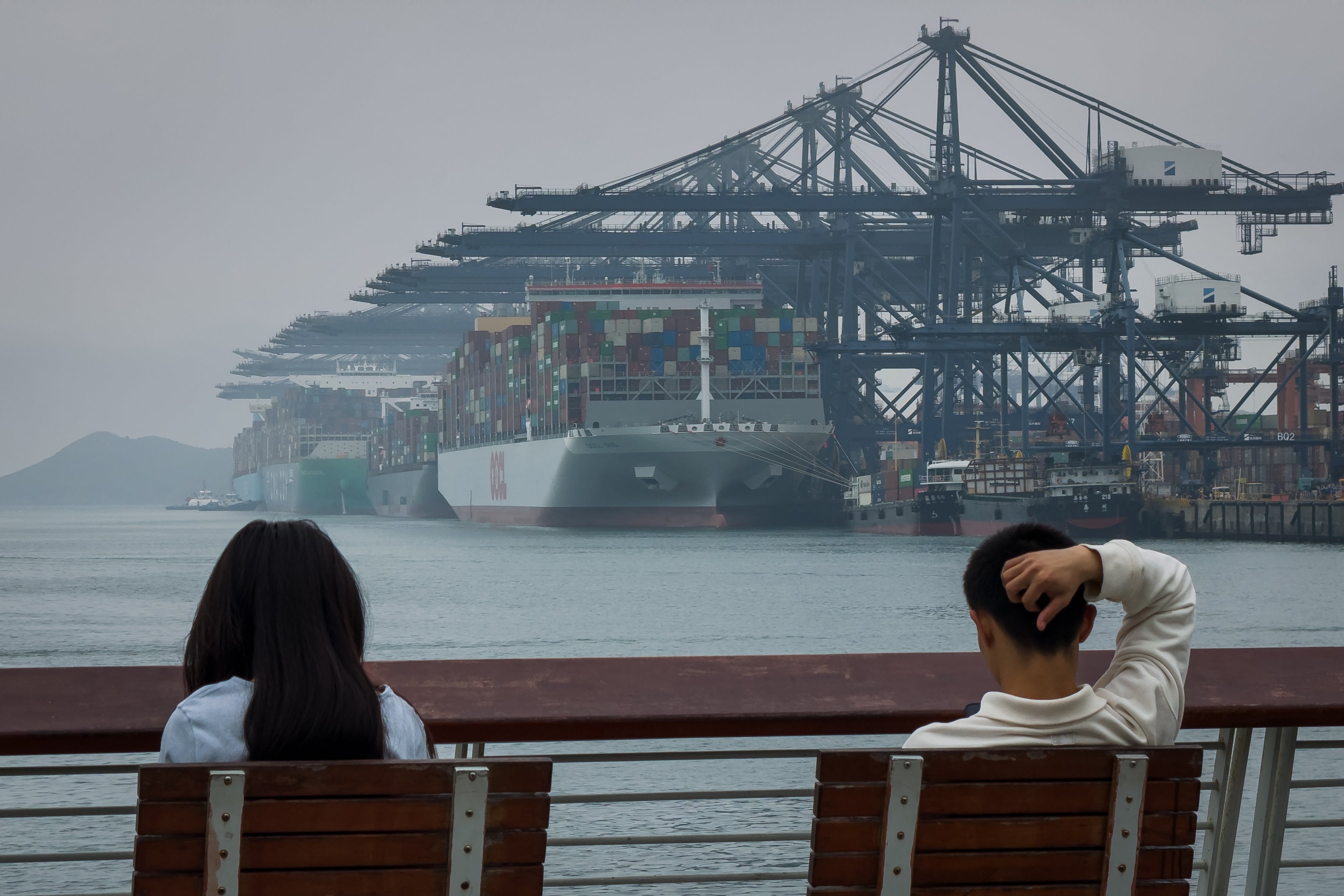
China has halted the export of a wide range of rare earth minerals, which are key to semiconductor and automotive industries around the world.
The suspension comes as the trade war between China and the U.S. continues to escalate after President Donald Trump decided to raise tariffs on China even further, while suspending large increases on most trading partners.
Shipments of the key minerals stopped on April 4, with exporters now required to apply for licences that could take anywhere from several weeks to several months to be approved.
China produces more than 90 per cent of the world’s rare earth minerals, and industry experts were concerned that if the export halt lasts more than a couple of months, existing stockpiles could be depleted.
Rachel Clun14 April 2025 08:44
More Asian countries line up for tariff talks to avoid steep hikes
Tariff negotiations are beginning immediately between the U.S. and several major Asian economies, according to South Korea’s acting president.
President Han Duck-soo said Donald Trump seems to have directed talks to start straight away with South Korea, Japan and India, the Yonhap News Agency reported.
On ‘liberation day’, the president imposed tariffs of 26 percent on India, 25 percent on South Korea and 24 percent on Japan. Those hikes have been paused to allow for negotiations.
Han said he had detailed South Korea’s stance on negotiations and Trump had been satisfied with that position.
Rachel Clun14 April 2025 08:36
First phase of U.S.-Taiwan tariff talks have gone ‘smoothly’
Taiwan’s president says the first phase of tariff talks with the U.S. have gone “smoothly”.
Taiwan is a major producer of the world’s semiconductors, making advanced chips for electronics, including smartphones and computers.
The country was due to be hit with a 32 percent tariff by the U.S. president, but those higher tariffs were paused for 90 days last week to allow time for negotiations.
Taiwanese President Lai Ching-tei said talks with the U.S. have already begun.
“Taiwan has started negotiations with the United States, and the first phase of the negotiations went smoothly,” his office cited him as saying.
Lai said he “hoped to use this challenge as an opportunity for Taiwan to promote the new layout of ‘Taiwan plus one’, that is, Taiwan plus the United States”.
It is unclear how Trump’s proposed tariffs on superconductors would affect these negotiations.
Rachel Clun14 April 2025 08:26
China’s president says there are ‘no winners’ in a trade war
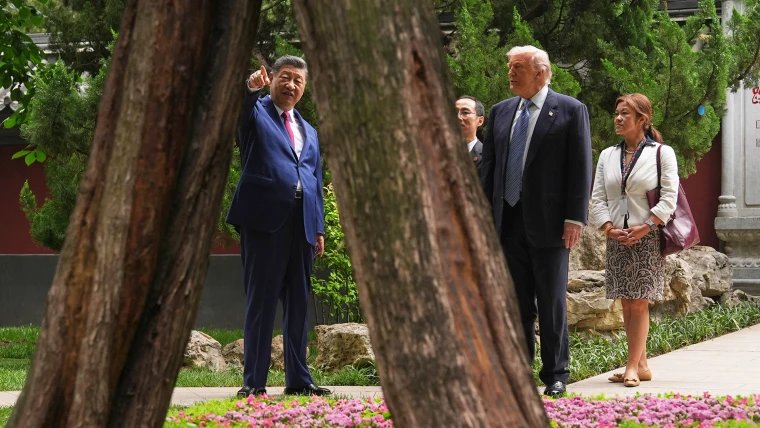
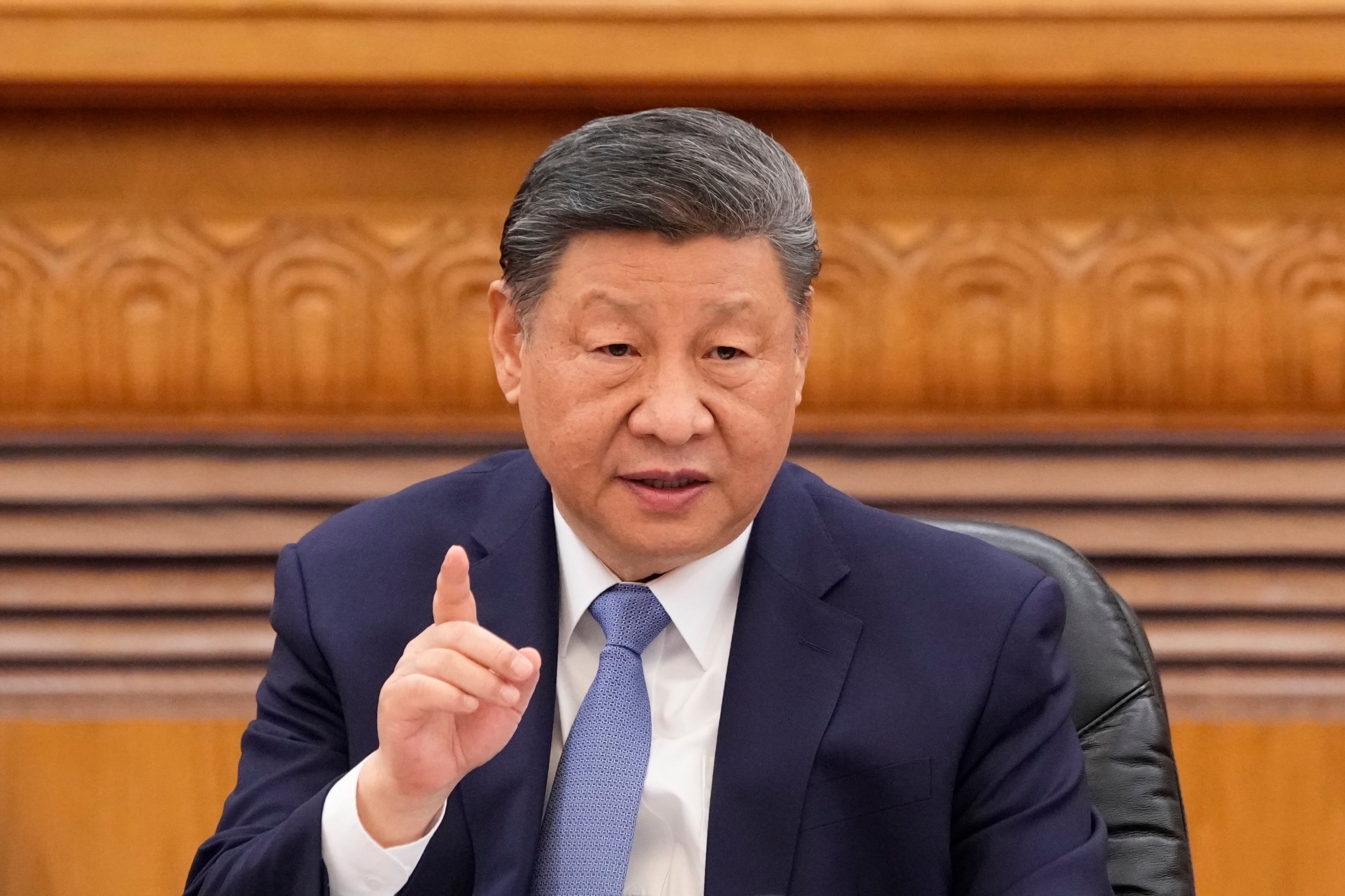
Chinese President Xi Jinping says “there are no winners in a trade war, or a tariff war,” as tariffs of 145 percent remain on Chinese goods exported to the U.S.
Xi’s comments came in an editorial, published in both official Vietnamese and Chinese media while the Chinese president tours Southeast Asia.
“Our two countries should resolutely safeguard the multilateral trading system, stable global industrial and supply chains, and open and co-operative international environment,” he wrote.
Last week, China announced it would lift tariffs on American goods to 125 percent, in retaliation for the higher duties imposed by the Trump administration.
Chinese President Xi Jinping
Sam Rkaina14 April 2025 08:18
Trump expected to announce chip tariffs today
The U.S. President is expected to detail new tariffs on powerful computer chips on Monday.
It is unclear how tariffs on the chips, which are key components of smartphones and other electronics, will affect the recently announced exemption on ultra-high tariffs imposed on goods from China.
Asked about the possibility of chips tariffs by reporters over the weekend, Trump said “I’ll give you that answer on Monday,” the New York Times reported.
On his Truth Social platform, the president said America needed to make more products in the U.S.
“NOBODY is getting “off the hook” for the unfair Trade Balances, and Non Monetary Tariff Barriers, that other Countries have used against us, especially not China which, by far, treats us the worst!” he wrote.
“There was no Tariff “exception” announced on Friday. These products are subject to the existing 20% Fentanyl Tariffs, and they are just moving to a different Tariff ‘bucket’.
He continued: “We are taking a look at Semiconductors and the WHOLE ELECTRONICS SUPPLY CHAIN in the upcoming National Security Tariff Investigations.”
Rachel Clun14 April 2025 08:17