Travelers often overlook Belgium in favor of neighbors like France and the Netherlands, but it’s one of Europe’s best-kept secrets. While its history means Belgium is linguistically and culturally diverse, it’s also small and compact, making it easy to hop between destinations.
From perfect fries and chocolate to accessible nature breaks, picturesque medieval towns and vibrant art and fashion scenes, there’s plenty to experience in Belgium. Here are the best places to visit.
1. Namur Province
Best for forts, nature and river views
Advertisement
Known as the “Land of Valleys”, the land-locked province of Namur in the Wallonia region is rich in rivers, cliffs, rolling farm hills and lush Ardennes greenery.
With postcard-perfect aesthetics and a mighty citadel perched atop limestone cliffs, Dinant is the ideal day-trip destination. Stroll around the town, cruise along the river, ride the cable car up to the fortress to take in the sweeping views and enjoy the scenery from a cafe while tasting regional specialties like the Couque de Dinant, a hard biscuit that comes in various shapes. Made of equal parts wheat flour and honey, it can be kept indefinitely, making a great souvenir to take back home.
For a once-in-a-lifetime culinary experience, head to Liernu, an even smaller town that’s the epitome of tranquility. Here you’ll find L’air du Temps, a fine-dining restaurant in a beautifully renovated farmhouse set on 5 hectares (12 acres) of private gardens. Most of the dishes served are sourced from the garden and often feature highlights of the local terroir, like Wallonia’s most sustainable food source, the Petits-Gris de Namur snails.
From there, you’re a stone’s throw from the relaxed city of Namur, capital of both the province and the region. It’s home to one of Europe’s largest citadels and also the adults-only Musée Félicien Rops, which exhibits the life and work of the scandalous 19th-century Belgian artist.
2. Brussels
Best for museums, shopping and street food
Brussels, the capital of Belgium and seat of the EU and NATO, is one of Europe’s most multicultural cities. Art lovers can spend a whole day visiting the Royal Museum of Fine Arts of Belgium – its six different museums include the must-visit Magritte Museum – along with the Boghossian Foundation at Villa Empain, and the modern-chic Center for Fine Arts, a multipurpose cultural venue commonly referred to as BOZAR.
The city is filled with architectural masterpieces such as the Grand Place, a UNESCO World Cultural Heritage site, and the illustrious Maison Cauchie, which can be toured on certain weekends with advance reservations.
You can find some of the world’s best and most affordable vintage shopping at the Brussels flea markets, most notably the daily open-air antique market in Place du Jeu-de-Balle, and the shops in the Sablon district.
Planning tip: For food and drink lovers, Brussels is the place to taste all of Belgium’s highlights. Délirium Café is a beloved, always-crowded bar with more than 2000 types of beer, including the country’s famed Trappist beers. Nearby, there are a handful of outdoor kiosks, known as frietkot (snack stands), where you can get your fix of frieten – fries served in a paper cone with your sauce of choice. To satisfy a sweet tooth, try Belgian chocolate at Pierre Marcolini and the fluffy Brussels-style waffles at Maison Dandoy.
3. Bruges
Best for a leisurely city break
Advertisement
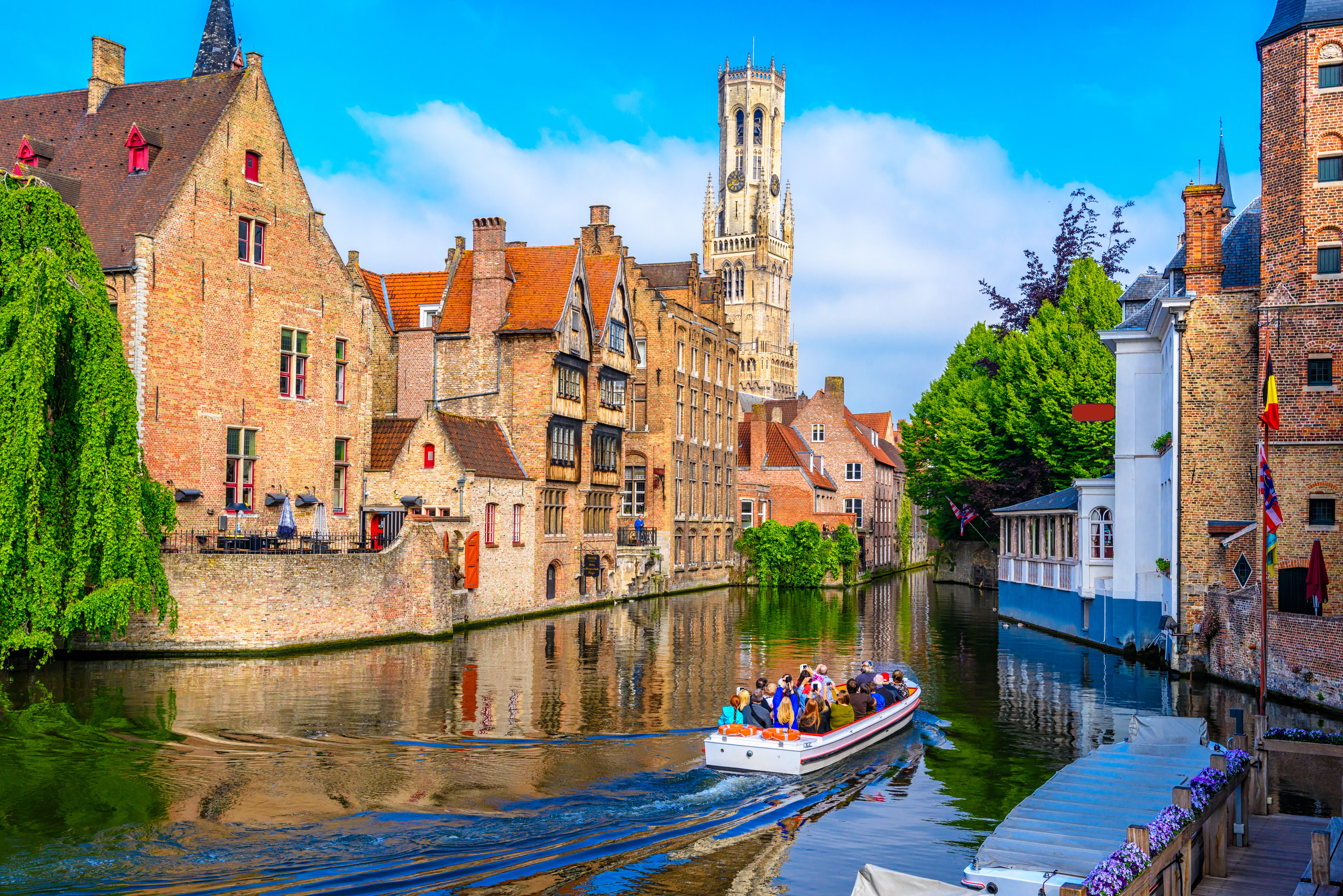
A visit to Bruges feels like stepping into a fairy tale. Often called the Venice of the North, the city is incredibly charming with an intricate network of tree-lined canals, cobblestone streets and well-preserved architecture. To add to the allure, many of the distinctively medieval buildings look like gingerbread houses, thanks to the red Gothic brick. All that and the fact that it’s the birthplace of Flemish Primitive painting led to the entire historic center of Bruges being designated as a UNESCO World Heritage Site.
Bruges is best experienced at a leisurely pace. Wander around the Old Town on foot, soaking up the atmosphere of the city squares, the Markt and the Burg; hop on a canal boat tour and count all 54 bridges, then bike along the canals to the less crowded places. For the best bird’s-eye views, head to the Belfort, one of Bruges’ most recognizable landmarks, and climb the 366 steps to the top.
Catch your breath with a crisp Belgian beer, which can be found on every corner of the city. Noteworthy destinations are De Halve Maan, a brewery that also offers tours with tastings, and ’t Brugs Beertje, a legendary beerhouse with more than 300 Belgian brews on the menu.
Last but not least, no visit to Bruges is complete without a visit to the Groeningemuseum, a fine-art museum with an impressive Flemish Primitive collection.
4. Antwerp
Best for fashion and design
Home to the world-renowned Royal Academy of Fine Arts Antwerp, Belgium’s second city is also its coolest. Some of fashion’s top creatives, including Martin Margiela and Balenciaga’s Demna Gvasalia, have connections to Antwerp. A few have gone on to open shops here that are worth a visit, such as Dries Van Noten’s Het Modepaleis and Ann Demeulemeester’s sleek, black-and-bone-white flagship store. There are more trendy shops in the Kammenstraat and Nationalestraat areas that make up the Fashion District, where you can also find the impressive fashion museum MoMu.
Beyond its stylish inhabitants, Antwerp has a visual edge driven by the contrasting architectural styles of contemporary projects and medieval buildings. Make your way down to the port to marvel at late architect Zaha Hadid’s Antwerp Port House and the MAS, home to exhibitions and collections revolving around the city.
5. The Belgian coast
Best for beaches
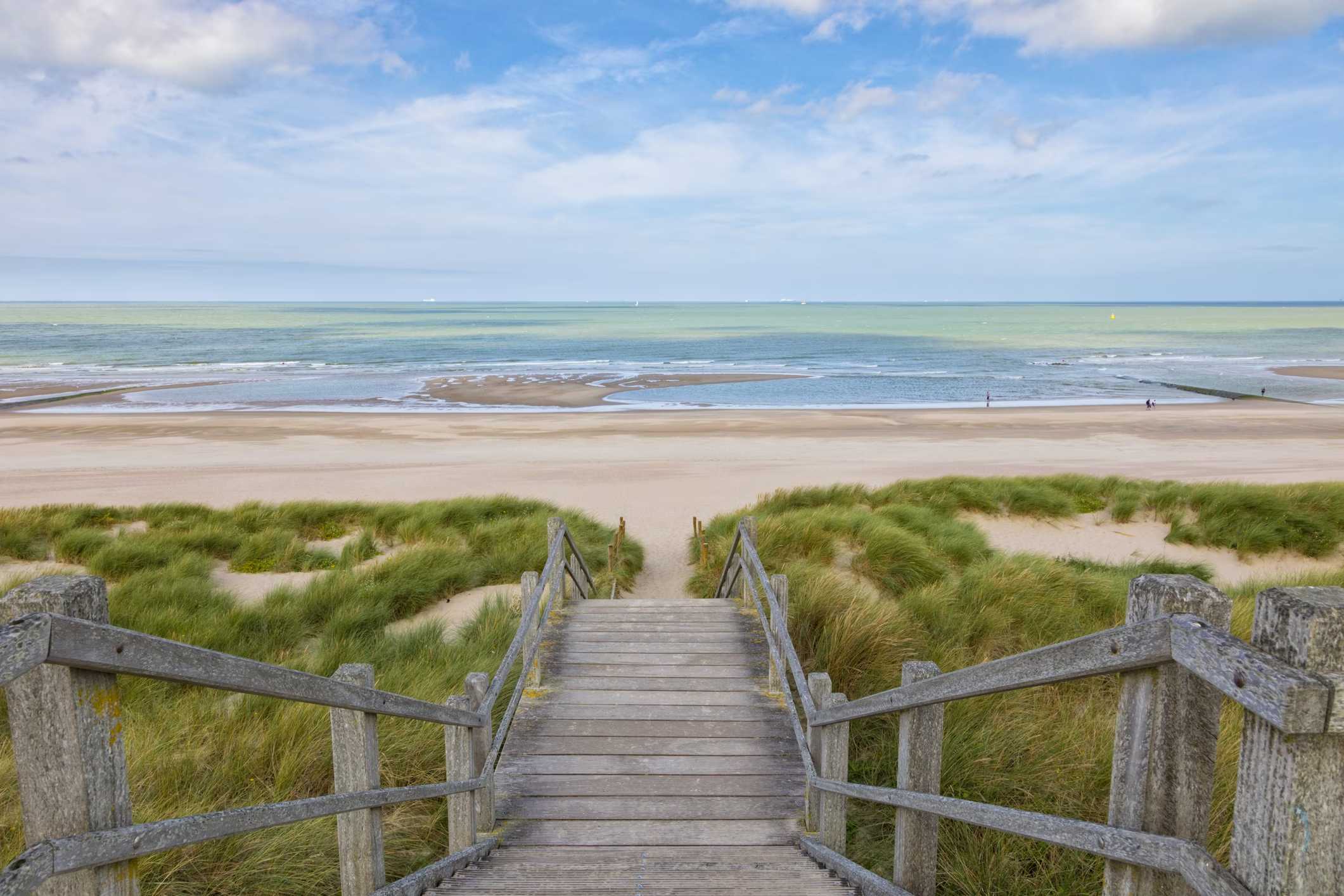
The Belgian coast stretches for 65km (40 miles), meaning you can pack multiple towns into a visit without feeling overwhelmed. Making things even easier is de Kusttram, a coastal tram that’s one of the longest in the world. It starts near the French border at De Panne and travels all the way to Knokke-Heist near the Dutch border, making 67 stops. The complete journey takes 2½ hours and allows you to admire the coastline in its entirety, jumping off whenever you like without having to worry about parking.
The two must-visit stops are De Haan and Oostduinkerke. De Haan is unlike other towns in that all buildings must be under five floors, which helps preserve its small-village charm. The low beachfront made up of Belle Epoque architecture and unspoiled grassy dunes is love at first sight for many. Still not convinced? The sweet treats at the retro Wafelhuis Annie or high tea at the vintage ‘t Stil Genot tearoom are sure to win you over.
Oostduinkerke, or East Dunkirk, is a protected dune area and the only place in the world where shrimpers still use horse-dragged nets to collect tiny gray shrimp from the sand. This centuries-old tradition is practiced by just over a dozen highly trained locals and takes place at low tide during the warmer months, usually between April and October. In 2013, shrimp fishing on horseback in Oostduinkerke received UNESCO’s Intangible Cultural Heritage of Humanity status. To learn more about this and the other local sea traditions, visit Navigo, a national museum housed in a 19th-century fisher’s cottage.
6. Ghent
Best for music and creatives
Located between Brussels and Bruges, Ghent encapsulates the best of Belgian cities: winding canals, medieval architecture, enviable museums and cobblestone alleyways filled with shops and restaurants. The difference is that it’s also home to the largest student population in Belgium – a young, beating heart in one of the country’s oldest urban areas.
Take a closer look and you’ll find an unconventional creative community, flourishing music scene and so many plant-based menus that it’s often referred to as the vegetarian capital of Europe.
Since 2009, Ghent has proudly held the title of UNESCO Creative City of Music. There’s a wide range of options for everyone’s tastes, from Belgium’s first silent disco at Abacho to performances at the never boring Vooruit Art Center and De Bijloke Muziekcentrum, and live music on the street and in bars and cafes like Kinky Star, a record-label-owned cafe famous for its Irish coffees and alternative concerts.
7. Nationaal Park Hoge Kempen
Best for nature
Hoge Kempen National Park is the only national park in Belgium. A former coal-mining site, it opened in 2006 following the cooperative conservation efforts of businesses, government agencies and environmental organizations.
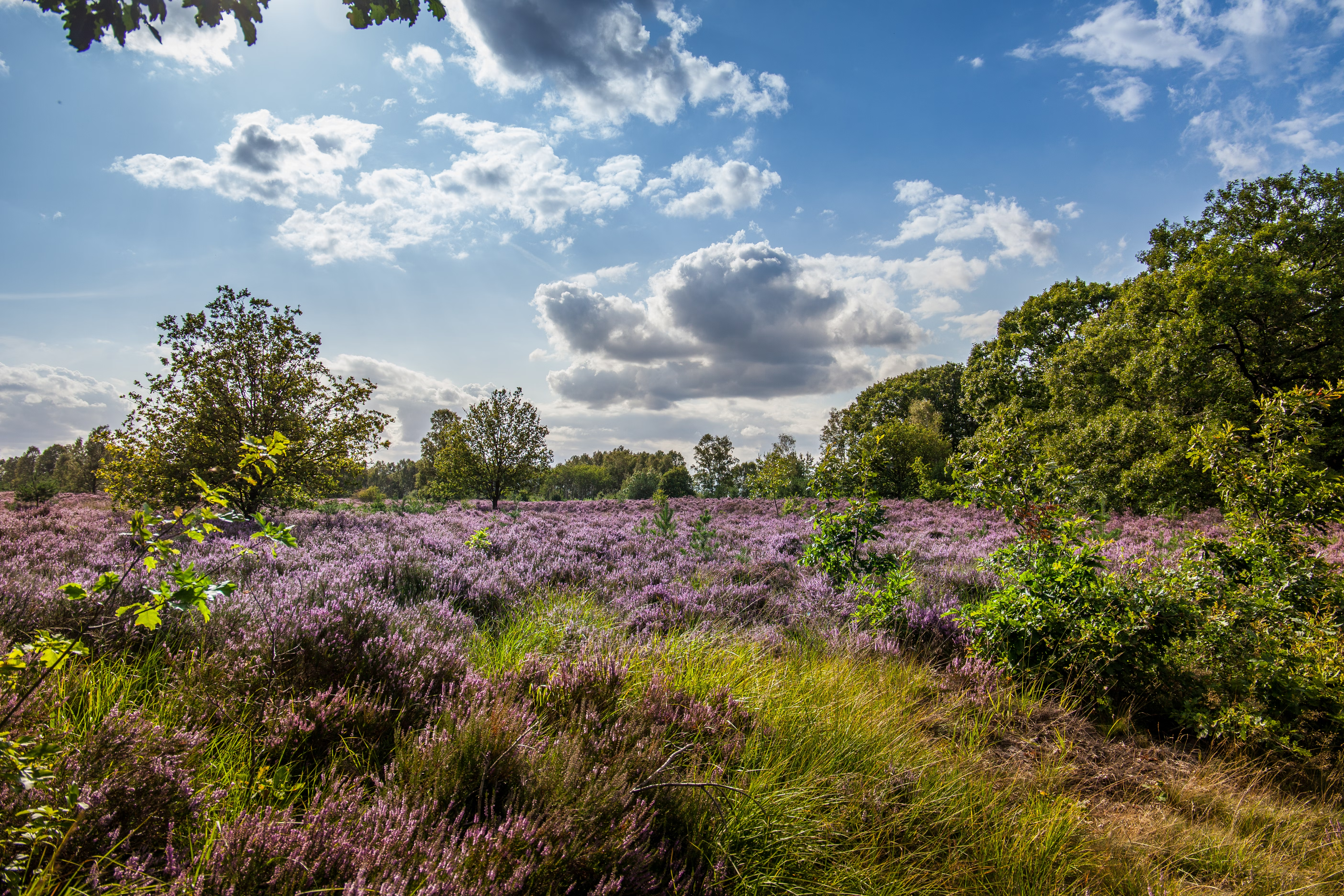
The 57 sq km (22 sq mile) nature reserve is mostly heathland and pine forest, a lush landscape of evergreen trees – and vibrant purple-flowering shrubs in August and September – next to expansive artificial waterways. Today, it’s inhabited by more than 6000 species of flora and fauna, which is especially impressive considering the area’s industrial history.
Planning tip: There are numerous entrances to the park. For those without a car, the park can be accessed through the Kattevennen Gateway, first by taking a train to Genk station, followed by a De Lijn bus ride or a short walk. Once inside, there are different routes depending on whether you’re exploring by bicycle, mountain bike, horseback or on foot. Admission is always free, and the park is open all year long. Rangers offer guided experiences for all ages with advance registration.
8. Spa
Best for thermal hot springs and well-being
Spas around the world take their name from this peaceful and breathtaking Ardennes town. Designated a UNESCO World Heritage Site in 2021, Spa is known for its healing thermal springs and lightly sparkling mineral water. The most famous spa in Spa is Thermes de Spa, a modern and surprisingly affordable complex in the hills that’s backed by more than 150 years of knowledge and tradition. With a stunning natural landscape as your backdrop, resting and relaxing feels easy here.
Spa is also home to the world’s first casino, a permanent exhibition of Joan Miró lithographs, and the annual Formula 1 Belgian Grand Prix at the world-class Spa-Francorchamps track.