Legacy Chips: The Next Tech Battle with China

Past US export controls curtailed the sale of sophisticated semiconductors to China. As Donald Trump takes office, the US looks set to expand the trade sanctions to block imports of older legacy chips, or “mature node” chips. While not as exciting as new cutting-edge AI semiconductors, these chips are used in almost all electronic devices, everything from car remotes to refrigerators.

The outgoing Biden administration launched an investigation in late December into Chinese subsidies of these legacy chips. The Trump administration will have to decide whether to impose tariffs or other measures to stop the chips from entering the US market. Typical US investigations into discriminatory foreign government practices take between six months and a year to conclude.

Across the board penalties could prove counterproductive, hurting US industry and consumers. What is needed are smart sanctions that encourage manufacturers around the globe to use non-Chinese chips.

The hope is to prevent China from leveraging its traditional playbook, pumping subsidies into manufacturing facilities, and flooding global markets with low-cost products, to force Western manufacturers out of the market. The formula already has left China dominating a wide range of industries, from solar panels to electric vehicles, set top boxes to security cameras. 

Legacy semiconductors could be next. Chinese chips are in most companies’ products surveyed by the US Department of Commerce and Bureau of Industry and Commerce. Although Chinese chips currently only make up about 2.8% of all chips by count, Beijing has made building an independent semiconductor industry key to its “Made in China 2025” plan. Since 2018, it has subsidized overcapacity for legacy chips, threatening to make Western companies dependent on China.

The US has already taken steps against the looming threat. The CHIPS Act, signed into law in 2022 by the Biden administration, aims to ensure that semiconductors are “made in America by American workers.” The goal is to reduce national security risks and improve supply chain resilience.

But US subsidies will be insufficient. The incoming Trump administration might be tempted to impose tariffs on legacy chips from China. This, too, will be ineffective. A nuanced approach is needed.

Get the Latest

Sign up to receive regular Bandwidth emails and stay informed about CEPA’s work.

Take the example of a refrigerator: the appliance itself costs several hundred dollars, and around $100 to build. By contrast, the several legacy chips it contains cost around $1 or less. A 100% tariff on these chips would have a negligible impact on the total product cost. Manufacturers could absorb the tariff cost or pass it on to the consumer without anyone noticing.

Instead, the US should impose targeted tariffs on finished products. If tariffs are slapped on the refrigerator instead of the chips, the economics change. Suddenly, the refrigerator is 30-50% more expensive, making it much less attractive for consumers. The price hike will hurt the manufacturer’s bottom line, until the offending Chinese chips are removed from the design. Manufacturers would be forced to source from American chipmakers such as Texas Instruments, or Europeans such as ST Microelectronics.

Tariffs on finished products are not a magic wand. Much work will be required to identify which products contain Chinese mature node chips. Given the ubiquitous nature of these electronics, that will prove difficult. Although the Department of Commerce survey found Chinese chips in the majority of products, 44% of companies did not know whether their products contained Chinese-fabricated chips.

A certification scheme would help solve this problem. It would keep the prevalence of Chinese chips at bay, obliging manufacturers to get each model certified by an independent testing agency as “China chip free” in order to qualify for a tariff exemption.

Beyond refrigerators, the certification scheme could apply to other consumer products such as heating and air ventilation systems. The tariffs should be imposed selectively to give time for US and European suppliers to prepare.  

These targeted tariffs would also generate revenue during the transition period, while manufacturers set up new component procurement contracts and modify their product design where necessary. The initiative should end up tax neutral. Funds raised could be reinvested to bolster the domestic semiconductor industry and support American jobs.

China’s semiconductor overcapacity poses a significant threat to global supply chains and national security. By imposing final product tariffs, the US can safeguard its semiconductor industry, protect critical supply chains, and reduce dependence on Chinese manufacturing – a winning combination.

Christopher Cytera CEng MIET is a non-resident senior fellow with the Tech Policy Program at the Center for European Policy Analysis and a technology business executive with over 30 years’ experience in semiconductors, electronics, communications, video, and imaging.

Bandwidth is CEPA’s online journal dedicated to advancing transatlantic cooperation on tech policy. All opinions are those of the author and do not necessarily represent the position or views of the institutions they represent or the Center for European Policy Analysis.

How the US and Europe Can Come Together


Read More

Read More From Bandwidth

CEPA’s online journal dedicated to advancing transatlantic cooperation on tech policy.

Read More

Source link

Visited 3 times, 1 visit(s) today

Related Article

President Asif Ali Zardari departs for five-day official visit to China

President Asif Ali Zardari boards aircraft at Lahore Airport as he departs for a five-day official visit to China on April 25, 2026. — Screengrab via Geo News President will travel to Changsha and Sanya during his visit. Zardari to meet Chinese leadership to boost economic ties. Talks will focus on trade ties, CPEC projects:

South China's Hengqin Port emerges as busiest Greater Bay Area gateway

South China’s Hengqin Port emerges as busiest Greater Bay Area gateway

The Hengqin Port in Zhuhai City, south China’s Guangdong Province, had handled more than 100 million cross-border passenger trips since it was put into operation in August 2020, with the milestone reached by Friday afternoon, according to the Zhuhai General Station of Immigration Inspection. The port had also processed 11.7 million inbound and outbound vehicle

China hints its fourth aircraft carrier will be nuclear-powered

China hints its fourth aircraft carrier will be nuclear-powered

Beijing, A latest video released by the Chinese navy highlighting China’s blue-water naval ambitions has sparked speculation that its fourth aircraft carrier currently being built will be a nuclear-powered one. China hints its fourth aircraft carrier will be nuclear-powered The video film ‘Into The Deep’ was released on Wednesday to mark the 77th anniversary of

President Asif Ali Zardari boards aircraft at Lahore Airport as he departs for a five-day official visit to China on April 25, 2026. — Screengrab via Geo News

President Asif Ali Zardari embarks on five-day official visit to China

President Asif Ali Zardari boards aircraft at Lahore Airport as he departs for a five-day official visit to China on April 25, 2026. — Screengrab via Geo News President Asif Ali Zardari on Saturday embarked on a five-day official visit to China, where he will meet Chinese leadership to advance economic and trade ties and

China Nuclear Technology: Foreign envoys acknowledge cooperation with China on nuclear technology for peaceful purposes

China Nuclear Technology: Foreign envoys acknowledge cooperation with China on nuclear technology for peaceful purposes

Envoys from permanent missions to the UN and other international organizations have concluded a week-long tour of China’s facilities and innovations in nuclear energy. They were in Beijing for an international nuclear industry technology conference and expo. They also witnessed the release of the first global initiative for cooperation on nuclear technology. The initiative calls

Us Sanctions China Oil Refinery: ‘Economic Fury’: US sanctions China’s ‘teapot’ refinery & 40 shipping companies, tightens pressure on Iran oil trade

The United States has imposed fresh sanctions on a major China-based oil refinery and around 40 shipping companies and tankers linked to Iranian oil transport, escalating its campaign to choke Tehran’s key revenue stream.The move, announced on Friday, targets what Washington describes as an extensive “shadow network” used to move Iranian crude to global markets.It

Text to Speech Icon

Justin Trudeau says U.S. economic coercion risks pushing Canada closer to China

Listen to this article Estimated 3 minutes The audio version of this article is generated by AI-based technology. Mispronunciations can occur. We are working with our partners to continually review and improve the results. Former prime minister Justin Trudeau is warning that U.S. tariffs threaten to drive Canada closer to China in the auto sector.

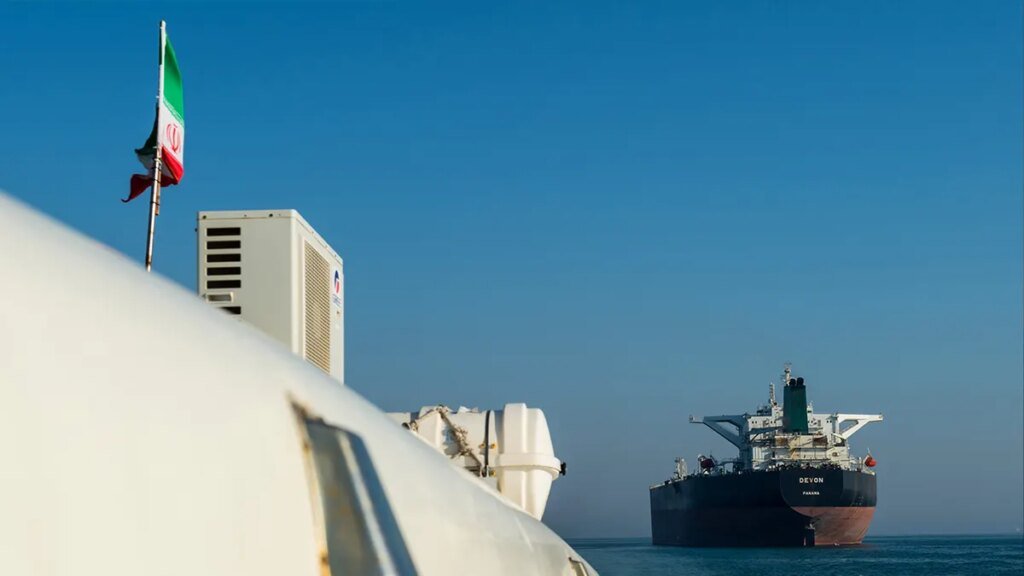
Oil tanker near terminal at Kharg Island in Iran

Treasury sanctions Chinese refinery Hengli over Iran oil purchases

NEWYou can now listen to Fox News articles! The U.S. Treasury’s Office of Foreign Assets Control (OFAC) on Friday sanctioned a major Chinese oil refinery and dozens of ships tied to Iran’s “shadow fleet,” escalating efforts to choke off Tehran’s main source of revenue. Officials said in a press release the move targets Hengli Petrochemical,

Roadkill found in freezer at Chinese restaurant, police say

Roadkill found in freezer at Chinese restaurant, police say

article  (Photo by Creative Touch Imaging Ltd./NurPhoto via Getty Images) PINEVILLE, La. – Police are investigating a Louisiana restaurant after officers discovered a deer believed to be roadkill stored in a freezer alongside food items intended for customers, authorities said. Dig deeper: The Pineville Police Department said the investigation began after officers learned of a

Headshot of Natalie Neff

Nissan’s New PHEV SUVs Show Its China-First Strategy

Nissan used Auto China 2026, also known as the Beijing Auto Show, to unveil two new electrified SUV concepts, the Urban SUV PHEV Concept and the Terrano PHEV Concept. The pair are part of a broader push by the automaker to develop what are generally known as new-energy vehicles (NEVs) aimed squarely at the Chinese

While DeepSeek repeatedly delayed releasing a major model update, domestic rivals including Moonshot AI’s Kimi, MiniMax, Alibaba Group and ByteDance have aggressively pushed out updates.

China’s DeepSeek Launches Long-Awaited AI Model| Technology News

China’s DeepSeek launched preview versions of its long-awaited V4 model, breaking months of silence from one of the country’s most closely watched AI labs. While DeepSeek repeatedly delayed releasing a major model update, domestic rivals including Moonshot AI’s Kimi, MiniMax, Alibaba Group and ByteDance have aggressively pushed out updates. V4-Pro’s agent ability has significantly improved

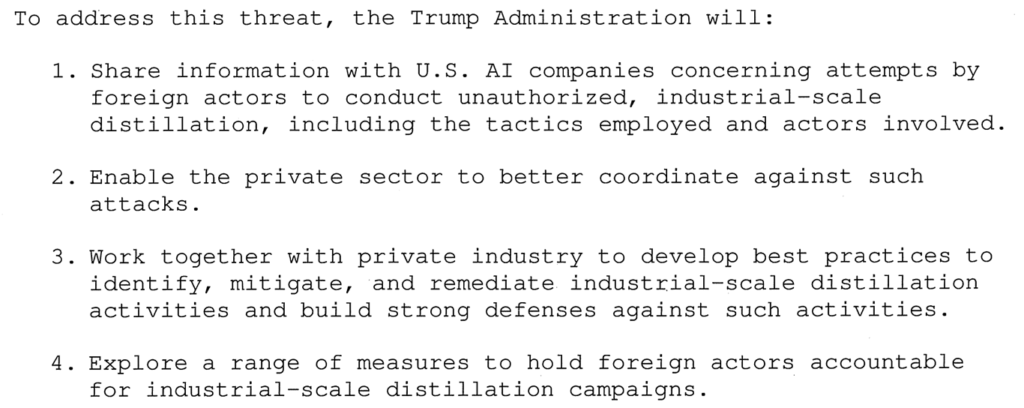
A section of a memorandum titled 'Adversarial Distillation of American AI Models' laying out how the Trump administration plans to deal with the threat.

White House accuses China of systematic theft of US AI tech

The US has accused China of stealing American AI models Chinese actors allegedly used a proxy network and jailbreaking techniques The accusation will likely strain US-China relations after a period of recompense The White House has accused China of orchestrating a campaign to steal AI models from American developers on an ‘industrial-scale’. In a memo,

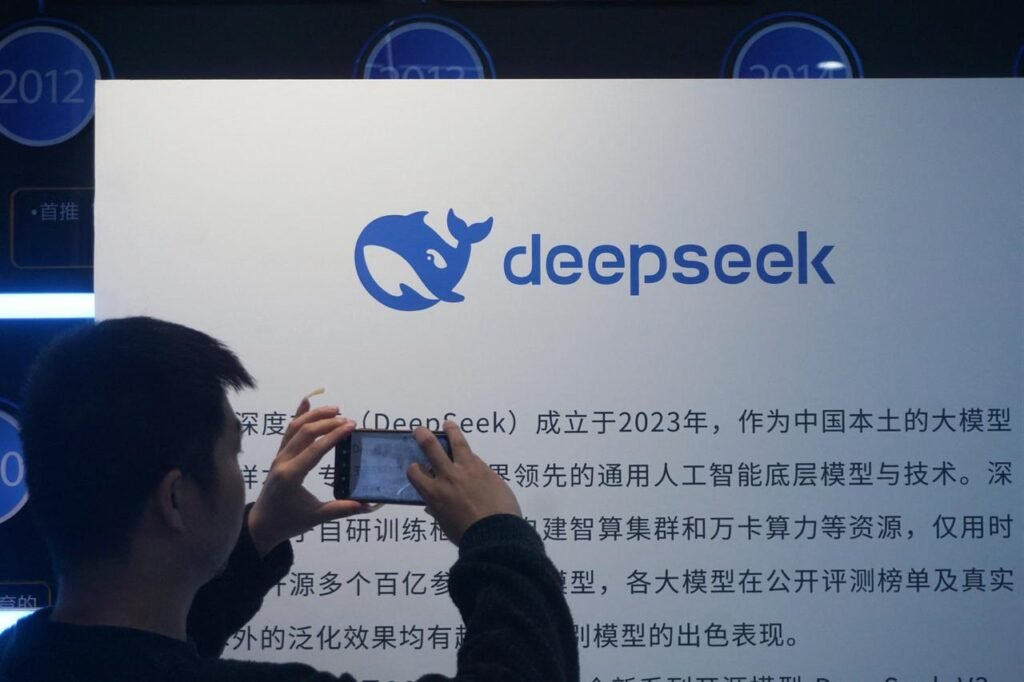
A man takes photos of a DeepSeek display at a shopping mall in Hangzhou, Zhejiang province, China, April 23, 2026. (AFP Photo)

DeepSeek returns with new AI model amid US-China tech rivalry

Hangzhou-based DeepSeek has released DeepSeek-V4, its first major new artificial intelligence model in over a year, positioning the Chinese startup once again at the center of a deepening rivalry between Beijing and Washington over technological supremacy. The release comes as the White House has accused Chinese entities of running industrial-scale campaigns to steal American AI

Hyundai Motor today reinforced its long-term commitment to the Chinese market at Auto China 2026, unveiling the all-new IONIQ V.

Hyundai Motor Reaffirms China Commitment at Auto China 2026, Unveils IONIQ V as First Step in New Product Offensive | Taiwan News

Hyundai Motor advances a renewed China strategy anchored in its ‘In China, For China, To Global’ approach IONIQ V debuts as the first dedicated IONIQ production model for China, tailored to local customer needs and expectations China positioned as a strategic hub for EV innovation and global competitiveness Ambitious roadmap targets 20 new models in

0
Would love your thoughts, please comment.x
()
x