Each new year tends to prompt discussion about potential shifts in the U.S. Federal Reserve’s rate‑cutting cycle. Given the current macroeconomic picture, and what may be expected looking ahead, 2026’s rate regime may be an interesting one. Inflation seems to be easing, but it remains uncertain whether consumers are going to see relief when it comes to cost pressures. Furthermore, the Trump Administration remains eager to push forward on both rate cuts and tariff negotiations.
Additionally, the Federal Reserve is approaching a period of transition, with multiple board members, including Chair Jerome Powell, expected to exit in 2026, opening the door for new leadership.
This uncertainty for the future of both the Fed and interest rates alike is making it difficult to look far ahead. That being said, the CME FedWatch Tool is showing that expectations remain rather low for the Fed to cut interest rates in the January 2026 meeting, as of December 19th, 2026.
Plan for a Level of Protection With CPSL
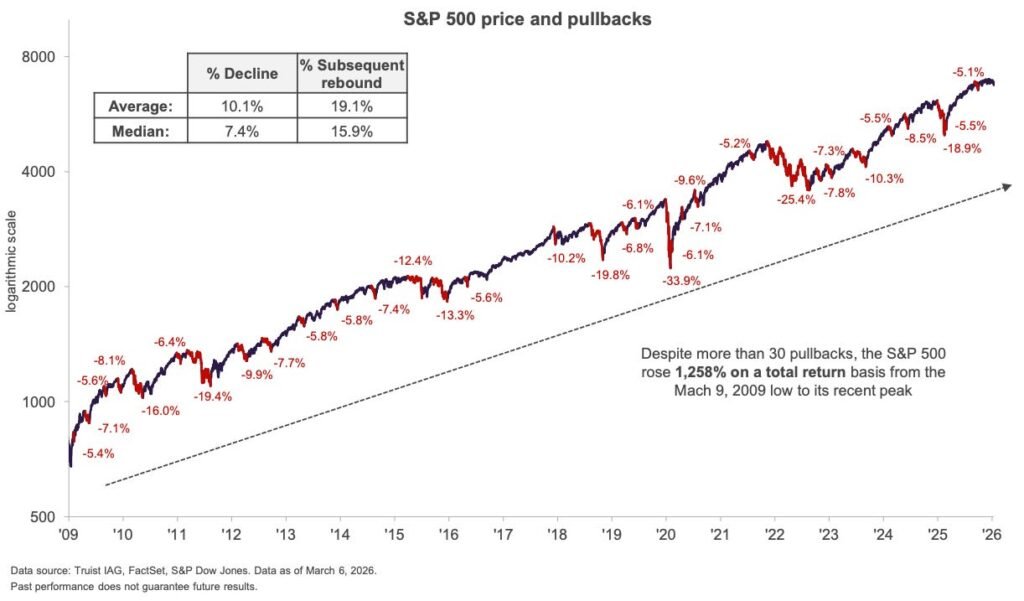
With the likelihood of a rate cut remaining low as the Federal Reserve enters a period of uncertainty, a more cautious stance may be warranted. Advisors and investors are understandably focused on preserving the gains achieved in 2025 as the new year begins.
One way to play the equity market in a defensive way is through the use of Calamos Structured Protection ETFs. These funds provide exposure to the equity market while protecting one’s initial investment from downside risk over an outcome period.
Take the Calamos Laddered S&P 500 Structured Alt Protection ETF (CPSL), for instance. CPSL invests in a laddered collection of twelve different monthly S&P 500 Structured Protection ETFs.
Each underlying fund provides 100% downside protection across its one-year outcome period, after fees and expenses. This positions CPSL as a compelling vehicle for putting 2025 gains to work. Investors can allocate directly to the U.S. large‑cap market and participate in capped upside potential, while maintaining confidence that their principal is protected from market declines..
For more news, information, and strategy, visit the Alternatives Content Hub.
Before investing carefully consider the fund’s investment objectives, risks, charges and expenses. Please see the prospectus and summary prospectus containing this and other information, which can be obtained by calling 1-866-363-9219. Read it carefully before investing.
Calamos Financial Services LLC and its representatives do not provide accounting, tax or legal advice. Due to various factors, including changing market conditions and/or applicable laws, the content may no longer be reflective of current opinions or positions. Each individual’s tax and financial situation is unique. You should consult your tax and/or legal advisor for advice and information concerning your particular situation. For more information about federal and state taxes, please consult the Internal Revenue Service and the appropriate state-level departments of revenue, respectively. This information is provided for informational purposes only and should not be considered tax or legal advice.
An investment in the Fund(s) is subject to risks, and you could lose money on your investment in the Fund(s). There can be no assurance that the Fund(s) will achieve its investment objective. Your investment in the Fund(s) is not a deposit in a bank and is not insured or guaranteed by the Federal Deposit Insurance Corporation (FDIC) or any other government agency. The risks associated with an investment in the Fund(s) can increase during times of significant market volatility. The Fund(s) also has specific principal risks, which are described below. More detailed information regarding these risks can be found in the Fund’s prospectus.
Investing involves risks. Loss of principal is possible. The Fund(s) face numerous market trading risks, including authorized participation concentration risk, cap change risk, capital protection risk, capped upside risk, cash holdings risk, clearing member default risk, correlation risk, derivatives risk, equity securities risk, investment timing risk, large capitalization investing risk, liquidity risk, market maker risk, market risk, non-diversification risk, options risk, premium discount risk, secondary market trading risk, sector risk, tax risk, trading issues risk, underlying ETF risk and valuation risk. For a detailed list of fund risks see the prospectus.
FUND-OF-FUNDS RISK. Shareholders of the Fund will experience investment returns that are different than the investment returns provided by an Underlying ETF. The Fund does not itself pursue a defined outcome strategy, nor does the Fund itself provide downside protection against SPY losses. Because the Fund will typically not purchase an Underlying ETF on the first day of a Target Outcome Period, it is not likely that the stated outcome of the Underlying ETF will be realized by the Fund. The Fund will be continuously exposed to the investment profiles of each of the Underlying ETFs during their respective Target Outcome Periods. The Fund, with its aggregate exposure to each of the Underlying ETFs, may have investment returns that are inferior to that of any single Underlying ETF or group of Underlying ETFs over any given time period. In between the semi-annual rebalance period of the Index, because the Fund is not equally weighted on a continuous basis, the Fund may be exposed to one or more Underlying ETFs disproportionately when compared to other Underlying ETFs. In such circumstances, the Fund will be subject to the over-weighted performance of such Underlying ETF.
As a shareholder in other ETFs, the Fund bears its proportionate share of each ETF’s expenses, subjecting Fund shareholders to duplicative expenses.
There are no assurances the Underlying ETFs will be successful in providing the sought-after protection. The outcomes that the Underlying ETFs seek to provide may only be realized if you are holding shares on the first day of the outcome period and continue to hold them on the last day of the outcome period, approximately one year. There is no guarantee that the outcomes for an outcome period will be realized or that the Underlying ETFs will achieve its investment objective. If the outcome period has begun and the underlying ETF has increased in value, any appreciation of the Fund(s) by virtue of increases in the underlying ETF since the commencement of the outcome period will not be protected by the sought-after protection, and an investor could experience losses until the underlying ETF returns to the original price at the commencement of the outcome period. The Underlying ETFs are subject to an upside return cap (the “Cap”) that represents the maximum percentage return an investor can achieve from an investment in the fund(s) for the outcome period, before fees and expenses. If the outcome period has begun and the Underlying ETFs have increased in value to a level near to their individual Cap, an investor purchasing at that price has little or no ability to achieve gains but remains vulnerable to downside risks. Additionally, the Cap may rise or fall from one outcome period to the next. Unlike the Underlying ETFs, the Fund itself does not pursue a target outcome strategy. The protection is only provided by the Underlying ETFs and the Fund itself does not provide any stated downside protection against losses. The Fund will likely not receive the full benefit of the Underlying ETF downside protections and could have limited upside potential. The Fund’s returns are limited by the caps of the Underlying ETFs.
Cap Rate – Maximum percentage return an investor can achieve from an investment in the Fund if held over the Outcome Period. Protection Level –Amount of protection the Fund is designed to achieve over the Days Remaining.
Outcome Period – The defined length of time over which the outcomes are sought.
The S&P 500 Price Index (SPX) tracks the price return of the S&P 500 Index, which is generally considered representative of the US stock market.
Unmanaged index returns, unlike fund returns, do not reflect fees, expenses or sales charges. Investors cannot invest directly in an index.
The “S&P 500” is a product of S&P Dow Jones Indices LLC or its affiliates (“SPDJI”) and S&P Global, and has been licensed for use by Calamos Advisors LLC (“CAL”). Standard & Poor’s® and S&P® are registered trademarks of Standard & Poor’s Financial Services LLC (“S&P”) and Dow Jones® is a registered trademark of Dow Jones Trademark Holdings LLC (“Dow Jones”). The trademarks have been licensed to SPDJI and have been sublicensed for use for certain purposes by CAL. Calamos S&P 500 Structured Protection ETFs are not sponsored, endorsed, sold or promoted by SPDJI, Dow Jones, S&P, any of their respective affiliates (collectively, “S&P Dow Jones Indices”) or S&P Global. Neither S&P Dow Jones Indices nor S&P Global make any representation or warranty, express or implied, to the owners of the Calamos S&P 500 Structured Protection ETFs or any member of the public regarding the advisability of investing in securities generally or in Calamos S&P 500 Structured Protection ETFs particularly or the ability of the S&P 500 to track general market performance. S&P Dow Jones Indices and S&P Global only relationship to CAL with respect to the S&P 500 is the licensing of the Index and certain trademarks, service marks and/or trade names of S&P Dow Jones Indices and/or its licensors. The S&P 500 is determined, composed and calculated by S&P Dow Jones Indices or S&P Global without regard to CAL or the Calamos S&P 500 Structured Protection ETFs. S&P Dow Jones Indices and S&P Global have no obligation to take the needs of CAL or the owners of Calamos S&P 500 Structured Protection ETFs into consideration in determining, composing or calculating the S&P 500. Neither S&P Dow Jones Indices nor S&P Global are responsible for and have not participated in the determination of the prices, and amount of Calamos S&P 500 Structured Protection ETFs or the timing of the issuance or sale of Calamos S&P 500 Structured Protection ETFs or in the determination or calculation of the equation by which Calamos S&P 500 Structured Protection ETFs are to be converted into cash, surrendered or redeemed, as the case may be. S&P Dow Jones Indices and S&P Global have no obligation or liability in connection with the administration, marketing or trading of Calamos S&P 500 Structured Protection ETFs. There is no assurance that investment products based on the S&P 500 will accurately track index performance or provide positive investment returns. S&P Dow Jones Indices LLC is not an investment advisor. Inclusion of a security within an index is not a recommendation by S&P Dow Jones Indices to buy, sell, or hold such security, nor is it considered to be investment advice.
NEITHER S&P DOW JONES INDICES NOR [THIRD PARTY LICENSOR] GUARANTEES THE ADEQUACY, ACCURACY, TIMELINESS AND/OR THE COMPLETENESS OF THE [INDEX] OR ANY DATA RELATED THERETO OR ANY COMMUNICATION, INCLUDING BUT NOT LIMITED TO, ORAL OR WRITTEN COMMUNICATION (INCLUDING ELECTRONIC COMMUNICATIONS) WITH RESPECT THERETO. S&P DOW JONES INDICES AND [THIRD PARTY LICENSOR] SHALL NOT BE SUBJECT TO ANY DAMAGES OR LIABILITY FOR ANY ERRORS, OMISSIONS, OR DELAYS THEREIN. S&P DOW JONES INDICES AND [THIRD PARTY LICENSOR] MAKES NO EXPRESS OR IMPLIED WARRANTIES, AND EXPRESSLY DISCLAIMS ALL WARRANTIES, OF MERCHANTABILITY OR FITNESS FOR A PARTICULAR PURPOSE OR USE OR AS TO RESULTS TO BE OBTAINED BY [LICENSEE], OWNERS OF THE [LICENSEE ETF], OR ANY OTHER PERSON OR ENTITY FROM THE USE OF THE [INDEX] OR WITH RESPECT TO ANY DATA RELATED THERETO. WITHOUT LIMITING ANY OF THE FOREGOING, IN NO EVENT WHATSOEVER SHALL S&P DOW JONES INDICES OR [THIRD PARTY LICENSOR] BE LIABLE FOR ANY INDIRECT, SPECIAL, INCIDENTAL, PUNITIVE, OR CONSEQUENTIAL DAMAGES INCLUDING BUT NOT LIMITED TO, LOSS OF PROFITS, TRADING LOSSES, LOST TIME OR GOODWILL, EVEN IF THEY HAVE BEEN ADVISED OF THE POSSIBILITY OF SUCH DAMAGES, WHETHER IN CONTRACT, TORT, STRICT LIABILITY, OR OTHERWISE. THERE ARE NO THIRD PARTY BENEFICIARIES OF ANY AGREEMENTS OR ARRANGEMENTS BETWEEN S&P DOW JONES INDICES AND [LICENSEE], OTHER THAN THE LICENSORS OF S&P DOW JONES INDICES.
STRUCTURED ALT PROTECTION ETF and STRUCTURED PROTECTION ETF are trademarks of Calamos Investments LLC.
Calamos Financial Services LLC, Distributor
Calamos Financial Services LLC
2020 Calamos Court | Naperville, IL 60563
866.363.9219 | www.calamos.com | [email protected]
2026 Calamos Investments LLC. All Rights Reserved.
Calamos and Calamos Investments are registered trademarks of Calamos LLC.