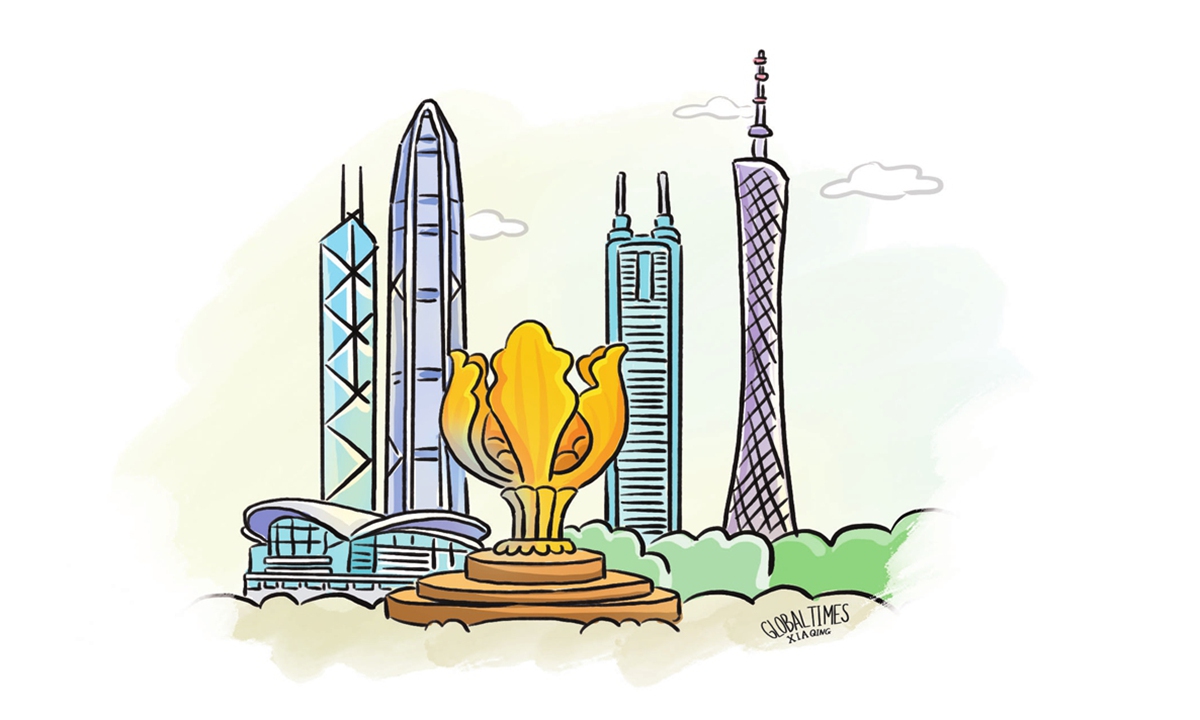
Illustration: Xia Qing/GT
Editor’s Note:
As China enters the annual national “two sessions” period of the National People’s Congress (NPC) and National Committee of the Chinese People’s Political Consultative Conference (CPPCC), the country is turning its focus toward the strategic blueprint of the 15th Five-Year Plan. Within this vision, the
Guangdong-Hong Kong-Macao Greater Bay Area (GBA) is expected to play a greater role as a strategic pivot point of China’s new development pattern, a demonstration zone for high-quality development and a leading area for Chinese modernization. Understanding how the Hong Kong and Macao Special Administrative Regions (SARs) proactively anchor themselves within this national road map offers a crucial window into the future of Chinese modernization.
Against this backdrop, the Global Times launches a commentary series, “GBA: New Voyage.” Through insights of NPC deputies and CPPCC members from the SARs as well as international professionals in Hong Kong and Macao, this series aims to showcase the vision of how the GBA could evolve into a world-class city cluster under the 15th Five-Year Plan. This is the first installment.
As China’s 15th Five-Year Plan unfolds comprehensively, Hong Kong stands at a pivotal juncture of “stepping forward from governance to prosperity.” The latest policy address and budget released by the Hong Kong Special Administrative Region (HKSAR) government clearly outline a development blueprint centered on upgrading the financial hub and elevating the innovation and technology center to align with national strategies, showcasing the confidence and vitality of this international metropolis to the world.
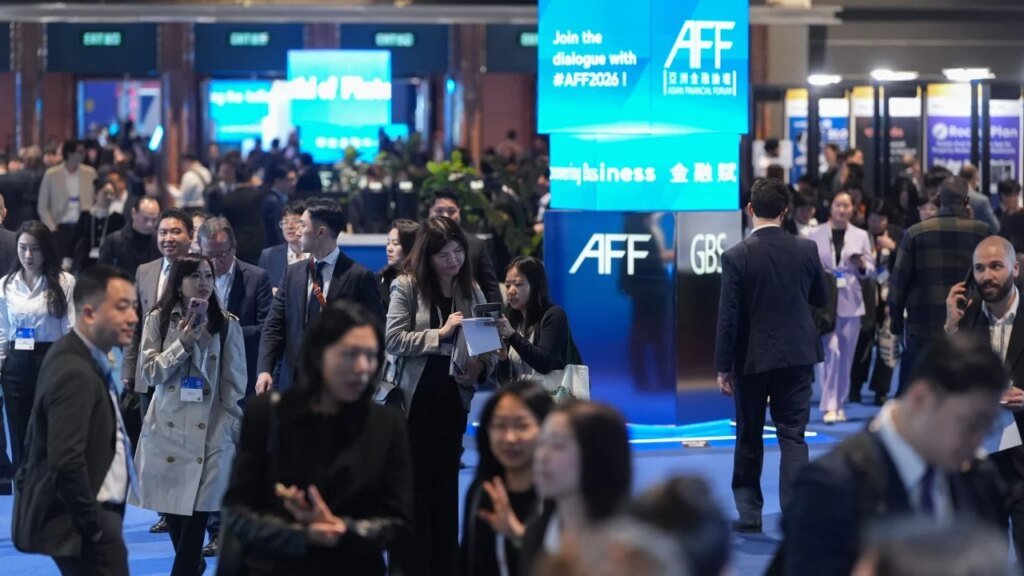
Despite malicious smears about Hong Kong being “replaced” or suffering a “talent drain,” facts speak louder than words. Over the past three years, Hong Kong’s status as an international financial center has risen steadily to third place globally, its overall competitiveness has jumped to third worldwide, and its talent competitiveness has climbed 12 places in two years to fourth globally. These hard indicators fully attest to Hong Kong’s unique value.
Hong Kong is leveraging its unique position as the largest offshore renminbi (RMB) hub to become a core hub for RMB internationalization. The HKSAR government explicitly stated in its policy address that it will double the size of the RMB Business Facility, providing enterprises with long-term RMB financing. Simultaneously, it will promote the inclusion of an RMB trading counter under the southbound trading of the Stock Connect, thereby enriching the application scenarios for RMB assets.
The budget further intensifies support for financial development by optimizing preferential tax regimes for funds and single-family offices, attracting global capital convergence. Hong Kong is projected to become the world’s largest cross-border wealth management center in the coming years. These initiatives precisely align with the national strategy to advance RMB internationalization, enabling Hong Kong to continue playing a pivotal role in “connecting domestic and international markets” within the global financial landscape.
Science and technology innovation, highlighted as a core element of new quality productive forces in the 15th Five-Year Plan, is being accelerated in Hong Kong through its foundation of five globally top-ranked universities. The HKSAR government has prioritized innovation and technology development with robust initiatives. In 2026, the Hong Kong Institute of Artificial Intelligence will be established, with HK$1 billion ($128 million) allocated to support upstream AI research and technology transfer.
Hong Kong is aligning technological innovation with national strategic needs to pioneer new development pathways. The city’s innovation and technology strengths extend beyond research capabilities to the institutional advantages under One Country, Two Systems. The HKSAR government is actively facilitating the cross-border flow of mainland data to the Hong Kong-Shenzhen Innovation and Technology Park for research purposes. This complements the development of the Cyberport’s AI Supercomputing Centre and the Sha Ling Data Park, building a trinity of computing power, data, and talent within the innovation and technology ecosystem.
Aligning with the 15th Five-Year Plan, Hong Kong’s development will not rely on isolated breakthroughs but rather on systemic upgrades.
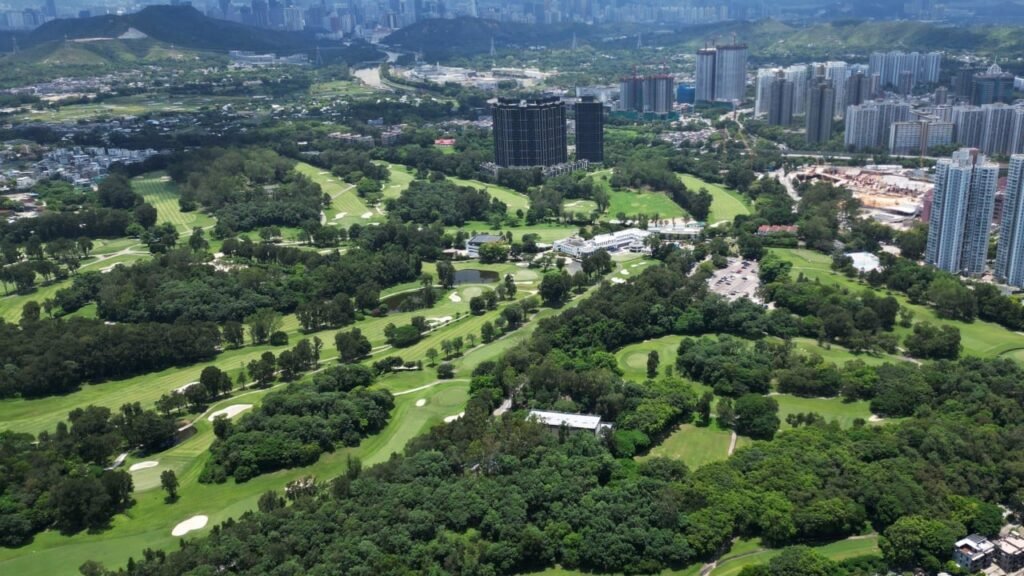
The HKSAR government has established the Committee on Development of the Northern Metropolis to build the Northern Metropolis area as a new engine integrating innovation and technology, education, and industry. In talent cultivation, the government has relaxed non-local student quotas for self-financed tertiary institutions and established the Task Force on Study in Hong Kong to attract global talent.
The implementation of the 15th Five-Year Plan presents unprecedented opportunities for Hong Kong. As a patriotic community leader, I will continue to unite people from all walks of life, support the HKSAR government and drive the upgrading of Hong Kong’s financial and innovation and technology sectors. I will also deepen cooperation and exchanges between Hong Kong and the mainland, especially with provinces such as Shandong.
Under the strong safeguard of One Country, Two Systems, Hong Kong will undoubtedly achieve higher-quality development by aligning with national strategies, powered by the dual engines of finance and innovation technology. The “Pearl of the Orient” will shine even more brilliantly on its new journey.
The author is a member of the National Committee of the Chinese People’s Political Consultative Conference and president of the Federation of HK Shandong Community Organization. opinion@globaltimes.com.cn