The US Supreme Court is poised in the weeks ahead to decide the legality of the majority of President Trump’s tariffs. The president invoked the International Emergency Economic Powers Act (IEEPA) to levy blanket tariffs on goods from other countries. But Congress is the branch of the US government with oversight of taxation and spending — not the president.
As he has publicly braced for the high court’s decision, Trump has claimed the “full benefit” of tariff policies would take effect soon, arguing that foreign buyers who stockpiled inventory would be forced to buy more goods. Meanwhile, Trump further expanded tariff breaks on Brazilian goods, part of moves to lower costs on some everyday goods as consumers grapple with price struggles.
The push to reduce food prices comes after electoral wins for Democrats across a number of key state and local races where candidates stressed affordability concerns. Trump has also in recent weeks floated the possibility of a tariff “dividend” for many Americans in the form of a $2,000 check.
Trump also in recent days floated the possibility of reducing — or completely eliminating — personal income tax.
Read more: What Trump’s tariffs mean for the economy and your wallet
-
The OECD raised its forecast for US growth this year — to 2%, up from the 1.6% it had forecast in June. Still, the American economy would have grown considerably more slowly than it did in 2024 (2.8%).
-
The US announced a major pharmaceuticals deal with the UK on Monday, which will lead to zero import tariffs on pharmaceutical products.
-
US Commerce Secretary Howard Lutnick has announced that the general tariff rate on imports from South Korea, which includes autos, will drop to 15% retroactive to Nov. 1. The move comes as South Korea has started to implement its US investment commitments.
-
The Trump administration is negotiating a deal that would commit Taiwan to new investment and training of US workers in semiconductor manufacturing and other advanced industries. Taiwan is also pushing for tariffs on its goods to be cut to 15%.
-
Trump said Chinese leader Xi Jinping “pretty much” agreed to increase the speed and size of the country’s agricultural purchases. Trump and Xi held their first call last week since the US and China struck a trade and tariff truce.
-
Friction between the US and EU continues to build as the two nations look to implement the framework agreement struck earlier this year. The EU is seeking lower tariffs on certain goods, but it rejected a demand to ease tech rules.
LIVE 107 updates
-
US growth forecast upgraded for 2025: OECD
The world economy has shown itself to be resilient in the face of President Trump’s tariffs, according to data released on Tuesday from the Organization for Economic Cooperation and Development.
The OECD upgraded its outlook for global and US economic growth this year and now forecasts that the world economy will grow 3.2% this year, down slightly from 3.3% in 2024 but a big improvement on the 2.9% it predicted in June.
Its economic forecast for US growth this year has risen to 2% up from its 1.6% June forecast.
The AP reports:
-
Cyber Monday US spending growth trails Europe amid tariffs
US Cyber Monday spending slowed in comparison to Europe, according to data released by Salesforce (CRM). This is seen as a new phenomenon and reflects the impact of President Trump’s trade war on consumer spending.
While global online spending, primarily from Europe, increased 5.3% as of 12 p.m. ET compared to the same period a year ago, US spending rose by only 2.6%. Salesforce, which tracks the transactions of 1.5 billion consumers, said global Black Friday sales grew twice as fast as those in the US.
Trump has said that he plans to take action to help US consumers feeling the pinch due to tariffs, such as cutting income tax due to the revenue from tariffs, alongside providing Americans with a $2,000 tariff “dividend” check.
Bloomberg News reports:
-
US Commerce chief confirms South Korea’s 15% tariff rate retroactive to November 1
US Commerce Secretary Howard Lutnick has confirmed that the tariff rate on imports from South Korea, which include autos, will drop to 15% retroactive to Nov. 1.
The announcement from Lutnick came on Monday, following South Korea’s implementation of the country’s US investment commitments.
-
US announces zero tariff pharmaceutical deal with Britain
The US announced a major deal on Monday to secure zero tariffs on British pharmaceutical imports and medical device technology in return for Britain spending more on medicines and overhauling how it values drugs.
Under the new deal, the UK will raise the net price it pays for new US medicines by 25%. In return, UK-made drugs and medical devices will be exempt from Section 232 sectoral tariffs and any future Section 301 country tariffs.
Reuters reports:
UK CHANGES SYSTEM FOR ASSESSING IF DRUGS ARE COST-EFFECTIVE
-
US manufacturing stuck in doldrums as tariff headwinds persist
-
US-UK ready to agree on zero tariffs on pharmaceuticals
The US and UK are ready to agree on a trade deal that would equal zero import tariffs on UK pharmaceutical products into the US.
Reuters reports:
-
Asia’s factories stumble as US trade deals fail to revive demand
Bloomberg reports:
-
Taiwan in negotiation for a drop in tariff rate from 20% to 15%
Reuters reports:
-
China demands Malaysia, Cambodia clarify US trade deals
-
The hot air of Trump’s tariffs is approaching a ceiling of cold reality
It wasn’t so long ago that a social media post from President Trump would cause a flurry of excitement among multinational companies, the media, and foreign governments. However, things may have changed. Markets and investors are no longer fazed by Trump’s aggressive tariffs, according to the FT’s senior trade writer Alan Beattie.
The FT reports:
-
EU members seek safeguards in US tariff deal to protect industry
-
Trump says he may cut income tax ‘completely’ because of tariff income
President Trump said on Thursday that his administration may be in a position over the next two years to slash income tax due to the revenue generated from tariffs.
The US president made the statement on a Thanksgiving video call to US military service members.
This latest move from Trump follows the idea floated in recent weeks of a tariff “dividend” for Americans in the form of a $2,000 check. It also comes on the heels of electoral wins for Democrats across several key state and local races, where candidates stressed affordability concerns.
Trump himself has said previously that the American people are “paying something” for tariffs.
Reuters reports:
-
Small US retailers face holiday supply chaos due to Trump tariffs
President Trump’s tariffs have created chaos for many US small businesses. When Trump threatened 180% tariffs on Chinese imports in April, small businesses scrambled to find cheaper production facilities, with many exploring Thailand. But when rates in China were cut to 20%, the alternative factories proved more costly. As a result, orders were delayed, and many businesses were left short on stock.
Reuters reports:
-
Swiss politicians decry ‘gold bar diplomacy’ in Trump trade deal
-
China’s tech giants take AI model training offshore to tap Nvidia chips
Some of China’s top companies are training their AI models overseas to access Nvidia’s (NVDA) chips and bypass efforts to prevent their development of the powerful technology.
Alibaba (BABA) and ByteDance are among some of the tech groups training their largest language models in data centres across south-east Asia, according to people familiar with the matter.
The FT reports:
-
High coffee prices are here to stay for longer despite US tariff cuts
The price of coffee is not going down anytime soon, according to Italian roaster Illycaffe SpA. Coffee lovers hoping for a quick fix with prices will have to wait a little longer as the expected pullback from a reduction in US tariffs will take some time to materialize.
Bloomberg News reports:
Read more here.
-
US continues to waive China import taxes on certain products for 1 year
The Trump administration announced on Wednesday that it will extend tariff exemptions on hundreds of Chinese products until November 2026, citing the new trade deal between the US and China as the reason for the extension.
What this means is that the US will continue to let certain Chinese imports skip paying taxes for one year, keeping a temporary break that was already in place due to their disputes over technology and trade secrets.
Reuters reports:
-
South Korea submits special bill aimed at cutting US car levies
-
Canada to add new tariffs to US steel, curb imports
Bloomberg reports:
-
Trump says Xi ‘pretty much’ agreed to expand agricultural buys
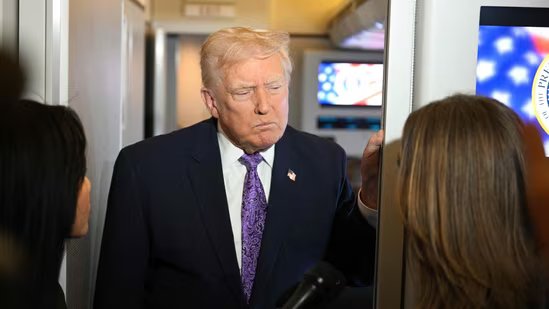
President Trump said on Tuesday that China’s leader Xi Jinping “pretty much” agreed to expand Beijing’s purchase of US agricultural products.
“I think he’s going to very much surprise you on the upside,” Trump told reporters aboard Air Force One on Tuesday. “I think he’s going to — I asked him, ‘I’d like you to buy a little faster, I’d like you to buy a little more.’ And he’s more or less agreed to do that.”
Bloomberg News reports: